
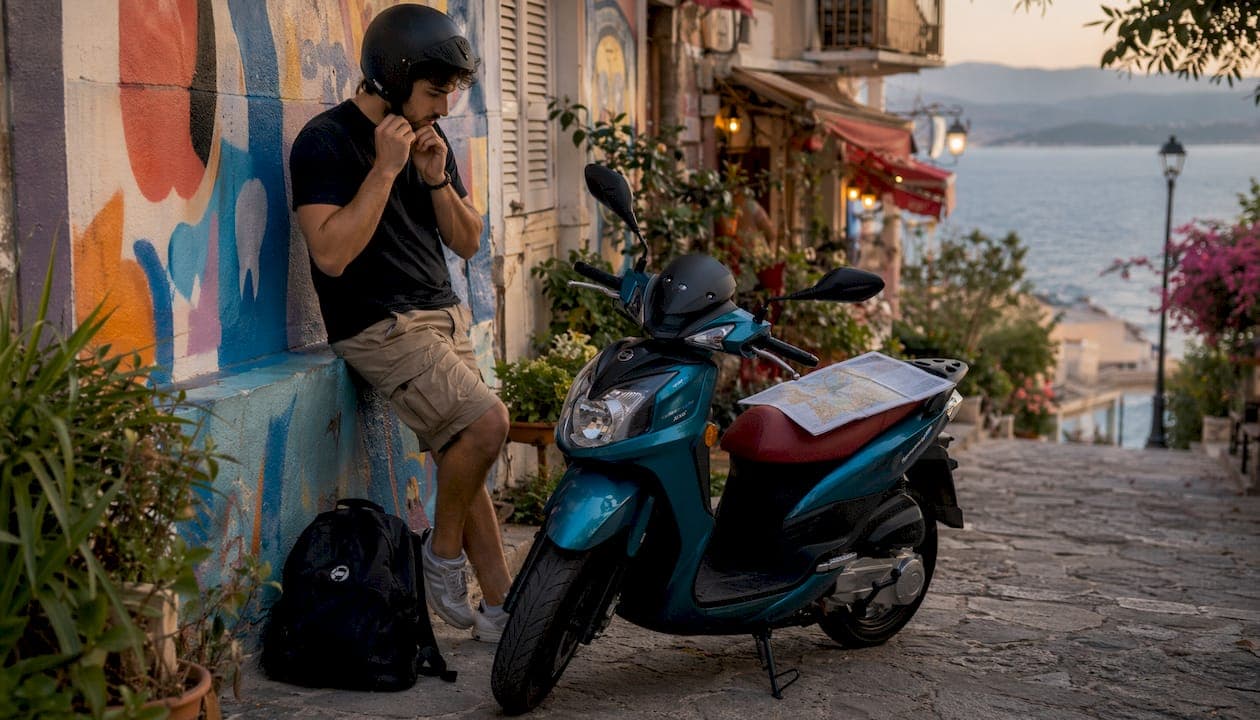
TL;DR:
- A well-planned scooter tour in Halkidiki ensures a smooth and enjoyable experience by addressing licensing, gear, and route considerations. Riders must meet age, license, and insurance requirements, and choose at least a 125cc scooter for the region’s challenging terrain. Early daily starts, thorough documentation, and adherence to safety laws improve safety and maximize the adventure.
A well-planned scooter touring workflow for Halkidiki is the difference between a frustrating trip and one of the best travel experiences of your life. Halkidiki's three peninsulas offer hidden beaches and scenic routes that cars and buses simply cannot reach. The region rewards riders who prepare correctly: valid license, right engine size, offline maps loaded, and a daily route plan that respects both the terrain and the heat. This guide walks you through every step, from paperwork to parking, so you arrive ready to ride.
What are the essential prerequisites for renting a scooter in Halkidiki?
Getting your documents right before you arrive saves real time and prevents rental refusals. Greek rental agencies enforce their requirements strictly, and showing up unprepared means no scooter.
Age and license requirements
Rental agencies require drivers to be at least 23 years old, hold a valid license for 1–2 years, and stay under the typical upper age limit of 70–72 years. These are not suggestions. Agencies check documents at pickup, and a license held for less than the minimum period triggers an automatic refusal.
Non-EU tourists face one additional requirement: an International Driving Permit. Even if your home license looks valid and carries an English translation, rental agencies strictly enforce the IDP rule. Apply for one before you leave home through your national automobile association. It takes a few days and costs very little.
Engine class and license type
This is where many tourists get caught off guard. In Greece, a standard category B car license covers scooter rentals up to 125cc. Renting anything with a larger engine strictly requires a motorcycle license, specifically an A1, A2, or A class. Tourists who assume their car license covers all scooters face rental refusals or legal exposure on the road.
Insurance and deposits
- Third-party insurance is standard with most rentals, but full coverage and personal accident protection are strongly recommended.
- Some travel insurance policies exclude motorized two-wheelers entirely. Verify your coverage before you book and purchase a supplemental policy if needed.
- Security deposits vary by agency and engine size. Ask for the exact amount in writing before signing.
- Returning the scooter late or with less fuel than provided triggers automatic additional fees. Confirm the fuel policy at pickup.
Pro Tip: Screenshot your rental agreement and email it to yourself before leaving the agency. If a dispute arises, you have instant access to the terms without relying on a paper copy.
How to select the right scooter for Halkidiki's terrain
Halkidiki is not flat. The roads between coastal villages climb hills, curve sharply around cliffs, and occasionally turn to loose gravel. Choosing the wrong scooter makes every kilometer harder than it needs to be.
Why 125cc is the minimum for Halkidiki
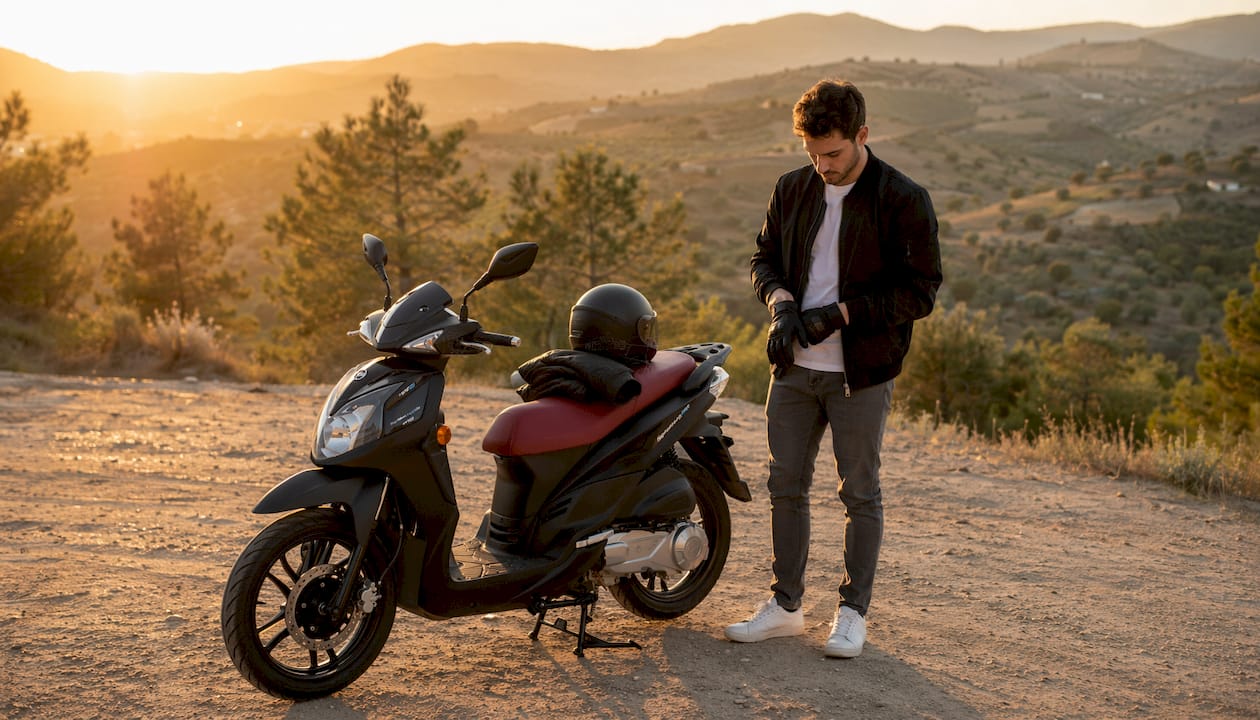
A 125cc engine is the recommended minimum for Halkidiki's mixed terrain. A 50cc scooter works fine on flat city streets, but it struggles on inclines and loses stability on coastal curves. If you plan to ride the Sithonia peninsula or cross between villages on the Kassandra peninsula, a 50cc model will slow you down and tire you out. Riders covering longer daily distances should consider a 150cc or 250cc model, which requires an A1 or A2 license.
Greek coastal roads in Halkidiki are narrow and challenging for larger vehicles. A scooter's maneuverability is a genuine advantage here, not just a cost saving. You can pull off at viewpoints, squeeze into small parking areas, and take detours that a rental car cannot follow.
Essential gear checklist
- Helmet: Mandatory by Greek law for all riders and passengers. Most rental agencies include one, but bring your own if you want a guaranteed fit.
- Gloves: Protect your hands on longer rides and in the event of a fall.
- Sunglasses or visor: Glare off the Aegean is intense from june through september.
- Protective clothing: Light long sleeves and pants protect against sunburn and road rash. Avoid shorts and sandals on the scooter.
- Closed shoes: Flip-flops are a common cause of foot injuries on scooters.
Pro Tip: Inspect the scooter thoroughly at pickup and photograph every scratch, dent, and scuff with a timestamped photo. Failure to document the scooter's condition at pickup can expose you to unfair damage claims upon return.
For couples or two-up riding, confirm the scooter is rated for two passengers. Not all 125cc models are, and overloading a scooter on hilly roads is a safety risk. Check the best scooters for Halkidiki terrain to match engine size to your specific itinerary.
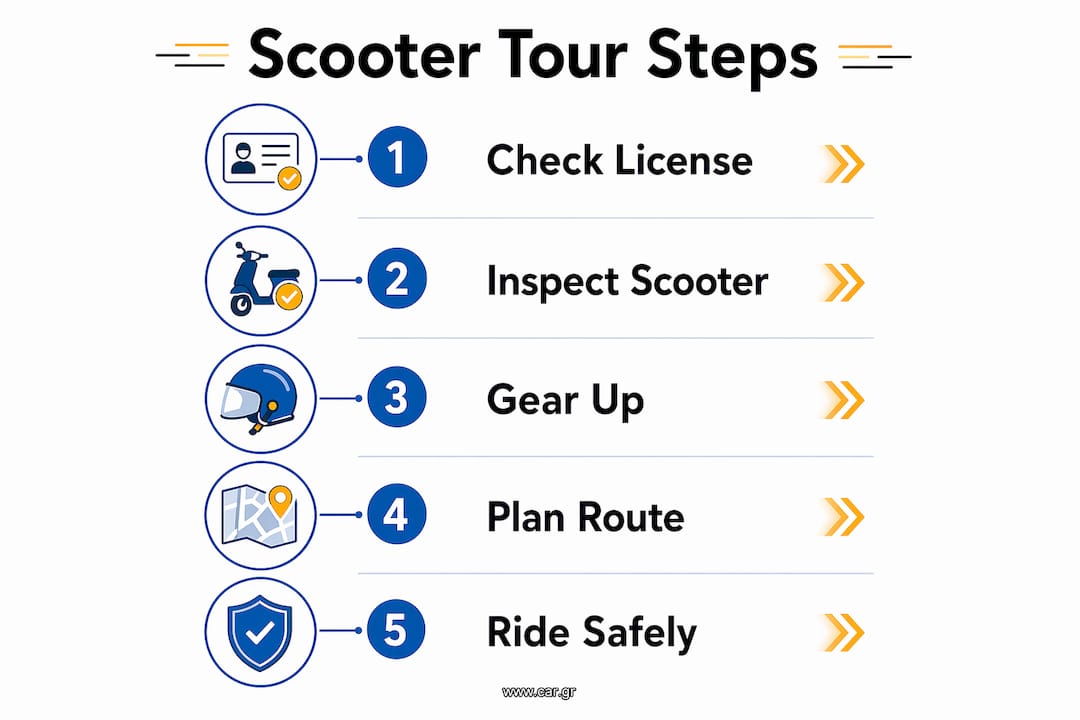
What is a practical step-by-step scooter itinerary for Halkidiki?
A structured daily plan is what separates a great Halkidiki scooter adventure from an exhausting one. The key is managing distance, heat, and timing together.
The daily touring workflow
- Start before 8:30 AM. Early morning rides avoid both summer heat extremes and the surge in tourist traffic. Roads are cooler, quieter, and safer in the first two hours of daylight.
- Plan your route in segments. Divide each day into a morning ride and an afternoon ride with a midday break at a beach or village. This keeps total riding time under four hours per day.
- Stay within 150km per day. The standard daily rental limit for scooters in Greece is approximately 150km. Exceeding it triggers additional fees. Map your route the night before and check the total distance.
- Download offline maps before you leave. Cell coverage in parts of Sithonia and Athos peninsula approaches is intermittent. Google Maps and Maps.me both support offline downloads. A dead signal on a narrow coastal road is not the time to realize you have no navigation.
- Arrive at popular beaches before 10:00 AM. Parking at spots like Kavourotrypes fills completely by 10:00 AM on summer weekends. Arriving early or parking further away and walking in are the only reliable options.
- Return the scooter on time and with a full tank. Late returns and low fuel both trigger automatic fees. Build a 30-minute buffer into your return schedule.
Sample Halkidiki scooter itinerary
| Day | Focus area | Approximate distance |
|---|---|---|
| Day 1 | Kassandra peninsula coastal loop | 90–110km |
| Day 2 | Sithonia cove marathon, Kavourotrypes to Porto Koufo | 100–130km |
| Day 3 | Inland villages and Petralona Cave area | 70–90km |
| Day 4 | Northern Halkidiki and Aristotle's birthplace, Stagira | 80–100km |
The "cove marathon" approach on Sithonia dedicates a full day to beach hopping through hidden bays only reachable by scooter or motorbike. This is the single best use of a scooter in Halkidiki. No bus route and no rental car can match the access you get on two wheels.
For a deeper look at multi-day tour planning, the same principles of segment planning and early starts apply across any touring destination.
What safety challenges should riders expect on Halkidiki scooter tours?
Halkidiki is beautiful and mostly well-maintained, but the roads carry specific hazards that catch unprepared riders off guard.
Road hazards to watch for
- Loose gravel on coastal curves. Greek roads carry hazards including loose gravel, potholes, and slippery road markings in wet conditions. Slow down before every curve on coastal roads, not during it.
- Narrow lanes near villages. Local drivers know these roads. Tourists do not. Stay left, ride predictably, and never overtake on blind corners.
- Potholes after rain. Halkidiki's secondary roads develop potholes quickly after heavy rain. Ride at a pace that lets you react.
Legal requirements every rider must know
Greek law mandates helmet use for all riders and passengers at all times. Greek law also enforces zero alcohol tolerance for motorbike riders. A single drink before riding is a legal violation, not just a risk judgment.
Violating either rule results in fines and can void your rental insurance entirely. That means any damage or injury becomes your personal financial liability.
Insurance and incident handling
Photograph the scooter at pickup and at return. If an incident occurs on the road, photograph the scene, get the other party's details, and call the rental agency immediately. Do not move the scooter until you have documented everything. Verify your insurance covers the specific incident type before assuming a claim will succeed.
Key Takeaways
A successful Halkidiki scooter tour requires the right license class, a 125cc or larger engine, a daily distance plan under 150km, and strict compliance with Greek helmet and alcohol laws.
| Point | Details |
|---|---|
| License and age requirements | Riders must be 23 or older, hold a license for 1–2 years, and carry an IDP if non-EU. |
| Engine size matters | Choose 125cc minimum for Halkidiki's hills; larger engines require an A-class motorcycle license. |
| Daily distance limit | Stay within 150km per day to avoid extra rental fees and manage rider fatigue. |
| Start early every day | Riding before 8:30 AM avoids heat, traffic, and full parking lots at popular beaches. |
| Document everything | Photograph the scooter at pickup and return to protect against unfair damage claims. |
Why I always tell first-time Halkidiki riders to start slow
Experienced riders advise starting scooter tours in calmer Halkidiki resort areas before tackling busy Thessaloniki traffic. I think this is the single most underrated piece of advice for tourists renting scooters in Greece.
Most visitors arrive from cities where traffic rules are familiar and roads are predictable. Greek coastal roads operate differently. Locals drive fast on roads that look slow. Gravel appears without warning. The heat by midday is genuinely disorienting if you are not used to riding in it.
My honest recommendation: spend your first half-day on the quieter back roads of Kassandra before committing to a full Sithonia cove marathon. Get a feel for the scooter, test the brakes on a downhill, and figure out how your offline maps behave before you need them urgently. The cove marathon is worth doing, but it rewards riders who already know their machine.
On gear: do not skip the gloves. Every rider I know who skipped them regretted it within two days. The sun, the vibration, and one small slide are all you need to understand why they matter.
— KONSTANTINOS
Plan your Halkidiki scooter rental with Motorent
Motorent offers a fully insured fleet of well-maintained scooters and motorbikes suited for Halkidiki's terrain, with helmets included and transparent pricing that covers daily rates without hidden fees.
Booking through Motorent gives you 24/7 customer support throughout your trip, which matters when you are on a coastal road in Sithonia and need quick answers. The online booking process is straightforward: browse the fleet, select your dates, and confirm your reservation in minutes. Every rental includes third-party insurance, and full coverage upgrades are available at checkout. Visit the Motorent scooter rental guide to check availability and book the right scooter for your Halkidiki itinerary.
FAQ
What license do I need to rent a scooter in Halkidiki?
A standard category B car license covers scooters up to 125cc in Greece. Larger engines require an A1, A2, or A motorcycle license.
Do non-EU tourists need an International Driving Permit?
Yes. Rental agencies in Halkidiki strictly require an IDP for non-EU citizens, even when the home license appears valid.
What is the daily mileage limit on a rental scooter?
The standard daily limit is approximately 150km. Exceeding it results in additional fees charged by the rental agency.
Is travel insurance enough for scooter riding in Halkidiki?
Not always. Many travel insurance policies exclude motorized two-wheelers. Verify your policy before you ride and purchase supplemental coverage if needed.
What is the best scooter engine size for Halkidiki?
A 125cc engine is the recommended minimum for Halkidiki's hilly and coastal terrain. Riders covering longer distances or carrying a passenger should consider a 150cc or 250cc model with the appropriate motorcycle license.