
TL;DR:
- Riding a motorbike offers unmatched access to remote beaches and scenic routes in Halkidiki.
- Greek roads outside cities are well-maintained, but strict legal requirements and safety rules apply.
- Motorbike travel provides greater flexibility, immersion, and fun compared to buses or cars.
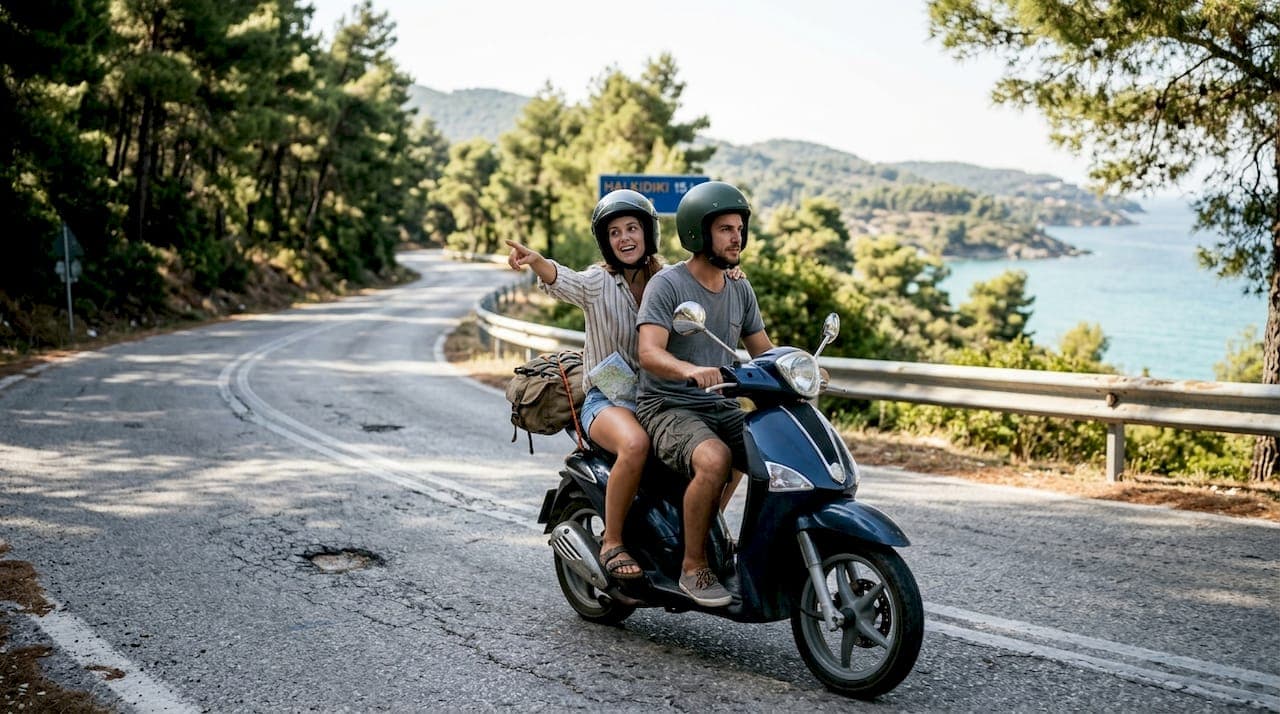
Most travelers assume Greece means packed tour buses, overpriced taxis, or white-knuckle driving on unfamiliar roads. That assumption leaves a lot of the best places undiscovered. Thessaloniki and Halkidiki are built for two wheels: winding coastal roads, hidden coves tucked between pine forests, and villages that no KTEL bus will ever reach. Renting a motorbike or scooter here is not just a budget move. It is a fundamentally different way to travel, one that puts you in control of your route, your pace, and your experience. This guide covers the real benefits, the honest safety picture, cost comparisons, and practical tips to help you plan your ride.
Table of Contents
- Why motorbikes unlock unique access to Thessaloniki & Halkidiki
- Safety, road quality, and legal realities for travelers
- Cost, flexibility, and the fun factor: how motorbikes compare
- Smart tips and essential prep for a smooth exploration
- The real adventure: why motorbike exploration transforms your journey
- Ready to discover Thessaloniki and Halkidiki on two wheels?
- Frequently asked questions
Key Takeaways
| Point | Details |
|---|---|
| Flexible route access | Motorbike exploration opens up remote beaches and scenic routes that cars and buses miss. |
| Safety and regulations | Touring roads in Greece are generally safe if you follow legal requirements, including helmets and speed limits. |
| Affordable and adventurous | Motorbike travel offers cost-effective fun for solos and couples, with more freedom than public transport. |
| Essential prep matters | Pre-trip checks, safety gear, and route planning are crucial to enjoying a smooth journey. |
| MotoRent simplifies booking | Local rental services like MotoRent make it easy to get started exploring Thessaloniki and Halkidiki. |
Why motorbikes unlock unique access to Thessaloniki & Halkidiki
Halkidiki stretches south of Thessaloniki in three distinct peninsulas: Kassandra, Sithonia, and the restricted Mount Athos. Each one has a different personality. Kassandra is the most developed, with beach clubs and resort towns. Sithonia is quieter, greener, and far more rewarding for anyone willing to explore. Mount Athos is accessible only by permit and boat, but the roads skirting its western edge are some of the most scenic in northern Greece.
The problem with reaching these places by conventional transport is real. Public buses connect Thessaloniki to major towns on Kassandra and occasionally Sithonia, but schedules are limited and stops are fixed. You will not catch a bus to a secluded cove between Vourvourou and Sarti. A car gets you closer, but narrow coastal tracks, limited parking near beaches, and the sheer cost of fuel and tolls add up fast.
A motorbike changes the equation entirely. Motorbike exploration provides flexible access to remote beaches and scenic routes that are genuinely inconvenient or impossible by car or bus. You can pull over anywhere, park in seconds, and take a dirt track down to a beach that does not appear on any tourist map. That kind of freedom is not a small thing. It is the whole point of traveling this region.
For exploring Sithonia beaches, a scooter or mid-size motorbike is the ideal tool. The coastal road looping around Sithonia is smooth, scenic, and perfectly sized for two wheels. Check our scooter rental guide if you are unsure which bike size suits your plans, or browse bike rental details to see what is available.
"The road to Kalamitsi felt like it was built for bikes. We passed three cars the entire morning."
Motorbike vs. car vs. bus: route flexibility comparison
| Feature | Motorbike | Car | Bus |
|---|---|---|---|
| Access to remote beaches | Excellent | Limited | Poor |
| Parking ease | Very easy | Difficult | N/A |
| Route flexibility | Full | Moderate | Fixed stops only |
| Cost per day | Low to moderate | Moderate to high | Low but inflexible |
| Fun factor | Very high | Moderate | Low |
Key advantages of riding in Halkidiki:
- Stop at unmarked beaches with no parking fees
- Ride early morning before tourist traffic builds
- Cover all three peninsulas in a multi-day loop
- Access forest roads and viewpoints closed to large vehicles
Safety, road quality, and legal realities for travelers
The idea that Greek roads are dangerous is one of the most persistent myths in European travel. Riders who have actually toured here tell a different story. Greek touring roads are well-maintained with low traffic outside cities, and the "dangerous roads" reputation mostly comes from urban driving habits, not rural touring conditions. Outside Thessaloniki's city center, the roads through Halkidiki are smooth, well-marked, and genuinely enjoyable to ride.
That said, the legal requirements are strict and enforced. Here is what every visitor needs to know before getting on a bike:
- Helmets are mandatory for all riders and passengers, with no exceptions
- Zero alcohol tolerance applies to motorbike riders in Greece
- Speed limits are 50 km/h in towns, 90 km/h on rural roads
- A valid motorcycle license is required; car licenses cover scooters up to 50cc
- Your rental must be fully insured, and you should carry documents at all times
Enforcement on helmet and alcohol rules is stricter than many visitors expect. Fines are real and immediate.
Common fines and enforcement points
| Violation | Fine (EUR) | Enforcement level |
|---|---|---|
| No helmet | 350 | High |
| Riding under the influence | 700+ | Very high |
| Speeding (over limit) | 100 to 350 | Moderate |
| No valid license | 200+ | Moderate |
Theft risk is worth mentioning honestly. In Halkidiki, it is low. In central Thessaloniki, it is moderate, similar to any mid-size European city. Always use the lock provided by your rental agency and avoid leaving the bike unattended overnight in unsecured areas.
Pro Tip: Book through a local rental agency like MotoRent rather than a generic platform. Local agencies give you a proper legal briefing, up-to-date route advice, and direct support if something goes wrong. Our machine rental info page covers everything you need before you pick up the keys.
Cost, flexibility, and the fun factor: how motorbikes compare
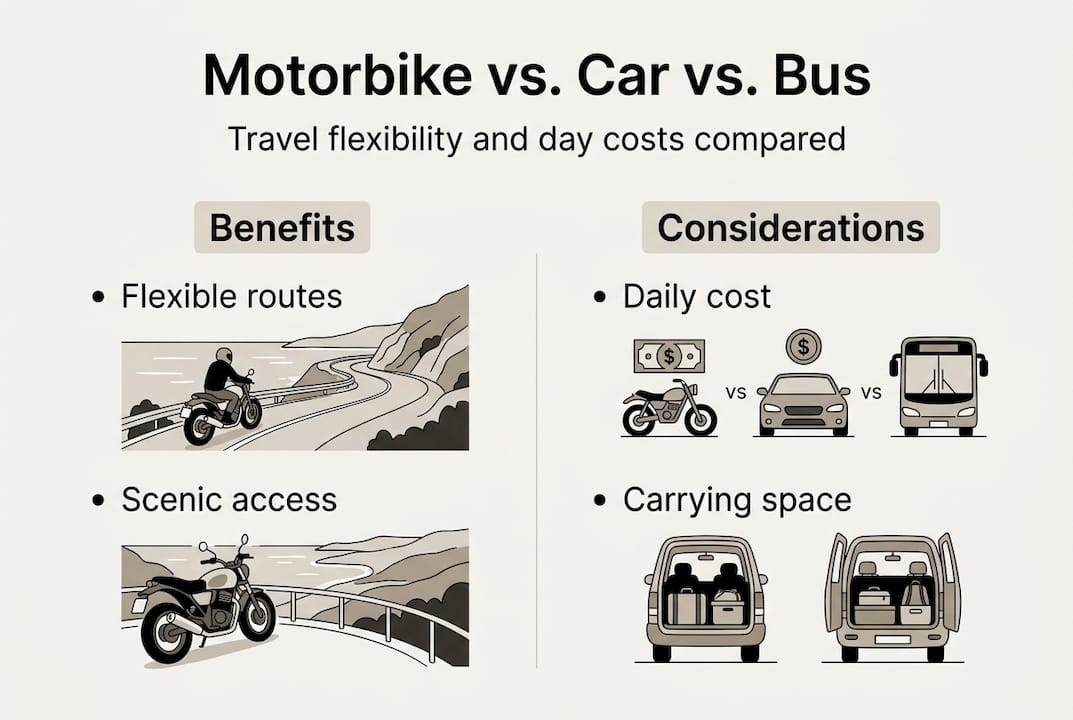
Let's talk money. A KTEL bus ticket from Thessaloniki to Sithonia towns costs around 12 to 15 EUR one way. That sounds cheap until you factor in the fixed schedule, the stops you cannot make, and the beaches you will never reach. A daily motorbike rental typically runs between 25 and 50 EUR depending on the model, which sounds like more until you realize you are buying total freedom for the day.
Public transport works well for getting between major towns but falls apart the moment you want to go anywhere interesting. A car offers more flexibility than a bus, but rental costs, fuel, tolls, and parking fees in beach areas push the daily total well above what a motorbike costs. For solo travelers or couples, the math almost always favors two wheels.
Who motorbike travel suits best:
- Solo adventurers who want to set their own pace
- Couples looking for a shared experience on scenic coastal roads
- Travelers staying multiple nights who want to cover different areas each day
- Anyone who finds sitting on a bus or in traffic genuinely frustrating
Cost and flexibility comparison
| Option | Avg. daily cost | Route flexibility | Best for |
|---|---|---|---|
| Motorbike rental | 25 to 50 EUR | Full | Solos, couples |
| Car rental | 45 to 80 EUR | High | Families, groups |
| KTEL bus | 12 to 15 EUR (one way) | Fixed stops | Budget, major towns |
Check the motorbike rental guide for current pricing, or browse the available fleet to find the right model for your trip.
Pro Tip: If you are riding as a couple, a 125cc or 150cc scooter handles two riders comfortably on flat coastal roads. For longer distances or hilly terrain, step up to a 300cc or 400cc model for a more relaxed ride.
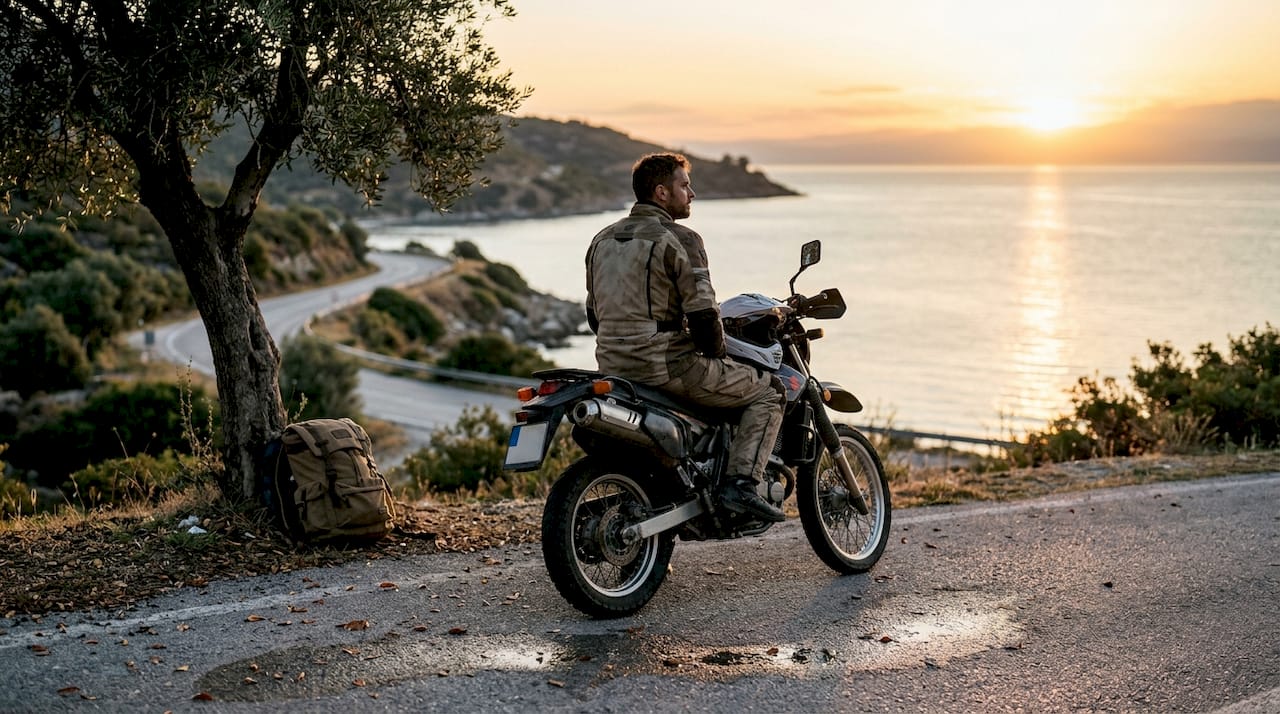
The fun factor is real and worth saying plainly. Riding a coastal road at sunrise with the Aegean on your left and pine trees on your right is not the same as watching it through a car window. The sensory experience of motorbike travel, the smell of the sea, the warmth of the sun, the sound of the engine on an empty road, is a core part of what makes this region worth visiting.
Smart tips and essential prep for a smooth exploration
Good preparation makes the difference between a memorable ride and an avoidable headache. Here are the five steps that matter most before you head out.
- Check your license: Confirm your license category covers the bike you are renting. A standard car license covers 50cc scooters in Greece. Anything larger requires an A-category motorcycle license.
- Inspect the bike before you ride: Check tires, brakes, lights, and mirrors at pickup. Document any existing damage with photos before signing anything.
- Pack light and smart: A small backpack or tank bag works well. Overpacking throws off the bike's balance and makes you uncomfortable on longer rides.
- Plan your route in sections: Halkidiki is bigger than it looks on a map. Break your route into morning and afternoon segments with a lunch stop built in.
- Ride in the morning: Heat builds fast in summer. Starting early means cooler temperatures, less traffic, and better light for photography.
Rural gravel patches appear after winter, especially on secondary roads. Slow down on any road that transitions from asphalt to loose surface. Helmet and legal compliance are not optional, and local police do check.
For coastal roads in Sithonia, a scooter or ATV is genuinely the recommended option. The roads are manageable but narrow in places, and a lighter, more maneuverable bike makes the experience more enjoyable. See the bike detail page for specs on each model in the fleet.
Essential gear to bring or rent:
- Full-face or open-face helmet (mandatory)
- Lightweight jacket with elbow and back protection
- Sunglasses or visor for glare on coastal roads
- Water and snacks for remote stretches
- Offline maps downloaded before you leave cell coverage
Pro Tip: Download an offline map of Halkidiki before you leave Thessaloniki. Cell coverage drops in several inland areas of Sithonia, and a downloaded map will save you from getting turned around on unmarked forest roads.
The real adventure: why motorbike exploration transforms your journey
Here is the part most travel guides skip. The practical case for motorbikes, the cost savings, the access, the flexibility, is real and well-documented. But the deeper reason to ride is harder to quantify.
When you travel by motorbike, you are not insulated from the place you are visiting. You feel the temperature change as you drop into a valley. You smell the thyme on the hillside. You stop because something caught your eye, not because a schedule allowed it. That kind of immersion is what separates a trip you remember from one you forget.
The discomfort is part of it too. A light rain on the road to Toroni, a wrong turn that leads to a better beach, a conversation with a local who saw you pull over to check the map. These moments do not happen in a rental car with the air conditioning on. Motorbike travel creates conditions for genuine experience, and that is not a small thing when you have limited days in a place this beautiful.
We have watched travelers leave Thessaloniki skeptical and return converted. The ride does that.
Ready to discover Thessaloniki and Halkidiki on two wheels?
If this guide has you thinking seriously about a motorbike trip, the next step is straightforward. MotoRent makes booking simple, with a fully insured fleet, transparent daily rates, and 24/7 support if you need help on the road.
See scooter rental guide to match the right bike to your route and experience level. Ready to pick your model? Browse our fleet to see everything available in Thessaloniki right now. Once you have decided, manage your bookings online in minutes. No waiting, no paperwork surprises. Just a confirmed rental and an open road waiting for you.
Frequently asked questions
Is it safe to ride a motorbike around Thessaloniki and Halkidiki?
Greek touring roads are well-maintained with low traffic outside major cities, making them genuinely enjoyable for riders of most experience levels. Following local rules and wearing proper gear keeps the risk low.
Do I need to wear a helmet, and what are the legal requirements?
Helmet use is mandatory for all riders, with strict enforcement and a 350 EUR fine for violations. Zero alcohol tolerance and posted speed limits also apply to all riders in Greece.
How much does it cost to rent a motorbike versus public transport?
Motorbike rentals offer far greater flexibility for 25 to 50 EUR per day, while KTEL buses run about 12 to 15 EUR one way to Sithonia towns but only reach fixed stops on a fixed schedule.
Is motorbike exploration suitable for families or groups?
Motorbikes are best for solo travelers or couples. Families and groups are better served by a car rental for comfort, luggage space, and safety with multiple passengers.
What are practical tips for a safe and smooth exploration?
Carry essential safety gear, download offline maps before leaving cell coverage, and never skip the helmet. Helmet and legal compliance are mandatory, and a scooter or ATV is the recommended choice for Sithonia's coastal roads.
Recommended
- Scooter Rental Thessaloniki-Motorbike Rentals Thessaloniki | Motorcycle Rentals Thessaloniki
- Scooter Rental Thessaloniki | Motorbike Rental Thessaloniki | MotoRent Thessaloniki | MotoRent
- Ενοικίαση Μηχανής Θεσσαλονίκη - Ενοικίαση Σκούτερ & Μοτοσυκλέτας | MotoRent
- BikeDetail | Scouter & Motorbike Rental Thessaloniki