
TL;DR:
- Motorcycle rental offers affordable, flexible transportation ideal for exploring Thessaloniki and Halkidiki.
- Choosing between local shops and peer-to-peer platforms depends on insurance needs and support preferences.
- Proper licensing, safety gear, and careful documentation help ensure a smooth and enjoyable riding experience.
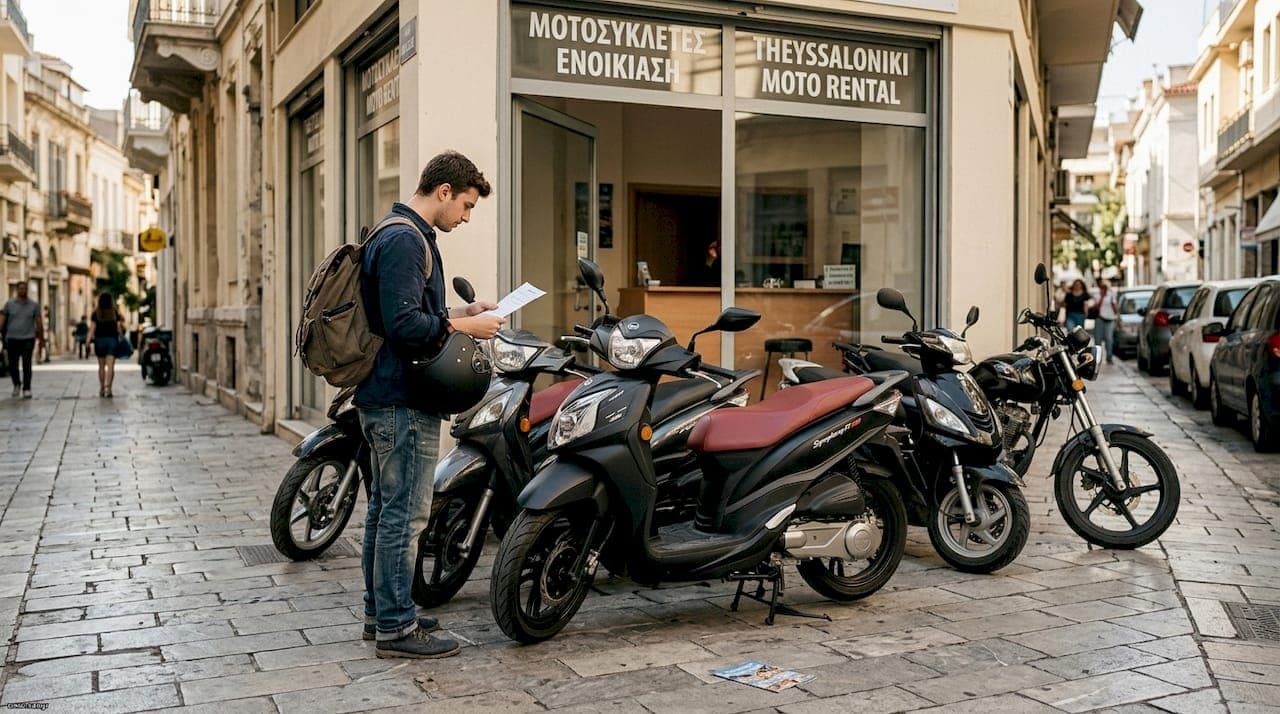
Most travelers landing in Thessaloniki head straight for a car rental desk. It feels safe, familiar, and logical. But here's the thing: a car is often the worst way to experience this city and the Halkidiki peninsula. Narrow coastal roads, packed summer parking lots, and winding village paths are where motorcycles and scooters genuinely shine. Renting a two-wheeler is simpler than most people expect, and it can cut your transportation costs dramatically while opening up routes no sedan can reach. This guide breaks down exactly what motorcycle rental means, how it works locally, and what you need to know before you book.
Table of Contents
- What is motorcycle rental?
- Types of motorcycle rental and how to choose
- What's included in a typical rental
- Requirements, insurance, and safety tips
- Frequently asked practical questions
- Why motorcycle rentals redefine travel in Thessaloniki and Halkidiki
- Explore Thessaloniki and Halkidiki on two wheels
- Frequently asked questions
Key Takeaways
| Point | Details |
|---|---|
| What is motorcycle rental | Renting a motorcycle or scooter gives travelers flexible, affordable transport in Thessaloniki and Halkidiki. |
| Rental types compared | Traditional providers offer insurance and support, while peer-to-peer can be cheaper but riskier for tourists. |
| Requirements and safety | You need a valid license, likely an IDP, and should always confirm what gear and insurance are included. |
| Smart booking tips | Booking early, bringing the right documents, and clarifying policies helps avoid problems and save money. |
What is motorcycle rental?
Motorcycle rental is a short-term agreement where you pay a daily or weekly fee to use a motorcycle, scooter, or moped owned by a rental company or private individual. In Thessaloniki and Halkidiki, this typically means choosing between a scooter (automatic, 50cc to 125cc, ideal for city riding) or a motorbike (manual or semi-automatic, 125cc and above, better for longer coastal routes).
Here's how the process usually works locally:
- Book online or in person at a rental shop or through a platform
- Present your license, passport, and deposit at pickup
- Receive a briefing on the bike, controls, and any territory limits
- Ride freely within the agreed zone and duration
- Return the bike at the agreed time and location, fueled up
There are two main rental models. Traditional local shops, like those found across Thessaloniki's center and in Halkidiki resort towns, offer face-to-face service, included insurance, and on-call support. Peer-to-peer platforms connect you directly with private owners, which can be cheaper but often means less coverage and no backup if something goes wrong. As noted in motorcycle rental site comparisons, peer-to-peer is cheaper but riskier, while traditional shops offer insurance and support with more fixed terms.
Compared to car rental, motorcycles win on cost, parking, and flexibility for solo travelers or couples. Cars make more sense for families or groups carrying lots of luggage. Understanding the motorcycle rental cost breakdown helps you see just how affordable two wheels can be.
Types of motorcycle rental and how to choose
Not all rentals are created equal. Choosing the right type can mean the difference between a smooth trip and a stressful one.
| Feature | Local rental shop | Peer-to-peer platform |
|---|---|---|
| Insurance included | Usually yes | Often limited or extra |
| After-hours support | Common | Rare |
| Gear provided | Helmet standard | Varies by owner |
| Cost | Moderate | Lower upfront |
| Accountability | High | Variable |
Local shops in Thessaloniki and Halkidiki generally offer the most reliable experience for tourists. You get a maintained bike, a helmet, basic insurance, and someone to call if things go sideways. Peer-to-peer can work well for experienced riders who know what questions to ask, but for most visitors, the support structure of a local shop is worth the slightly higher daily rate.
Here's how to choose the right option for your trip:
- Define your route. City only? Go with a scooter from a local shop. Coastal peninsula exploration? Consider a motorbike with higher engine capacity.
- Check insurance terms. Confirm what damage scenarios are covered before signing anything.
- Ask about after-hours support. A flat tire at 9 PM on a Halkidiki beach road needs a phone number that actually answers.
- Compare daily rates vs. weekly rates. Longer rentals almost always come with discounts.
- Read reviews. Real traveler feedback reveals service quality that no brochure will tell you.
For solo riders or couples, the motorbike vs car guide makes a compelling case for two wheels on cost and access. And if you want to understand the full experience, the benefits of motorbike exploration in this region go well beyond just saving money.
Pro Tip: Always ask whether the rental includes a second helmet. If you're riding with a passenger, many shops charge extra for it, and you don't want to find out at pickup.
What's included in a typical rental
This is where many first-time renters get surprised. What's included varies more than you'd expect, so knowing the standard package helps you compare providers fairly.
Typical inclusions at Thessaloniki rental shops:
- Helmet (one, sometimes two)
- Basic third-party liability insurance
- A roadside contact number
- Lock or chain
- Full tank of fuel at pickup
Common exclusions:
- Collision damage waiver (CDW) upgrades
- Theft protection beyond basic terms
- Riding gear like jackets or gloves
- GPS or phone mounts
- Fuel for return
| Item | Typically included | Usually extra |
|---|---|---|
| Helmet | Yes | Second helmet sometimes |
| Basic insurance | Yes | CDW upgrade |
| Roadside support | Yes | 24/7 coverage varies |
| Riding jacket | No | Available for fee |
| GPS device | No | Rentable add-on |
Insurance is the most important thing to clarify. As local shops vs peer-to-peer comparisons show, traditional rental shops typically include more insurance coverage than peer-to-peer arrangements, but even shop policies have limits. Always read the damage liability cap before you ride.
A helmet is mandatory by law in Greece, so every legitimate shop will provide one. If a rental doesn't include a helmet, that's a red flag. Review the full scooter insurance guide to understand what coverage you actually need, and check the daily rental guide for a breakdown of what a standard day package looks like in 2026.
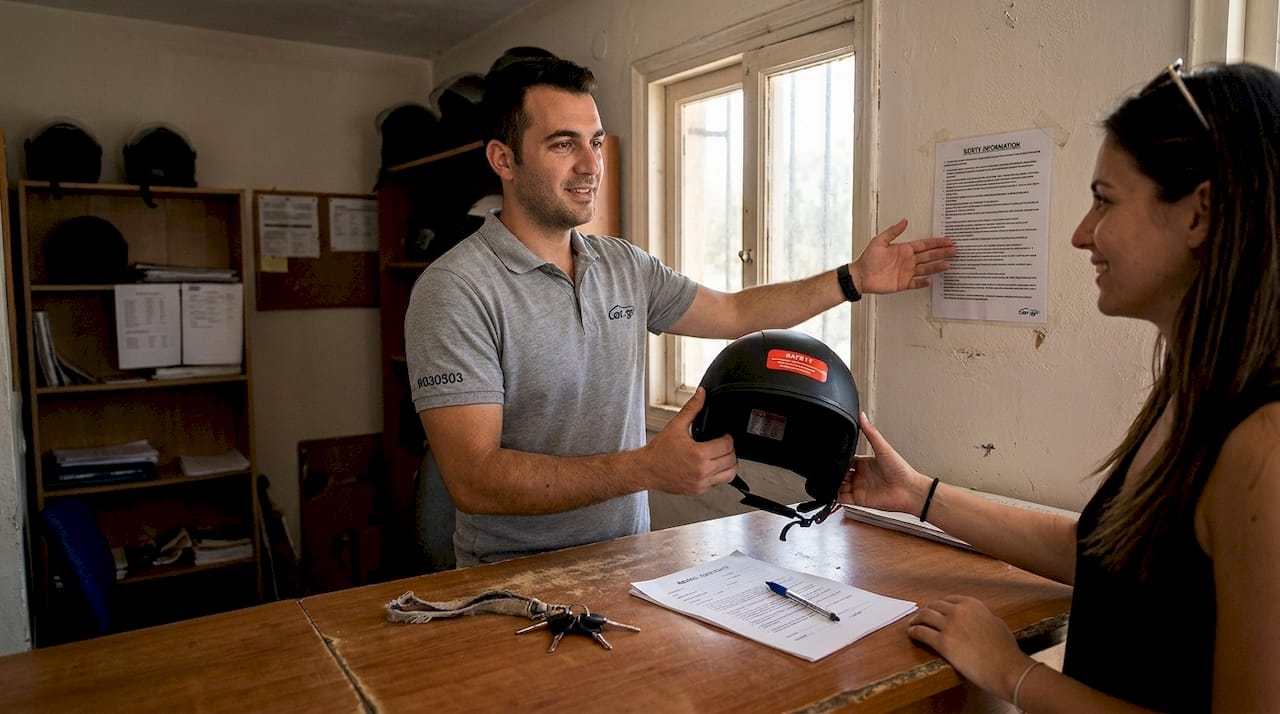
In peak summer months, over 60% of road incidents involving tourists in Greece relate to unfamiliar road surfaces and inadequate protective gear. Renting a jacket isn't just comfort, it's smart risk management.
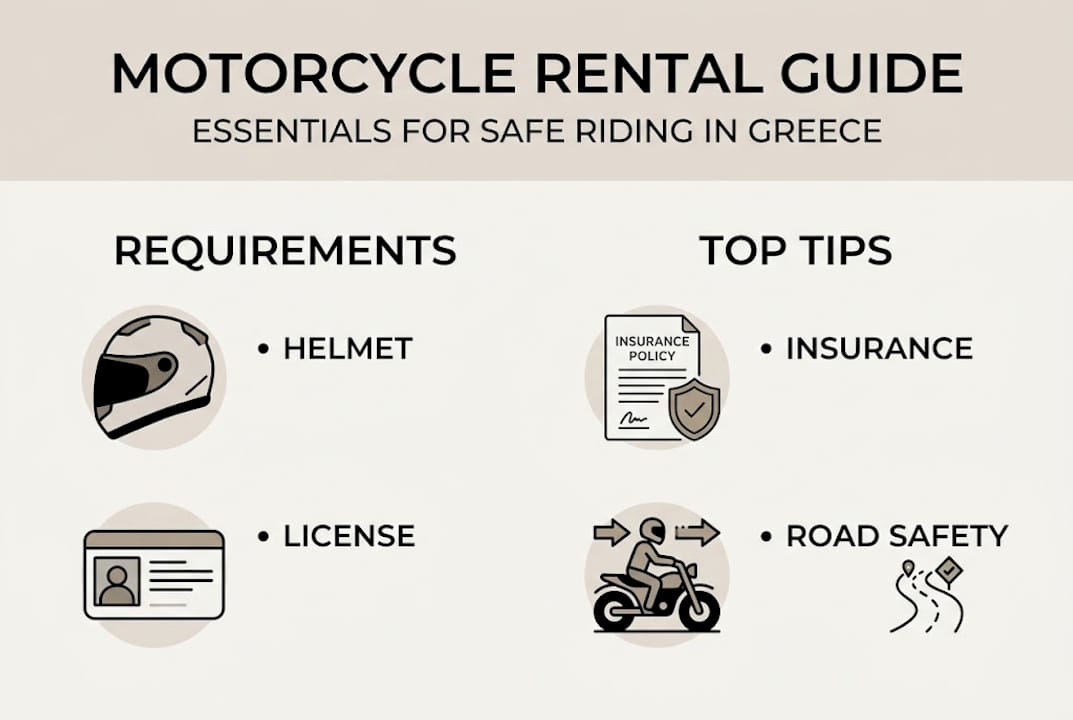
Requirements, insurance, and safety tips
Greece has specific rules for motorcycle rentals, and ignoring them can result in fines or voided insurance. Here's what you need to have ready.
Document checklist for rental pickup:
- Valid motorcycle license from your home country (category A or AM depending on engine size)
- International Driving Permit (IDP) if your license is not in Latin script
- Passport or national ID
- Credit card for the security deposit
- Proof of travel insurance (optional but recommended)
For scooters under 50cc, a regular car license (category B) is sufficient in Greece. For anything above 125cc, you need a full motorcycle license. Always confirm the exact requirement with your chosen provider before arriving.
Riding without the correct license category in Greece not only risks a fine but will void your rental insurance entirely, leaving you personally liable for any damage.
Pro Tip: Get your IDP before you leave home. Many countries require you to apply in person at a motor club or licensing office, and it can take several days. Don't leave it to the last minute.
Top safety tips for Thessaloniki and Halkidiki roads:
- Wear a helmet every single ride, no exceptions
- Watch for loose gravel on Halkidiki's rural roads, especially after rain
- Avoid riding at night on unlit coastal roads until you know the area
- Keep your speed down in Thessaloniki's city center where pedestrians step out unexpectedly
- Stay hydrated in summer heat, fatigue affects reaction time significantly
For a smooth pickup experience, the guide on picking up your rental bike walks you through exactly what to expect step by step.
Frequently asked practical questions
Before booking, most travelers have a handful of practical questions that aren't always easy to find answers to. Here are the most common ones.
Minimum rental period: Most shops in Thessaloniki offer a minimum of one day, though some require a two-day minimum during peak July and August season. Always check before booking.
How far in advance should you book? In high season (June through September), popular models sell out fast. Booking at least one week ahead is smart. Two weeks ahead for July and August is safer.
Damage deposits: Expect a refundable deposit between 100 and 300 euros, held on your credit card. As rental site guides note, traditional shops handle deposits more transparently than peer-to-peer arrangements, where disputes can be harder to resolve.
- Deposits are released within 3 to 7 business days of return
- Minor pre-existing damage should be photographed at pickup
- Ask for a written condition report before you ride away
Return location flexibility: Some providers allow different pickup and drop-off points, which is useful if you're riding through Halkidiki and ending in a different town. Expect a small surcharge for this service.
Pro Tip: Take a short video of the entire bike at pickup, including any scratches or dents. This 60-second habit has saved countless travelers from unfair damage charges.
For riders planning more adventurous routes, the adventure rentals guide covers which bikes handle Halkidiki's terrain best.
Why motorcycle rentals redefine travel in Thessaloniki and Halkidiki
Here's an honest take: most travelers who default to cars in this region end up missing the best parts of it. We've seen it repeatedly. A group books an SUV, spends 20 minutes finding parking at Vourvourou, and watches a solo rider on a scooter park in seconds and walk straight to the beach.
Motorcycles don't just save money. They change how you interact with a place. You stop more. You notice more. A coastal road that takes 25 minutes by car becomes a 45-minute ride you actually remember. Thessaloniki's upper city, Ano Poli, is genuinely more enjoyable on a scooter than wedged into a narrow street in a rental car.
First-timers often worry about safety or complexity, and those concerns are valid. But the learning curve for an automatic scooter is genuinely short, and the motorbike benefits in Thessaloniki are not just marketing. They are real, practical advantages that experienced travelers keep coming back for. If you've been on the fence, this region is one of the best places in Europe to try it.
Explore Thessaloniki and Halkidiki on two wheels
You now have a clear picture of what motorcycle rental involves, what to expect, and how to prepare. The next step is finding the right bike for your trip.
At MotoRent, we offer a hand-picked fleet of well-maintained scooters and motorbikes built for exactly this region. Every rental includes insurance, a helmet, and real local support. Whether you want to cruise Thessaloniki's waterfront or ride the full Halkidiki coastline, we've got the right bike waiting. Browse our motorcycle and scooter rental options to find your match, explore our motorcycle fleet to see what's available, or go ahead and rent a scooter or motorbike today and start planning the ride.
Frequently asked questions
Do I need a special license to rent a motorbike in Thessaloniki?
Yes, you need a valid motorcycle license for bikes above 50cc, and most non-EU travelers also need an International Driving Permit to rent legally in Greece.
Is a damage deposit required for motorcycle rental?
Most rental shops require a refundable deposit held by credit card. As traditional shops vs peer-to-peer comparisons show, local shops tend to handle deposit disputes more clearly than private arrangements.
Can I return my rental scooter to a different location?
Some providers do allow different pickup and drop-off locations, but confirm this before booking since an extra fee usually applies.
What's usually included with a rental: insurance and helmet?
Most rentals include a helmet and basic third-party insurance as standard, but always ask about collision coverage upgrades and whether a second helmet is available.