

What is a rental agreement, and what does it cover?
A rental agreement is a legally binding contract between a lessor (the vehicle owner or rental company) and a lessee (you, the renter) that governs the temporary use of a scooter or motorcycle. It spells out exactly who is responsible for what, for how long, and at what cost.
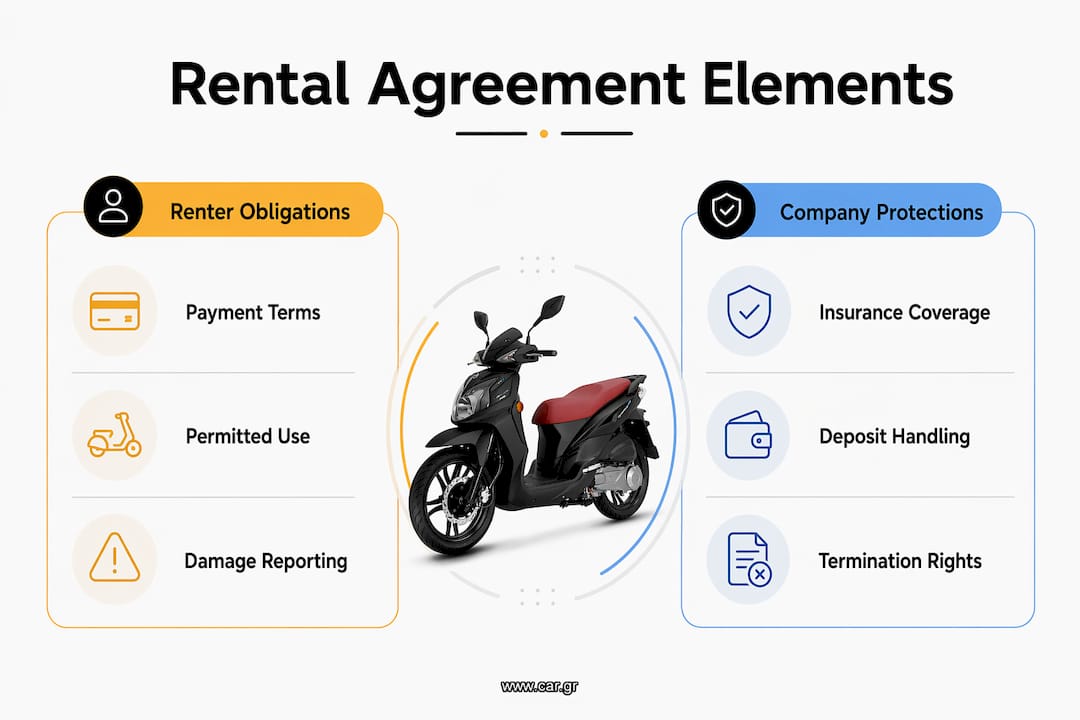
For scooter and motorcycle rentals, a solid agreement covers:
- Parties identified: Full legal names of the rental company and the renter
- Vehicle description: Make, model, year, and VIN or license plate
- Rental period: Start and end dates, or a rolling daily/monthly term
- Payment terms: Daily rate, deposit amount, and accepted payment methods
- Liability clauses: Who pays for damage, theft, or injury
- Termination notice: Typically 30 days or less for short-term vehicle rentals
- Automatic renewal: Most short-term agreements renew automatically unless either party gives written notice
Table of Contents
- Key legal elements in US scooter and motorcycle rental agreements
- How rental agreements differ from lease agreements for scooters
- Why rental agreements protect both you and the rental company
- How Motorent makes rental agreements clear and stress-free
- State-specific regulations that affect your rental agreement
- Termination and cancellation policies in short-term vehicle rentals
- Damage and deposit handling in scooter and motorcycle rentals
- Motorent: clear agreements, quality fleet, no surprises
- FAQ
- Key Takeaways
Key legal elements in US scooter and motorcycle rental agreements
Standard US rental agreements must identify the parties, describe the vehicle, specify the rental period, payment schedule, and assign liability for damages. Beyond those basics, scooter and motorcycle contracts carry provisions you won't find in a typical apartment lease.
Key provisions to look for:
- Permitted use clauses: Many agreements restrict geographic zones, road types (no highways for 50cc scooters), and passenger limits
- Insurance coverage: Whether the rental includes liability coverage or requires your own policy
- Helmet and gear requirements: Some states mandate specific helmet standards in the contract itself
- Age and license requirements: Minimum age (often 21) and valid motorcycle endorsement
- Fuel policy: Return full or pay a refueling fee
- Mileage limits: Some daily rentals cap total miles
Violating a permitted use clause, like riding off-road when the contract prohibits it, can void your insurance coverage entirely and leave you personally liable for any damage.
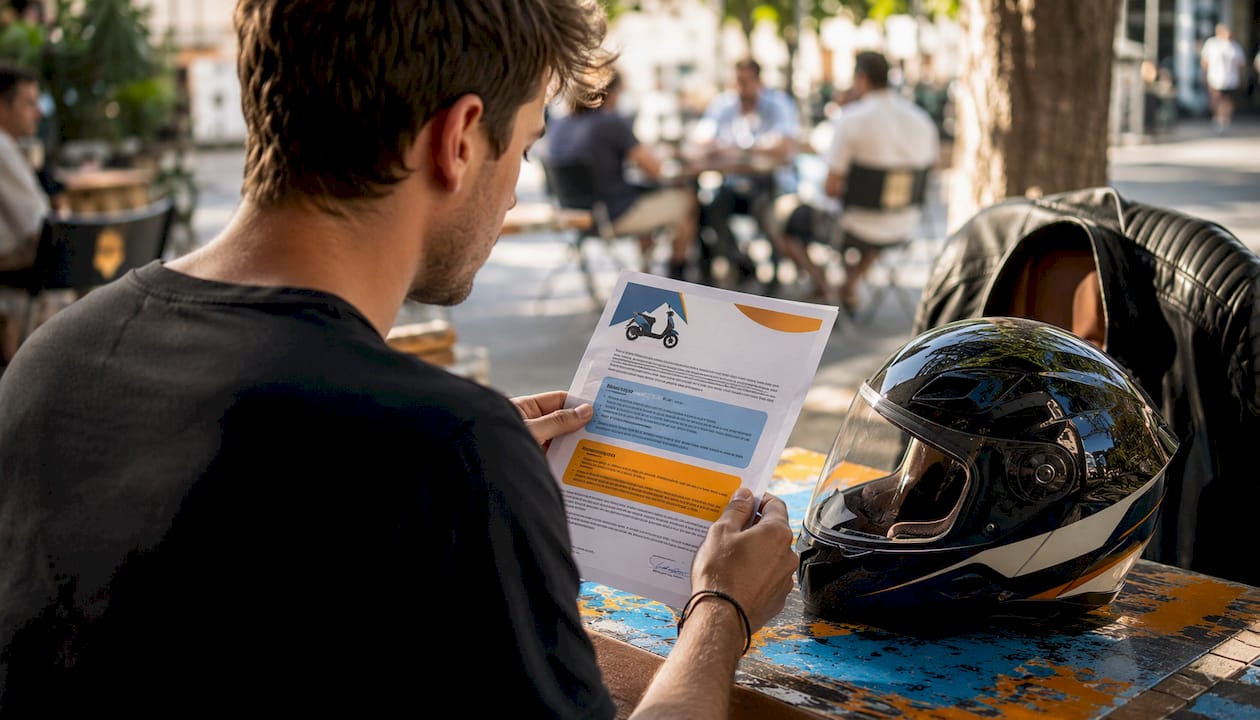
Pro Tip: Always insist on a written rental contract rather than an oral agreement. Verbal agreements are far harder to enforce in court, and without written terms, disputes over damage charges or deposit returns become your word against theirs.
How rental agreements differ from lease agreements for scooters
People use "rental agreement" and "lease" interchangeably, but they are legally distinct. The difference matters when you want flexibility versus stability.
Key distinctions:
- Duration: Rental agreements are short-term and flexible, often daily or month-to-month; leases lock in a fixed term, typically 6–12 months
- Auto-renewal: Rental agreements usually renew automatically; leases generally do not
- Term changes: A rental company can adjust rates or terms with proper written notice on a rolling agreement; a lease locks in terms for the full period
- Commitment level: Leases suit long-term commuters; rental agreements suit tourists and short-term travelers
For scooter and motorcycle rentals, you'll almost always be signing a rental agreement, not a lease. If a document is mislabeled, the actual contract terms control, not the title on the page.
Why rental agreements protect both you and the rental company
Written rental agreements do more than satisfy a legal formality. They set clear expectations on damage responsibility, payment, and what happens when something goes wrong.
For renters, the agreement tells you:
- Exactly what you're paying and when
- What damage you're liable for versus what the company covers
- Your rights if the vehicle breaks down mid-rental
- How to get your deposit back and under what conditions
For rental companies, the agreement protects their asset and limits disputes. A clear contract is the fastest path to resolving a disagreement without lawyers.
Pro Tip: Before you accept the keys, document pre-existing damage with timestamped photos or video on your phone. Walk around the entire vehicle and capture every scratch, dent, and scuff. This evidence is your strongest defense if the company later claims you caused damage that was already there.
Reviewing rental policies in detail before signing takes five minutes and can save you hundreds of dollars.
How Motorent makes rental agreements clear and stress-free
Motorent provides written rental agreements with transparent terms on every booking. No hidden clauses, no surprise fees buried in fine print.
When you rent through Motorent, here's what to do before signing:
- Read the full agreement: Check the permitted use section, geographic limits, and insurance details
- Verify insurance coverage: Confirm whether the rental includes liability protection or if you need supplemental coverage
- Ask about the deposit: Understand the exact amount, how it's held, and the timeline for return
- Inspect the vehicle together: Walk through the scooter or motorcycle with a staff member and note any existing damage on the agreement itself
- Use the 24/7 support line: If anything in the contract is unclear, Motorent's support team can clarify before you sign
Motorent's fleet is fully insured and well-maintained, which means the agreement you sign reflects actual vehicle condition, not a best-case description. For a deeper look at what to check before you ride, the pre-rental inspection guide covers every step.
State-specific regulations that affect your rental agreement
Scooter and motorcycle rental rules vary significantly by state, and those differences show up directly in your contract terms.
A few examples worth knowing:
- California: Helmets are mandatory for all riders; rental agreements must reflect this, and some companies require proof of a valid motorcycle license before handing over keys
- Florida: No universal helmet law for riders over 21 with sufficient insurance, but rental companies often impose their own helmet requirements contractually
- New York: Mopeds under 50cc require registration and insurance; rental agreements in NYC typically include specific borough restrictions
- Washington: Seattle's municipal guidelines directly shape permitted use clauses, including road-type restrictions for smaller-displacement scooters
Always check your state's DMV website for current licensing and insurance requirements before signing. If the agreement contradicts state law, state law wins, but you still need to know which terms are enforceable.
Termination and cancellation policies in short-term vehicle rentals
Short-term scooter and motorcycle rentals handle cancellations differently than long-term leases. Most daily rentals allow cancellation up to 24–48 hours before the start date for a full refund; cancel inside that window and you typically forfeit the deposit or pay a cancellation fee.
For rolling monthly rentals, the standard notice period is 30 days in writing. Miss that window and you're on the hook for another month's payment. Some agreements require notice by a specific day of the month, not just 30 calendar days from whenever you decide to leave.
Read the termination clause carefully. A few things to confirm: whether notice must be written (email usually qualifies), whether there's a penalty for early return on a multi-day booking, and whether the company offers any credit for unused days.
Damage and deposit handling in scooter and motorcycle rentals
Deposits on scooter and motorcycle rentals typically range from one to several days' rental value, held on a credit card authorization rather than an actual charge. The hold releases within a few business days after return, assuming no damage.
When damage does occur, the process matters. Most agreements require you to report any incident immediately, even minor ones. Failing to report damage, even damage you didn't cause, can be treated as an admission of liability under the contract terms.
The agreement should specify: the deductible amount if insurance applies, the process for assessing repair costs, and your right to dispute a damage claim. If the contract is vague on any of these points, ask for clarification in writing before you ride. Understanding motorbike rental agreements in full before you sign is the single best way to avoid a deposit dispute on return.
Motorent: clear agreements, quality fleet, no surprises
Renting a scooter or motorcycle should feel like freedom, not a legal obstacle course.

Motorent offers fully insured scooters and motorcycles with transparent rental agreements that spell out every term before you commit. The fleet is well-maintained, the booking process is online, and 24/7 support means you're never left guessing mid-trip. Whether you're exploring Thessaloniki for a day or spending a week in Halkidiki, Motorent's flexible daily and monthly options fit the trip you're actually taking. Check availability and browse the full fleet to find the right ride and review the agreement terms before you book.
FAQ
What is a rental agreement for a scooter or motorcycle?
A rental agreement is a legally binding short-term contract between a rental company and a renter that defines the vehicle, rental period, payment terms, liability, and termination conditions. It typically renews automatically unless either party gives written notice.
How is a rental agreement different from a lease?
Rental agreements are short-term and auto-renew monthly; leases are fixed-term contracts, usually 6–12 months, with no automatic renewal. For scooter and motorcycle rentals, you'll almost always be signing a rental agreement.
What happens if you violate the permitted use clause?
Violating a permitted use clause, such as riding outside the approved geographic zone or on prohibited road types, typically voids your insurance coverage and makes you personally liable for any resulting damage.
Do I need a written rental agreement, or is a verbal one enough?
Always get a written agreement. Oral rental contracts are significantly harder to enforce in court, and without written terms, disputes over damage charges or deposit returns are nearly impossible to resolve in your favor.
How do I get my deposit back after returning a rental scooter?
Document the vehicle's condition with timestamped photos before and after the rental, return the scooter in the agreed condition, and report any incidents immediately. Most companies release the deposit hold within a few business days of return.
Key Takeaways
A rental agreement for a scooter or motorcycle is a legally binding short-term contract that defines vehicle use, payment, liability, and termination terms, protecting both the renter and the rental company.
| Point | Details |
|---|---|
| Written contracts are non-negotiable | Oral agreements are far harder to enforce; always get terms in writing before you ride. |
| Permitted use clauses carry real risk | Violating geographic or road-type restrictions voids insurance and creates personal liability. |
| Rental vs. lease distinction | Rental agreements are short-term and auto-renewing; leases are fixed-term with no automatic renewal. |
| Document damage before you ride | Timestamped photos of pre-existing damage are your strongest defense against unfair deposit deductions. |
| Motorent simplifies the process | Motorent provides transparent, written agreements with insured vehicles and 24/7 support for every rental. |