

TL;DR:
- An unlimited mileage rental charges a flat rate for the entire rental period with no extra cost per mile. It is ideal for long, flexible trips or multiple destinations, saving renters from unexpected charges. Always verify the specific vehicle category and route restrictions, as luxury, electric, or cross-border rentals may have mileage caps despite the "unlimited" label.
An unlimited mileage rental is defined as a vehicle rental agreement where you pay a single flat rate for the entire rental period, with no extra charges per mile driven. This structure is the standard in most US and UK rental markets, and it has become the most requested rental feature globally because it removes cost uncertainty from every trip. Whether you are planning a road trip across multiple cities or simply want to avoid watching the odometer, understanding what is an unlimited mileage rental before you book saves you money and stress. This guide covers how it works, when it makes sense, and what the fine print actually says.
What is an unlimited mileage rental and how does it work?
An unlimited mileage rental works by charging you one daily or weekly rate that covers every mile you drive, no matter how far. You pick up the vehicle, drive your route, and return it without any per-mile calculation at checkout. The rental agreement specifies this policy explicitly, usually under a "mileage" or "distance" clause.
The practical benefit is significant for road trips and multi-destination itineraries. If you drive 800 miles over a four-day rental, you pay the same as someone who drives 200 miles. Unlimited mileage is cost-effective for long-distance travel precisely because the per-mile risk disappears entirely.
Limited mileage rentals work differently. They set a daily or total mileage cap, often 100–200 miles per day, and charge a per-mile fee for every mile above that cap. Those fees typically range from $0.10 to $0.30 per mile, which adds up fast on a long trip.
Here is when unlimited mileage makes the most sense:
- Road trips covering multiple cities or regions where total distance is hard to predict in advance.
- Spontaneous or flexible itineraries where you might extend a day trip without warning.
- One-way trips between distant locations where mileage accumulates quickly.
- Business travel with variable daily routes where driving patterns shift day to day.
- Vacation rentals in rural or spread-out areas where attractions are far apart.
Pro Tip: Read the mileage clause in your rental contract before signing. The word "unlimited" should appear explicitly. If the contract lists a daily mileage allowance instead, you are on a limited plan regardless of what was advertised.
What vehicles and locations have mileage restrictions?
Major rental agencies include unlimited mileage on most standard vehicles, but they exclude luxury cars, electric vehicles, and commercial vans. This is one of the most common surprises renters encounter. The unlimited label applies to the fleet category, not every single vehicle in it.
The exclusions follow a clear pattern:
- Luxury and premium vehicles (sports cars, high-end SUVs) frequently carry daily mileage caps of 150–250 miles even when standard cars in the same fleet are uncapped.
- Electric vehicles are capped to protect battery range and charging logistics. Luxury and electric vehicles often carry mileage caps even when the agency's standard policy is unlimited.
- Cargo vans and large passenger vans are treated as commercial vehicles and often fall under separate mileage terms.
- One-way rentals frequently include mileage caps or route restrictions, even when a round-trip rental with the same agency would be unlimited.
- Cross-border trips trigger geographic restrictions. Driving a rental from the US into Canada or Mexico, for example, often voids the unlimited mileage policy entirely. Geographic limits and one-way mileage caps commonly apply despite the "unlimited" label on the booking page.
- Promotional rates and discount codes sometimes come with hidden mileage caps that standard rates do not carry. Always check whether a deal changes the mileage terms.
The safest approach is to confirm the mileage policy for your specific vehicle category, not just the general policy listed on the agency's homepage.
Unlimited mileage vs limited mileage rental: which costs less?
The answer depends entirely on how far you plan to drive. Unlimited mileage rentals often have higher base rates, so for short, predictable trips, a limited mileage plan can be cheaper. For longer or unpredictable trips, unlimited wins clearly.

Here is a practical example. Suppose a standard sedan rents for $45 per day with unlimited mileage, or $30 per day with a 100-mile daily cap and a $0.20 per-mile overage fee. If you drive 80 miles per day, the limited plan costs $30. If you drive 200 miles per day, the limited plan costs $30 plus $20 in overage fees, totaling $50. The unlimited plan saves you $5 per day on a heavy-driving itinerary.
| Feature | Unlimited mileage | Limited mileage |
|---|---|---|
| Base daily rate | Higher | Lower |
| Overage risk | None | High on long trips |
| Budget predictability | Excellent | Depends on driving habits |
| Best for | Road trips, flexible plans | City driving, short trips |
| Psychological comfort | High | Low if plans change |
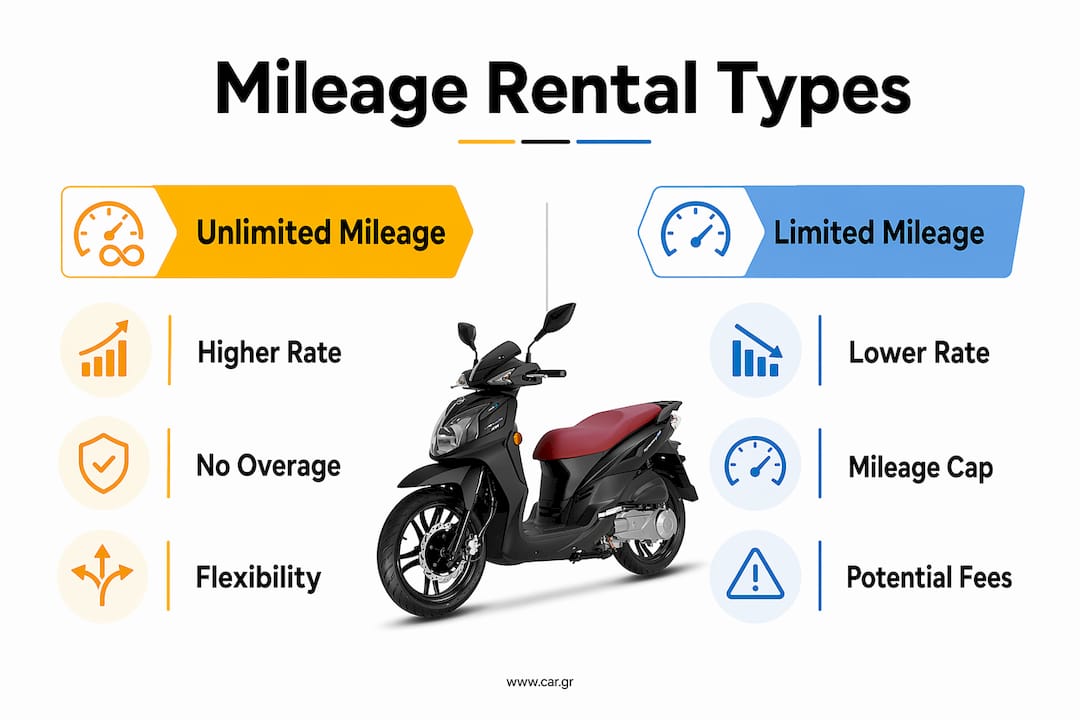
Unlimited mileage provides psychological freedom, allowing spontaneous travel without worry about added costs. That freedom has real value when your itinerary is fluid. A detour to a scenic route or an unplanned overnight stop does not trigger a financial penalty.
Budget operators frequently use mileage caps to advertise low daily rates, then offer an upgrade to unlimited mileage at the counter for an extra daily fee. That upgrade is often worth taking if your trip covers more than 150 miles per day.
Pro Tip: Before booking, estimate your total expected mileage for the trip. Divide it by the number of rental days. If your daily average exceeds the cap on a limited plan, the unlimited option is almost always cheaper once you factor in overage fees.
How to find and confirm unlimited mileage rentals
Short-term rentals usually include unlimited mileage by default for standard vehicles, but confirmation is always necessary. The booking page may say "unlimited mileage" in the highlights, but the actual terms live in the rental agreement.
Follow these steps to confirm before you commit:
- Check the vehicle category page, not just the homepage. Mileage policies are often listed at the vehicle level, not the agency level.
- Read the rental agreement mileage clause before signing. Look for the words "unlimited mileage" or "no mileage cap" explicitly stated.
- Ask at the booking stage, either online via chat or by phone. Get the answer in writing if possible.
- Verify again at the counter when you pick up the vehicle. Agents can confirm the mileage terms printed on your contract.
- Watch for promotional restrictions. A discounted weekend rate may include a mileage cap that the standard rate does not. Read the promotion's terms separately.
- Check one-way trip policies independently. If you are dropping the vehicle at a different location, confirm whether the mileage policy changes for that trip type.
Understanding rental agreement mileage terms before you sign is the single most effective way to avoid unexpected charges. A two-minute review of the contract saves you from a surprise bill at return.
Common pitfalls renters make with unlimited mileage plans
The most frequent mistake is assuming that "unlimited mileage" applies to every vehicle in a fleet. A common renter mistake is assuming a uniform mileage policy applies to all vehicles, which leads to unexpected fees at return. This happens most often when renters upgrade their vehicle at the counter without checking whether the new category carries the same mileage terms.
Here are the pitfalls to avoid:
- Upgrading your vehicle class without confirming mileage terms. A free upgrade from a compact to an SUV sounds great until you realize the SUV has a 200-mile daily cap.
- Booking a promotional rate without reading the mileage clause. Discounts often come with mileage restrictions that standard rates do not carry.
- Assuming cross-border travel is covered. Geographic restrictions are common and often not highlighted during booking.
- Ignoring fuel and insurance policies alongside mileage. A rental with unlimited mileage but a full-to-empty fuel policy can still produce a large unexpected charge.
- Not recording the odometer at pickup and return. Disputes about mileage are easier to resolve when you have photos of the odometer at both ends of the trip.
Renters should keep mileage records to avoid disputes and confirm mileage policies at booking to prevent surprises. A quick photo of the odometer when you pick up and drop off the vehicle costs nothing and protects you completely.
Pro Tip: If you plan a cross-border trip or a one-way drop-off, ask about mileage restrictions for those specific conditions before you book, not at the counter. Policies for these trips are often different from standard rentals.
Key Takeaways
An unlimited mileage rental is the right choice when your trip is long, flexible, or unpredictable, but confirming the exact terms for your vehicle category and route is non-negotiable.
| Point | Details |
|---|---|
| Flat rate, no overage | Unlimited mileage means one fixed rate covers all miles, with no per-mile fees. |
| Vehicle exceptions apply | Luxury, electric, and commercial vehicles often carry mileage caps even under unlimited policies. |
| Geographic restrictions exist | Cross-border trips and one-way rentals frequently have separate mileage conditions. |
| Cost comparison matters | Calculate your expected daily mileage before choosing between unlimited and limited plans. |
| Always confirm in writing | Read the mileage clause in the rental agreement before signing, not after. |
Why unlimited mileage is worth it more often than renters expect
Travelers consistently underestimate how quickly miles accumulate on a trip. I have seen renters book a limited mileage plan for what they thought was a simple three-day city rental, only to add a day trip to a coastal town and return the vehicle 180 miles over their cap. The overage fee wiped out every dollar they saved on the lower daily rate.
The real value of unlimited mileage is not just financial. It changes how you travel. When you are not watching the odometer, you take the scenic route. You stop at the unexpected roadside market. You extend the drive because the weather is perfect. That kind of freedom is genuinely difficult to put a price on, and most renters only recognize it after they have experienced a limited plan that penalized them for being spontaneous.
My honest advice: if your trip involves any uncertainty at all, book the unlimited option. The higher base rate is almost always justified once you account for the real-world tendency to drive more than planned. The one exception is a purely urban rental where you know you will park the car and walk most of the time. In that case, a limited plan with a low daily cap is the smarter financial choice.
Read the fine print every time. The word "unlimited" in a headline does not guarantee unlimited mileage on your specific vehicle, your specific route, or your specific promotion. Two minutes with the contract protects you from the most common and most avoidable rental surprise.
— KONSTANTINOS
Motorent's flexible rental options for travelers in Thessaloniki
Travelers exploring Thessaloniki and Halkidiki need a rental that matches their pace, not a contract that penalizes them for going further.

Motorent offers a fleet of scooters and motorcycles built for exactly this kind of travel, with flexible daily and monthly rental durations, fully insured vehicles, and 24/7 customer support. Every rental comes with transparent pricing so you know what you are paying before you ride. If you want to understand how scooter rental pricing works before you book, Motorent's guides walk you through the details clearly. Ready to plan your trip? Visit the Motorent rental guide to browse available vehicles and book with confidence.
FAQ
What does unlimited mileage mean in a rental?
Unlimited mileage means you pay a flat rental rate with no extra charges per mile driven. You can drive any distance during the rental period without incurring overage fees.
Is unlimited mileage always included in car rentals?
Short-term rentals usually include unlimited mileage for standard vehicles, but luxury, electric, and commercial vehicles often have caps. Always confirm the mileage terms for your specific vehicle category.
When is a limited mileage rental a better choice?
A limited mileage rental costs less when your total daily driving stays well below the mileage cap. It suits urban trips or short, predictable routes where you know the distance in advance.
Do unlimited mileage rentals cover cross-border trips?
Not automatically. Geographic restrictions commonly apply to cross-border travel even when the standard rental policy is unlimited. Confirm cross-border mileage terms separately before your trip.
How do I confirm unlimited mileage before booking?
Read the mileage clause in the rental agreement and ask the agency directly at the booking stage. Confirm again at the counter when you pick up the vehicle to make sure the terms match what was advertised.