
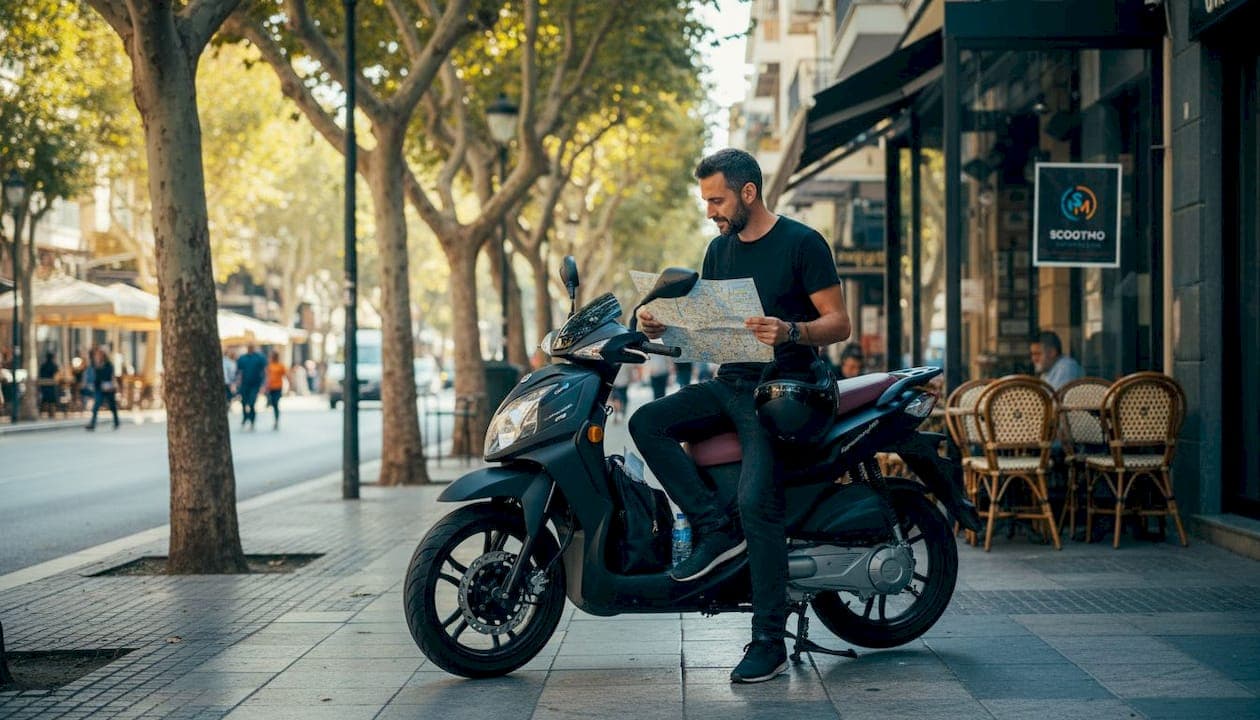
TL;DR:
- Scooter accidents in Greece are rising, especially among inexperienced riders unfamiliar with local roads.
- Proper licensing, insurance, and wearing full protective gear are essential for safe riding.
- Choose the right scooter type and follow safe riding habits to avoid common hazards on Greek roads.
Riding a scooter through Thessaloniki's buzzing waterfront or along the pine-lined coastline of Halkidiki is one of the best ways to experience northern Greece on your own schedule. But freedom on two wheels comes with real risk. Greece recorded 109 e-scooter accidents in 2025, including 2 fatalities and 4 serious injuries, with another 17 accidents already logged in early 2026. Those numbers are a wake-up call, not a reason to skip the experience. The tips in this guide will help you ride with confidence, stay legal, and come home with great memories instead of a trip to the emergency room.
Table of Contents
- Understand local scooter risks and regulations
- Master safe riding habits for city and scenic roads
- Choose the safest scooter for your adventure
- Gear up: Essential protection for every rider
- Our take: What tourists usually miss about scooter safety
- Find your safest ride with MotoRent Thessaloniki
- Frequently asked questions
Key Takeaways
| Point | Details |
|---|---|
| Know local laws | Understand Greece's helmet and license rules before riding any rental scooter. |
| Adapt your riding | Adjust riding habits for Thessaloniki traffic and rural roads to reduce accident risk. |
| Pick trusted rentals | Choose regulated rental shops and check your scooter's condition to stay safe. |
| Gear up effectively | Always wear helmets and recommended protection to prevent serious injuries. |
Understand local scooter risks and regulations
Scooter travel in Greece is popular, affordable, and genuinely thrilling. It is also misunderstood by a surprising number of tourists who assume that renting a scooter works the same way it does back home. It does not.
The accident trend is real and rising. The 109 e-scooter accidents in 2025 are not just a number. They represent a pattern of growing adoption by tourists who lack local road knowledge. Many of those incidents involved first-time or infrequent riders who underestimated how different Greek roads feel compared to what they are used to. Thessaloniki in particular has a dense, fast-moving urban core where taxis, delivery bikes, and pedestrians share space with very little predictability.
What the law actually requires from you:
- A valid driver's license that covers two-wheeled vehicles. In many countries, a standard car license covers scooters up to 50cc. Above that threshold, you need a specific motorcycle license.
- An International Driving Permit (IDP) if your home license is not in the Latin alphabet. Many tourists skip this step and only find out it is required when something goes wrong.
- Helmet use is mandatory for all riders and passengers. No exceptions.
- The scooter must be insured. Confirming scooter insurance coverage before you ride is something many visitors overlook until they need to file a claim.
- Some pedestrian zones in central Thessaloniki restrict motorized two-wheelers. Riding into these areas risks a fine and an impounded vehicle.
The most common regulatory mistakes tourists make are riding a scooter with only a car license when the engine size requires more, skipping the IDP, and assuming verbal assurances from an informal rental operator count as insurance coverage. None of those assumptions hold up if a police officer stops you or if you are involved in a collision.
Understanding the full rental regulations specific to Thessaloniki and Halkidiki before you book saves you from very avoidable problems. Greek traffic authorities have increased enforcement in tourist areas, and fines for unlicensed or uninsured riding can run into hundreds of euros.
What causes most accidents here specifically?
Road surfaces in Greece vary dramatically within a very short distance. A smooth coastal road can suddenly give way to crumbling asphalt at the edge of a village. Heat causes tar to soften in summer, making surfaces slippery. Drainage can be poor, meaning a short rain shower leaves oily puddles exactly where you need to brake. Add in the driving culture, where lane discipline is flexible and horn use replaces signaling, and you have a recipe for surprises if you are not prepared.
Master safe riding habits for city and scenic roads
Knowing the rules is only half of staying safe. What you actually do on the scooter matters just as much. Thessaloniki and Halkidiki present two very different riding environments, and each one demands its own set of habits.
Riding in Thessaloniki's city center means dealing with heavy, unpredictable traffic. Cars double-park on narrow streets. Delivery scooters emerge from side alleys without warning. Taxis brake hard and often. The instinct for many visitors is to weave and accelerate to keep up with local riders. That instinct is wrong. Local riders have years of pattern recognition built into their reactions. You do not. Matching their speed without matching their experience puts you in their risk zone without their ability to respond.

The smarter approach is to ride in a visible lane position, never tucking in too close behind larger vehicles where you disappear from a driver's mirrors. Give yourself two to three times the braking distance you think you need. Thessaloniki's older roads have painted crosswalks and metal manhole covers that become extremely slippery when wet. Avoid braking hard on them.
Riding the scenic roads of Halkidiki feels like a reward after the city. The three peninsulas, Kassandra, Sithonia, and Athos, offer some of the most beautiful coastal riding in Europe. But the roads carry their own hazards that surprise visitors every season.
Here is a simple numbered approach to managing Halkidiki's specific challenges:
- Scan well ahead. Goats, dogs, and cats routinely cross rural roads, especially near villages. A goat appearing around a blind corner at 60 km/h gives you almost no reaction time.
- Respect gravel and loose surfaces. Gravel patches at road edges and potholes on rural routes are common after winter. Lean your scooter into curves before you see the surface, not after.
- Use both brakes smoothly and progressively. Grabbing only the front brake during a turn is how most single-vehicle accidents happen. Apply front and rear brakes together, gently, before the turn rather than during it.
- Watch for oil and diesel spills near port areas, petrol stations, and village roads where trucks pass regularly. These patches are invisible in dry conditions but feel like ice under your tires.
- Slow down through villages. Speed limits drop to 30 or 50 km/h through settlements, and pedestrians including elderly residents and small children treat the road as shared space.
Pro Tip: If you are new to scooter travel, review beginner riding techniques before you rent. Even experienced car drivers benefit from a quick refresh on two-wheel handling dynamics, particularly when it comes to countersteering and weight distribution on curves.
Carrying the right gear is also part of safe habits. Before any ride, check out this essential gear checklist to make sure you are not missing anything critical.
Choose the safest scooter for your adventure
The scooter you rent directly affects your safety. Not all machines are equal, and not all rental operators maintain their fleets to the same standard.
Electric vs. gas scooters: what actually matters for safety
Electric scooters (e-scooters) are quiet, easy to throttle, and popular with urban tourists. For flat city riding at low speeds, they work well. The problem is that their light frames and limited torque response make them poorly suited for Halkidiki's hilly, winding coastal roads. A gas-powered scooter with a 125cc or larger engine handles climbs, headwinds, and sustained highway speeds far more confidently.
| Feature | Electric scooter | Gas scooter (125cc+) |
|---|---|---|
| Urban maneuverability | Excellent | Good |
| Hill and range performance | Limited | Strong |
| Regulatory accident data | Higher incidents | Lower incidents |
| Maintenance visibility | Harder to assess | Easier to check |
| Suitability for Halkidiki routes | Low to moderate | High |
The accident data from 2025 shows a disproportionate involvement of e-scooters, and part of that reflects mismatched vehicle choice for the terrain and rider experience.
Why licensed rental shops are safer than informal operators
Informal operators, often individuals renting vehicles from their property or through unofficial listings, frequently lack proper insurance documents, skip safety checks, and offer no recourse if a mechanical failure causes an accident. Licensed shops are regulated, carry fleet insurance, and have reputational incentives to maintain their vehicles.
When you identify quality scooters from a reputable provider, the process is transparent. You can inspect the vehicle, ask for the service record, and confirm the insurance coverage before signing anything.
Your pre-ride checklist for any scooter:
- Tires inflated correctly, no visible cracking or worn tread
- Front and rear brakes respond firmly, no spongy feel
- Lights and horn working (legally required)
- Mirrors adjusted and intact
- Fuel level confirmed or battery range confirmed for e-scooters
- No loose panels or structural damage
Pro Tip: Always take photos of the scooter before you ride. Document any existing scratches or dents. This protects you from being charged for damage you did not cause. A reputable shop will support this practice. One that resists it is a red flag.
Use the renting guide for Thessaloniki and Halkidiki to understand exactly what to ask at the counter before you hand over your card details.
Gear up: Essential protection for every rider
Your scooter choice matters. Your gear matters just as much, sometimes more. What you wear on every ride is the last line of defense between you and a serious injury.
What Greek law requires:
Following increased accident rates, new helmet regulations have been reinforced across Greece. Every rider and every passenger must wear a helmet. This is not a suggestion. Police checkpoints in tourist areas enforce this actively during summer. A fine for helmetless riding can reach 350 euros, and the helmet you skipped might have been the difference in a crash.
Beyond helmets: what serious riders wear
Many tourists treat a helmet as the complete safety kit. It is not. Here is what actually protects you when asphalt meets skin:
- Gloves: Your hands hit the ground first in any fall. Even lightweight motorcycle gloves protect palms, fingers, and wrists from road rash that requires skin grafts in serious cases.
- Closed-toe shoes: Sandals and flip-flops are the default beach footwear, but they offer zero protection if your foot makes contact with the road or gets caught under the scooter.
- Light jacket with padding: A motorcycle jacket with elbow and shoulder inserts does not have to be heavy leather. Lightweight summer options exist that protect without overheating you in August.
- High-visibility vest or bright colors: In Thessaloniki's traffic and on narrow Halkidiki roads, being seen is as important as seeing. Avoid dark clothing on early morning or evening rides.
Gear quick reference table:
| Gear item | Urban riding | Rural/scenic riding | Legally required |
|---|---|---|---|
| Certified helmet | Yes | Yes | Yes |
| Gloves | Recommended | Essential | No |
| Closed-toe shoes | Recommended | Essential | No |
| Padded jacket | Optional | Recommended | No |
| High-visibility layer | Recommended | Recommended | No |
Review the complete tourist safety gear guide for specific product types and what to look for when renting or buying gear locally in Thessaloniki.
One practical note: reputable rental shops in Thessaloniki will offer helmets as part of the rental. Ask specifically whether the helmet meets ECE 22.06 certification, which is the current European standard. A cheap, uncertified helmet offers little real protection.
Our take: What tourists usually miss about scooter safety
After watching countless visitors rent scooters and head out into Thessaloniki and Halkidiki, we have noticed a pattern that no safety brochure addresses directly.
Most accidents involving tourists do not happen because the rider lacked skills. They happen because the rider was in the wrong mental state. Vacation mode, the relaxed, slightly distracted headspace that makes travel so enjoyable, is genuinely dangerous on a scooter. You are less alert. You are more likely to reach for your phone to check a map. You are more likely to take a bend faster than usual because the view looks incredible and stopping feels like an interruption.
Experienced riders coming from countries with stricter road cultures often underestimate Greece the most. They have confidence built on different roads, different driver behaviors, and different vehicle types. That confidence, without local calibration, creates blind spots.
The practical mindset shift we recommend is simple: treat every ride as its own activity, not a means of getting somewhere. Plan your route before you start. Make navigation decisions while stopped, not while moving. Take breaks more often than you think you need to. Fatigue sets in faster on two wheels than in a car because your whole body is engaged.
Explore what adventure riding in the region actually looks like when planned properly, because the best rides are the ones where you come back wanting to do it again.
Find your safest ride with MotoRent Thessaloniki
Putting all of this safety knowledge into practice starts with choosing the right rental partner.

At MotoRent.io, we offer fully insured scooters and motorbikes maintained to a high standard, with rental options from daily to monthly. Our team in Thessaloniki knows the local roads, the seasonal hazards, and what each type of rider needs to stay safe whether you are exploring the city center or heading deep into Halkidiki. We provide helmets, support your gear questions, and offer 24/7 customer assistance if anything comes up on the road. Browse our fleet and check availability through our Scooter Rental Safety Guide, or go straight to booking through our trusted rental platform to start your ride the right way.
Frequently asked questions
Do I need a special license to rent a scooter in Thessaloniki or Halkidiki?
Yes, a valid driver's license covering two-wheeled vehicles is required, and international visitors may need an International Driving Permit if their license is not in the Latin alphabet. Engine size determines which license category applies, so confirm this before you book.
Are helmets required by law, and are they provided with rentals?
Helmets are legally required for all scooter riders in Greece, and current regulations have reinforced enforcement following recent accident increases. Reputable rental shops always include helmets, but ask specifically about certification standards.
What is the biggest danger for tourists riding scooters in Greece?
Unfamiliar road surfaces, including potholes, gravel patches, and oil spills, combined with unpredictable traffic and animals on rural roads, catch visitors off guard most often. The hazard is rarely speed alone but speed combined with an unexpected surface or obstacle.
Are e-scooters riskier than gas scooters on Greek roads?
Recent data shows that e-scooter accident rates have risen sharply, particularly among inexperienced riders using them on terrain they are not designed for. Gas scooters with larger engines handle hilly, rural routes far more predictably.