

TL;DR:
- Renting scooters in Thessaloniki involves additional costs like mileage overages, insurance, and deposits.
- Standard daily mileage caps are 150km, with extra charges between 0.15 to 0.50 EUR per km.
- Choosing the right vehicle and optional upgrades can significantly affect total rental costs and trip experience.
Most tourists landing in Thessaloniki assume renting a scooter is as simple as paying the daily rate and hitting the road. That assumption costs real money. What catches travelers off guard is how quickly mileage overages, insurance upgrades, and deposit holds can stack on top of that advertised price. Standard daily mileage caps sit at 150km for most vehicles, with extra kilometers charged at 0.15 to 0.50 EUR/km depending on the bike you choose. This guide breaks down every cost layer so you can plan your budget, pick the right vehicle, and ride through Thessaloniki or Halkidiki without a single surprise at checkout.
Table of Contents
- The basics of rental pricing: What's included and what's extra?
- Mileage limits and extra charges explained
- Security deposits and damage: What to expect
- Choosing the right scooter or motorcycle for your trip
- What most tourists miss about rental pricing and how to really save
- Ready to book your perfect ride in Thessaloniki or Halkidiki?
- Frequently asked questions
Key Takeaways
| Point | Details |
|---|---|
| Base price coverage | Your rental’s base price usually covers third-party insurance and a helmet but not extended coverage or extras. |
| Mileage charges | Exceeding the typical 150km/day cap adds per-kilometer costs based on vehicle size. |
| Deposit importance | Large deposits are held on your card and returned if you follow inspection and return policies carefully. |
| Choose wisely | Match your ride to your route and group to maximize comfort and minimize fees. |
| Book with reputable firms | Reputable rental companies with clear policies help you avoid extra stress and unnecessary costs. |
The basics of rental pricing: What's included and what's extra?
When you see a daily rate advertised for a scooter or motorcycle rental, that number is the floor, not the ceiling. Understanding what's built into the base price and what costs extra is the single most important thing you can do before you book.
Here is what the base price typically includes:
- Third-party liability insurance: This is legally required in Greece and is always part of your base rate. It covers damage you cause to other people or property.
- One helmet: Greek law requires a helmet, so it's bundled in. Budget for a second helmet separately if you're riding with a passenger.
- Basic roadside information: Most reputable companies include a local contact number and general riding guidance.
What you will typically pay extra for:
- Full coverage or reduced excess insurance: If you want protection for damage to the rental vehicle itself, you need to upgrade. This is almost always an optional add-on.
- Second helmet: Planning to take a passenger? That extra helmet costs around 3 to 8 EUR per day depending on the company.
- GPS device: Some companies rent GPS units for 5 to 10 EUR per day, though most riders now just use phone mounts.
- Unlimited mileage upgrade: One of the most important optional extras, especially for longer trips. More on this in the next section.
"Most disputes between tourists and rental companies trace back to one thing: the tourist thought something was included when it wasn't. Read the contract line by line before you sign."
The good news is that reputable rental companies are transparent about these add-ons. Review the insurance and coverage options carefully before finalizing your booking. Reduced excess insurance, for example, lowers the amount you're liable for if the bike gets damaged. Depending on the vehicle, that excess can be 300 to 600 EUR without the upgrade, which is a hefty risk to carry on a vacation.
Pro Tip: If you're renting for multiple days, ask whether the rental company offers a bundled rate that includes unlimited mileage and reduced excess together. These combo packages often save 15 to 25% versus buying each upgrade separately.
Mileage limits and extra charges explained
With your basics nailed down, it's time to dig into the mileage rules that can heavily influence your total costs, especially for day trips and adventurers.
The standard policy across most Thessaloniki and Halkidiki rental companies is a 150km daily cap. Go beyond that, and you're charged per kilometer. The rate depends on which vehicle you're riding.
| Vehicle type | Daily km limit | Extra km charge |
|---|---|---|
| 50cc scooter | 150 km | 0.15 EUR/km |
| 125cc scooter | 150 km | 0.20 EUR/km |
| 300cc motorcycle | 150 km | 0.35 EUR/km |
| 500cc+ motorcycle | 150 km | 0.50 EUR/km |
Those numbers may look small, but they add up fast on longer routes. Consider a popular trip from Thessaloniki to Ouranoupoli, the gateway to the Athos peninsula. That route runs approximately 120km one way, meaning a round trip of 240km blows past the 150km limit by 90 kilometers. On a 300cc motorcycle, that's an extra 31.50 EUR in overage fees, on top of your daily rental rate.
Here's why this matters so much in Halkidiki specifically: the peninsula's three "fingers" stretch south from Thessaloniki, and most scenic routes require 130 to 200km of riding per day just to cover the highlights. The Kassandra peninsula loop, for instance, is around 100km on its own. Add beach stops and detours, and you're almost certainly exceeding 150km.
A quick statistic to keep in mind: On a multi-day Halkidiki adventure with a 500cc motorcycle, a rider who averages 220km per day instead of staying under 150km would owe an extra 35 EUR per day in overage fees. Over a five-day rental, that's 175 EUR in unplanned charges.
The smarter move for long-route trips is to check daily mileage policies and choose the unlimited mileage upgrade upfront. This upgrade typically costs 5 to 15 EUR per day depending on vehicle class. On a large motorcycle for a five-day trip, paying 15 EUR/day for unlimited mileage costs 75 EUR total, which is well below the 175 EUR overage example above.
Pro Tip: Map your routes before you book. Use Google Maps or Maps.me to plot the total kilometers for each planned riding day. If any single day exceeds 130km, the unlimited mileage upgrade is almost certainly worth it.
For pure city riding in Thessaloniki, the standard 150km/day limit is more than adequate. The city is compact, and getting from the seafront promenade to the upper neighborhoods and back several times over still rarely pushes past 50km per day.
Security deposits and damage: What to expect
While mileage charges add up, your deposit is the biggest up-front expense, so here's how it works and what you absolutely need to check.
Security deposits are held on your credit card at the start of your rental. They are not charged outright. The hold is released when you return the vehicle in the same condition you received it. The deposit amounts vary significantly by vehicle size:
| Vehicle class | Deposit range (USD) |
|---|---|
| 50cc scooter | $150 to $250 |
| 125cc scooter | $200 to $350 |
| 300cc motorcycle | $400 to $550 |
| 500cc+ motorcycle | $500 to $670 |
These are meaningful sums. If you're traveling with a tight budget or a card with a low available limit, a large deposit hold can disrupt your entire trip's financial flexibility for days at a time.
To protect your deposit, follow these steps without skipping any:
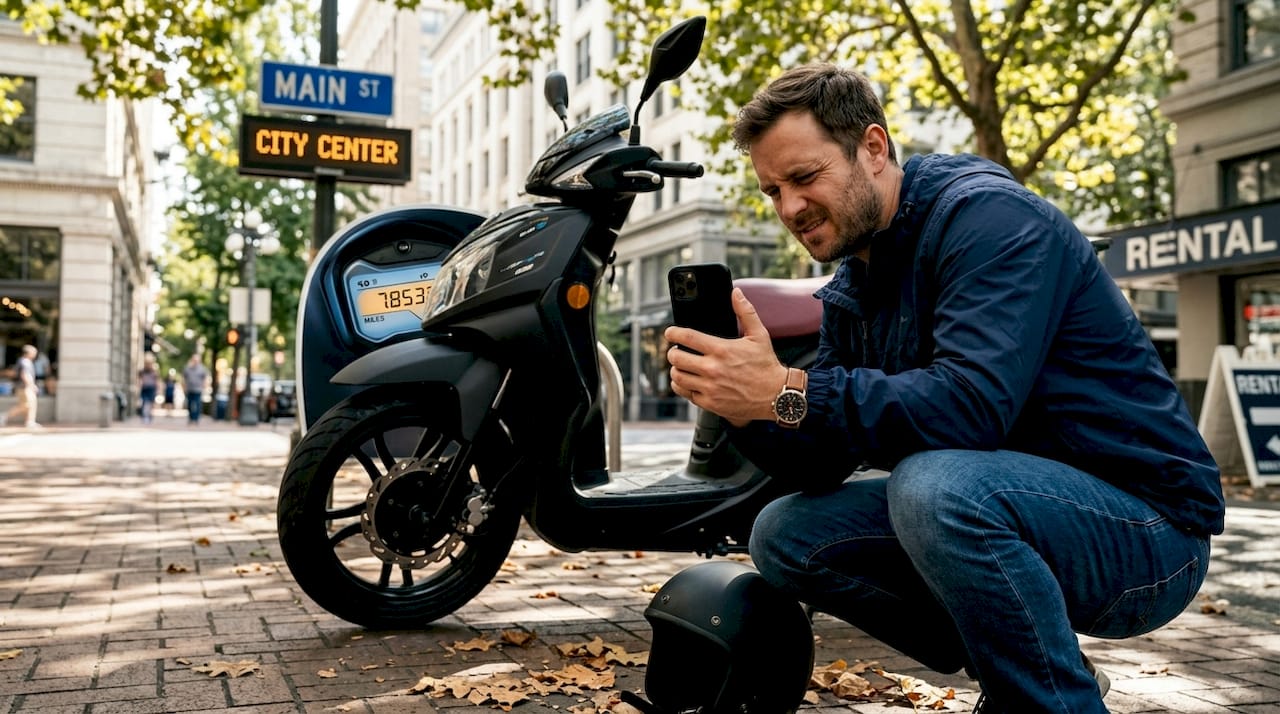
- Photograph the entire vehicle at pickup: Walk around the bike and document every existing scratch, dent, or scuff before you ride away. Capture date-stamped images from your phone.
- Note every imperfection on the rental agreement: If the agent marks something as "minor," ask them to put it in writing on the contract. Verbal agreements do not protect you.
- Check tires, mirrors, and lights: Damage to these components is easily missed and can lead to deposit disputes.
- Return fuel at the same level: Most rentals require you to return fuel as you found it. An empty tank can trigger a refueling fee.
- Confirm return time clearly: Late returns can result in an additional day charge on top of any deposit issues.
Choosing a quality rental company makes all the difference here. Companies with physical offices, clear contracts, and verifiable customer reviews are far less likely to create disputes over pre-existing damage. Walk-in or pop-up rental setups offer little recourse if something goes wrong.
Pro Tip: Use your phone to shoot a short video walkthrough of the bike at pickup and return. Video evidence is far harder to dispute than static photos and takes less than two minutes to record.
Choosing the right scooter or motorcycle for your trip
Understanding deposits and insurance is only half the story. The vehicle you choose can make or break your adventure's value for money.
The best vehicle for your trip depends on three things: where you're going, who's going with you, and your comfort level on two wheels.
How to match your vehicle to your trip:
-
Solo city explorer: A 50cc or 125cc scooter is your best choice. They're cheaper to rent, easier to park, carry a lower deposit, and are perfectly capable on flat urban roads. Thessaloniki's waterfront, the Ano Poli neighborhood, and the White Tower area are all easily reachable on a 50cc.
-
Beach hopper on Kassandra or Sithonia: A 125cc scooter handles most coastal routes comfortably. You get better fuel economy than a larger bike while still having enough power for moderate hills.
-
Long-range touring rider: If you're planning to cover significant ground through Halkidiki's interior routes, the roads to Polygyros, or rural areas with real elevation, a 300cc or larger motorcycle is the right call. Motorbike selection tips can help you narrow this down.
-
Riding with a passenger: Greek law requires passengers to be on a bike rated for two riders. Most 125cc scooters support a passenger, but comfort drops quickly on longer routes. A 300cc or 400cc motorcycle is a much better choice for two people over distances above 50km.
-
Mixed urban and regional adventuring: This is where the value calculation gets interesting. A range of adventure rental choices lets you match the bike to the full scope of your itinerary rather than just one part of it.
The cost difference between a 50cc scooter and a 500cc motorcycle is significant across every line item. Daily rate, deposit, insurance premium, and overage charges all scale up with engine size. For solo tourists doing urban and beach exploration, the smaller bike wins on value nearly every time. For groups or serious touring riders, the larger investment pays off in comfort, range, and capability.
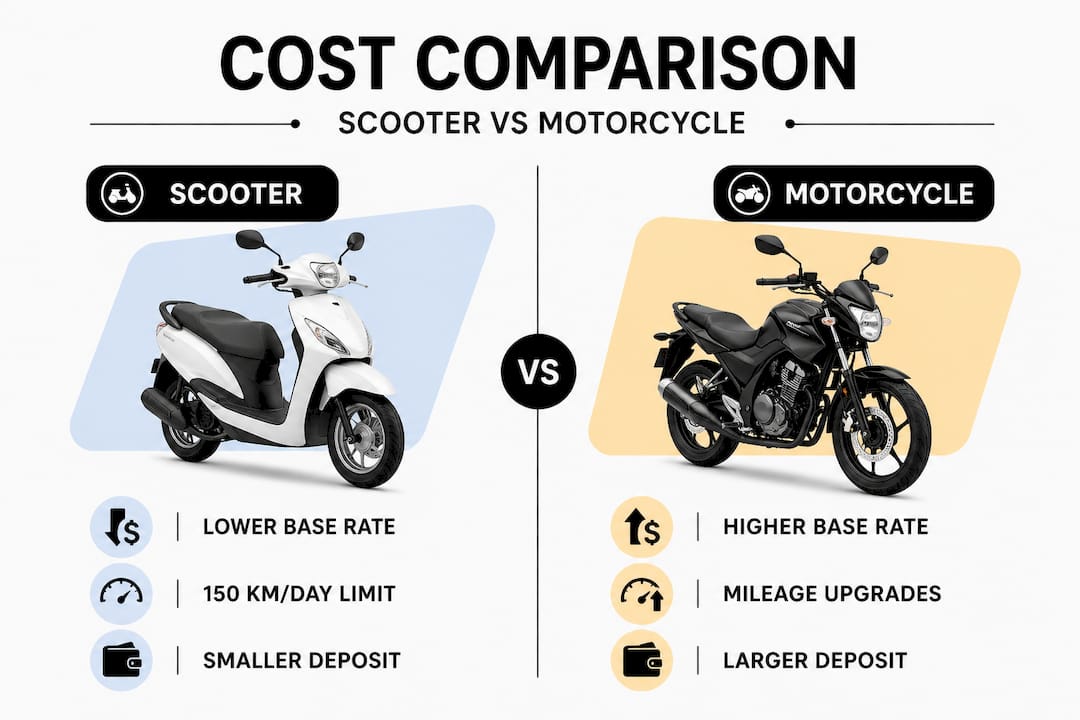
Think about your trip as a package: route length, number of passengers, terrain type, and total days. Run the numbers on mileage, insurance, and deposit against each vehicle class. The difference between smart and impulsive vehicle selection can be 100 to 200 EUR across a week-long rental.
What most tourists miss about rental pricing and how to really save
Here's something most rental guides will not tell you: obsessing over the lowest daily rate is the wrong strategy. We've watched countless tourists save three euros per day on the base rate, then hand back 80 EUR in mileage overages they never saw coming. The advertised daily rate is just one number in a multi-variable equation.
The real calculation is: base rate + mileage cost + insurance upgrade + deposit risk = true trip cost. When you factor all of that in, a company charging 35 EUR per day with unlimited mileage and reduced excess included is nearly always cheaper than one advertising 22 EUR per day with rigid mileage caps and a bare-bones contract.
There's another angle most tourists don't consider: the value of reliability. A rental from a company with a physical office, a real phone number, and verified reviews gives you something no cheap walk-in rental does. If the bike breaks down on the road to Sithonia, you need someone to answer the phone and help you. That peace of mind has a real value, and reputable firms provide it.
Our consistent advice is to look at proven adventure rental options from companies with transparent pricing and documented track records. The habit of inspecting vehicles and photographing them at pickup is non-negotiable, regardless of how trustworthy a company looks at first glance.
Match your vehicle to your exact itinerary. Use unlimited mileage for any day that looks remotely like it will push 130km. Choose reduced excess insurance for any bike with a deposit above 300 USD. These three decisions together often cut your real total cost more effectively than hunting for the cheapest base rate.
Ready to book your perfect ride in Thessaloniki or Halkidiki?
Now that you're equipped with insider knowledge, here's how to easily put your plan into action and make the most of your trip.
At MotoRent.io, we've built the booking experience around exactly what you now know matters: transparent pricing, clear mileage policies, and a well-maintained fleet that spans 50cc city scooters to full touring motorcycles. No hidden fees, no deposit surprises.
Start by browsing bike details and specs to match your route to the right engine size. If you want a broader overview of pricing structures before you choose, the Thessaloniki scooter and motorbike rental guide walks through everything in one place. When you're ready to commit, you can book your rental now in just a few minutes with full insurance options laid out before checkout. Our 24/7 support team is on standby for anything that comes up on the road, because knowing your pricing is just the start of a great ride.
Frequently asked questions
What does the base price of a scooter or motorcycle rental typically include?
The base price typically includes third-party liability insurance and one helmet; upgrades like full coverage, reduced excess, or a second helmet are available as paid add-ons.
How is the mileage limit enforced on rentals in Thessaloniki and Halkidiki?
Most companies track odometer readings at pickup and return, with standard 150km daily limits and per-kilometer charges of 0.15 to 0.50 EUR applied automatically for any distance over the cap.
How much security deposit should I expect to pay for a rental?
Deposits range from 150 to 670 USD based on vehicle size, held as a credit card authorization that is released when you return the bike without damage.
What's the best way to avoid losing my deposit?
Document every scratch and existing damage with photos at pickup, get all pre-existing issues noted on the contract, and book with established companies that have verifiable physical locations.
Which scooter or motorcycle size is best for local adventures?
50 to 125cc scooters are ideal for solo urban or beach trips due to lower costs and deposits, while 300cc and larger motorcycles suit hill routes, touring, or riding with a passenger.