
TL;DR:
- Rental agreements define vehicle details, rental terms, insurance, and responsibilities crucial for travelers.
- Understanding license requirements, insurance options, and fuel policies helps prevent costly disputes.
- Carefully inspecting, documenting, and returning the bike ensures protection against unfair charges.
Renting a scooter in Thessaloniki sounds straightforward until you're standing at the counter, sun blazing outside, and someone hands you a three-page contract in a mix of Greek and English. Most travelers scan it quickly, sign, and hope for the best. That works fine until something goes wrong. A scratch you didn't make, a fuel discrepancy, or an insurance gap you didn't know existed can turn a dream Halkidiki ride into a frustrating dispute. This guide breaks down exactly what a motorbike rental agreement contains, what each section means for you as a traveler, and what to check before you put pen to paper.
Table of Contents
- What is a motorbike rental agreement?
- Key sections explained: What to look for before you sign
- Insurance, liability, and local nuances: What travelers must know
- Return, deposits, and resolving issues
- A traveler's perspective: Why understanding agreements matters more than you think
- Find your rental: Secure and simple options in Thessaloniki
- Frequently asked questions
Key Takeaways
| Point | Details |
|---|---|
| Legal contract essentials | A rental agreement spells out your rights, duties, and what is covered or not. |
| Insurance limitations | Most rentals provide only basic third-party insurance, so check if extra coverage like CDW is offered. |
| Return process clarity | Document your bike’s condition and return it on time for a smooth refund of your deposit. |
| Review all terms | Carefully check eligibility, deposits, prohibited uses, and liabilities to avoid vacation mishaps. |
What is a motorbike rental agreement?
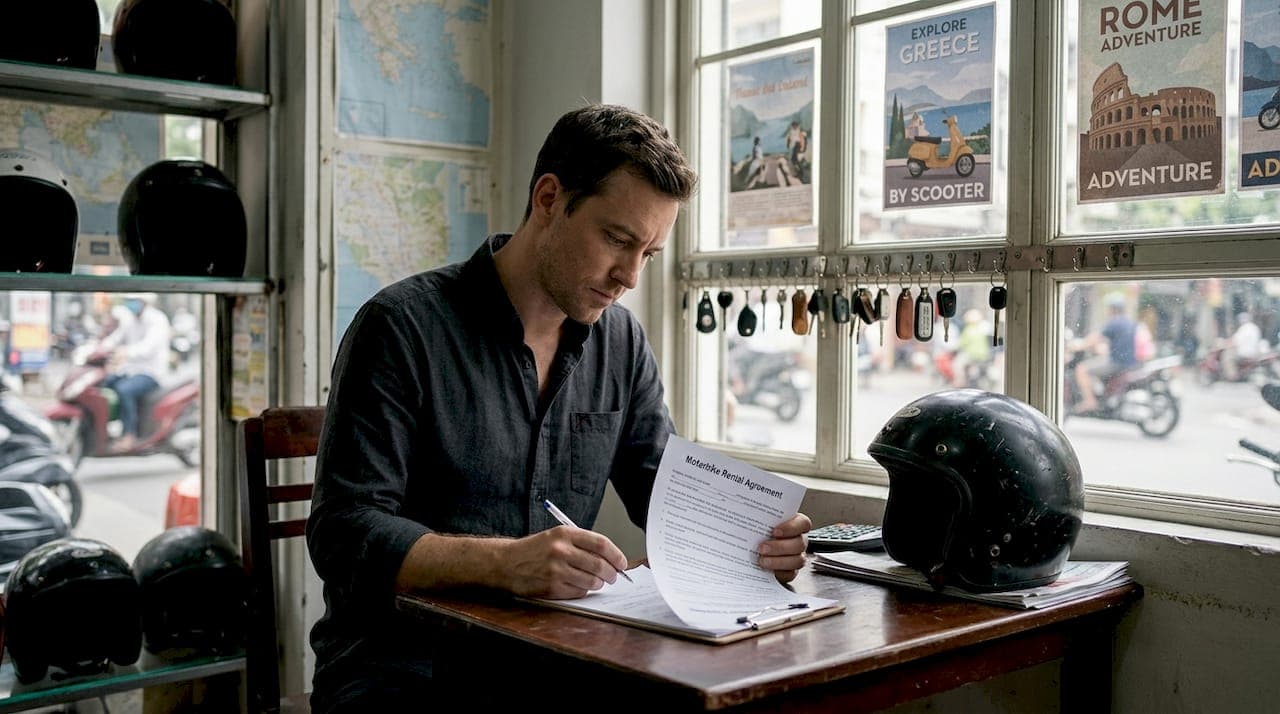
A motorbike rental agreement is a signed contract between you (the renter) and the rental company. It is the legal foundation of your entire rental experience. Everything from the bike you ride to what happens if you scratch a mirror is spelled out in this document.
Think of it like a hotel check-in form, but with much bigger stakes. If you return a hotel room key late, you pay a small fee. If you return a motorbike with damage that wasn't recorded at pickup, you could be on the hook for hundreds of euros.
A legal contract with standard sections outlines specifics such as vehicle details, duration, fees, eligibility, rules, insurance, and return expectations. Every rental shop structures it slightly differently, but the core sections are almost always the same.
Here is a quick look at the main sections you will find in most agreements:
| Section | What it covers |
|---|---|
| Vehicle details | Make, model, year, license plate, odometer reading |
| Rental period | Start and end date/time, grace period policy |
| Fees and deposit | Daily rate, total cost, refundable deposit amount |
| Eligibility | Minimum age, valid license type required |
| Prohibited uses | Off-road riding, racing, unauthorized riders |
| Insurance | What's covered, deductibles, optional add-ons |
| Return conditions | Fuel policy, condition standards, inspection process |
Why does all of this matter for tourists specifically? Because you are in unfamiliar territory, often without local support networks, and potentially dealing with a language barrier. The contract is your only real protection.
Here is what a solid agreement protects you from:
- Unexpected charges for damage you didn't cause
- Coverage gaps that leave you paying out of pocket after an incident
- Disputes over fuel if the return policy is unclear
- Unauthorized rider liability if a travel companion hops on the bike
Before you even look at rental costs in Thessaloniki, make sure you understand what you're agreeing to. The daily rate is only one part of the financial picture.
"Reading the agreement before signing is not about distrust. It's about knowing your rights and responsibilities from the moment you take the keys."
Both you and the rental company benefit from a clear, well-documented agreement. When things go smoothly, it sits in a drawer. When things go sideways, it becomes the single most important document you have.
Key sections explained: What to look for before you sign
Now that you understand the structure, let's go section by section and highlight what actually matters for travelers renting in Thessaloniki or Halkidiki.
Standard sections include motorcycle details such as make, model, and year, along with the rental period, fees, eligibility requirements for renters including minimum age and license class, prohibited uses, and insurance terms. Each section carries real risk if ignored.
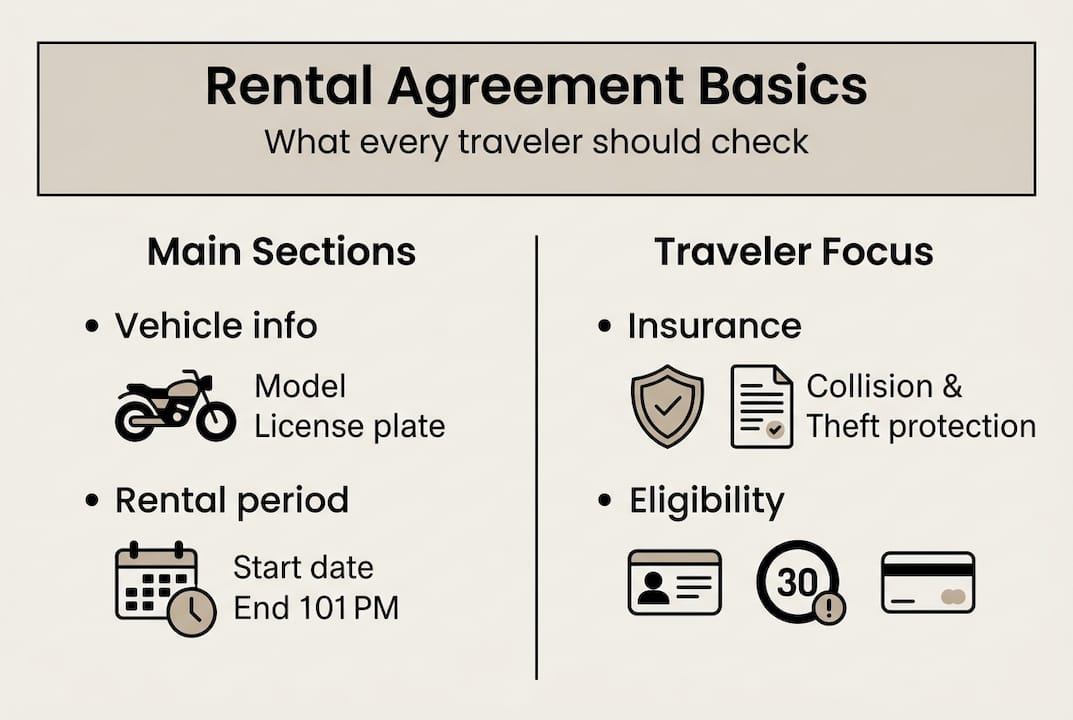
Here is a comparison of what you want to see versus common red flags:
| What you want | Red flag |
|---|---|
| Bike details written in full | Vague description, no plate number |
| Exact rental dates and times | No mention of late return fees |
| Deposit amount clearly stated | Deposit terms only verbal |
| Insurance type named clearly | "Insurance included" with no specifics |
| Minimum age listed | No eligibility section at all |
Here are the top five things to verify before signing:
- Your license class matches the bike. Greece requires a valid license appropriate for the engine size. An A2 license covers motorcycles up to 35 kW, while mopeds under 50cc may only need an AM or B class. Check before you assume.
- The minimum age requirement. Many shops set a minimum of 18, but some require 21 or 25 for larger bikes. Bring your passport or ID as proof.
- Prohibited uses. Taking the bike off-road, using it in a race, or letting an unlisted rider drive it can void your insurance entirely. These clauses are non-negotiable.
- Insurance specifics. Does basic coverage include the rental bike itself, or only third-party? Is there a deductible? We will get into this more in the next section.
- Fuel policy. Most agreements require you to return the bike with the same fuel level. Some shops charge premium rates if you do not.
Pro Tip: If you are a first-time renter, the beginner scooter travel guide is worth reading before you book anything. It gives you practical context that makes the contract much easier to understand.
Never rush through the eligibility section. Travelers sometimes assume their regular car license is enough, but in Greece, riding a motorcycle above 125cc without the correct endorsement is illegal. The rental shop may still hand you the keys, but you would be uninsured and unprotected.
Insurance, liability, and local nuances: What travelers must know
Insurance is where most rental disputes begin. It is also the section most travelers skim fastest. That combination creates real financial exposure.

Basic insurance covers third-party damages only. This means if you hit another vehicle or injure a pedestrian, the policy covers their costs. It does not cover damage to the bike you rented. That part comes out of your deposit, or worse, your wallet.
CDW, which stands for Collision Damage Waiver, is optional coverage that reduces or eliminates your financial responsibility for damage to the rental vehicle itself. It sounds straightforward, but the details matter:
- Deductibles vary widely. A CDW might cap your liability at 200 euros or 800 euros depending on the provider.
- Exclusions apply. Stolen helmets, tire damage, and damage from prohibited use are often not covered even with CDW.
- Personal injury is separate. Neither basic nor CDW typically covers your own medical costs after an accident.
Small rental shops in popular Greek tourist areas sometimes have relaxed document practices. That casualness can feel reassuring, but it often means disputes get resolved informally and inconsistently. Always get your insurance guide for scooter rentals details in writing, even if the shop seems laid-back about it.
Pro Tip: Ask specifically, "If I damage the bike, what is the maximum amount I can be charged?" Write down their answer. If the contract doesn't match what they said, that is a warning sign.
Greece sees roughly 800 road fatalities per year, with motorcycles and scooters involved at a disproportionately high rate. This is not meant to scare you away from renting. It is a reason to understand exactly what coverage you have before you ride.
For riders looking for adventure rentals in Thessaloniki on larger bikes or longer routes, comprehensive coverage is even more critical. The further you ride from the city, the more isolated a breakdown or accident situation becomes.
One more thing worth checking: your personal travel insurance or credit card benefits. Some premium credit cards include collision damage coverage for rental vehicles when you pay with the card. If yours does, confirm whether it covers motorcycles specifically. Many policies exclude two-wheeled vehicles.
Return, deposits, and resolving issues
The end of your rental is just as important as the beginning. Agreements specify that the motorbike must be returned in the same condition it was in at pickup, with check-in inspections and deposits being standard and varying policies applying to any damage or disputes.
Here is the step-by-step return process most travelers should follow:
- Do a full walkthrough at pickup. Note every scratch, dent, or scuff on the inspection sheet. Take photos or a short video covering all angles.
- Keep your copy of the signed inspection form. This is your proof of the bike's condition when you took it.
- Return the bike during business hours. Leaving it unattended after hours can mean you are responsible for anything that happens until staff check it in.
- Be present during the return inspection. Do not hand over the keys and walk away. Watch the staff check the bike.
- Ask for written confirmation that the bike was returned in acceptable condition before you leave.
Deposits are typically held on a credit card rather than charged upfront. The shop places a pre-authorization hold, and if the bike comes back clean, the hold is released within a few business days. Some shops charge the deposit and refund it after inspection. Know which method your provider uses.
Common return disputes involve:
- Pre-existing damage that wasn't documented at pickup
- Fuel level disagreements when the gauge reading is borderline
- Helmet or accessory condition, which some shops bundle into the deposit
- Late return fees calculated differently than expected
Pro Tip: Always use a credit card for the deposit rather than a debit card. Credit cards offer better dispute resolution options if a charge is incorrect.
Knowing the rental pick-up and return process in detail helps you avoid the most common traps. If you are comparing providers, a look at top rental companies in Thessaloniki can help you choose a shop with transparent policies.
A traveler's perspective: Why understanding agreements matters more than you think
Here is an uncomfortable truth most rental guides skip: verbal promises mean nothing once you sign a paper that says something different. We have seen travelers in Thessaloniki trust a shop owner's casual wave of the hand when asking about damage coverage, only to find out later that the contract held them fully liable for any incident.
Language barriers amplify the risk. A staff member might genuinely believe they explained everything clearly. You might genuinely believe you understood. But when the dispute reaches the company's management or an insurance adjuster, the contract is the only language that counts.
Local casualness is not the same as local protection. Many smaller shops in tourist-heavy areas operate on goodwill and repeat business. That usually works fine. But goodwill has no legal standing. Stories about unusual rental experiences often start with "the guy at the shop said it would be fine."
Spending five extra minutes on the agreement before you sign is not paranoia. It is the cheapest insurance you can buy.
Find your rental: Secure and simple options in Thessaloniki
Choosing the right rental provider makes the entire agreement process easier. Platforms that prioritize transparency give you clearly written contracts, named insurance types, and deposit policies that are spelled out before you book.
At MotoRent.io, we built our booking process around exactly that kind of clarity. From our Scooter & Motorcycle Rental Guide to our full lineup of vehicles, everything is designed to remove the guesswork from your rental experience. You can browse all available models online before you even arrive in Thessaloniki, and our team is available around the clock if questions come up. No surprises. Just riding.
Frequently asked questions
What documents do I need to rent a motorbike in Thessaloniki?
You need a valid driver's license in the correct class for the bike, a passport or national ID, and a credit card for the deposit hold. Eligibility requires valid license and minimum age documentation as specified in the contract.
Does the basic insurance included cover damages to the rented bike?
No. Basic insurance covers only third-party liability, meaning costs to others. Damage to the rented bike itself requires optional CDW or similar add-on coverage.
What happens if I return the motorbike late?
Late returns typically trigger extra fees calculated per hour or full day, depending on the shop. Agreements specify penalties for late returns, so check the exact terms before you plan your schedule.
Can I take the rented bike off-road or outside city limits?
Most agreements prohibit off-road use outright, and some restrict travel to specific regions. Prohibited uses like off-road travel are standard clauses, and violating them can void your coverage entirely. Always verify travel boundaries before riding.