
TL;DR:
- A motorbike packing checklist ensures riders have essential gear, tools, and documents for safe travel. Proper weight distribution and organization prevent handling issues and roadside problems. Preparing documentation and inspection videos protects against rental disputes and damage claims.
A motorbike packing checklist is a curated list of essential gear, tools, and documents every rider needs for a safe and well-prepared motorcycle trip. Getting this list right before you leave is the difference between a smooth ride and a roadside disaster. The categories that matter most are protective clothing, repair tools, electronics, and legal documents. Weight distribution is equally critical: riders targeting a 27 kg total load should allocate roughly 37% to clothing, 29.6% to camping gear, 11.1% to electronics, and 9.3% to tools and spares. An International Driving Permit (IDP) and a cash deposit strategy round out the non-negotiable prep work for 2026 trips.
1. The motorbike packing checklist: what it covers and why it matters
A motorcycle packing list is not just a shopping list. It is a safety system. Riders who pack without a plan tend to overload one side of the bike, forget critical documents, or show up at a rental counter without the right license category. Space on most motorcycles runs 85–170 liters, which forces real prioritization. The best method is to sort every item into three categories: "Yes," "Maybe," and "No," then cut the "Maybe" pile in half.
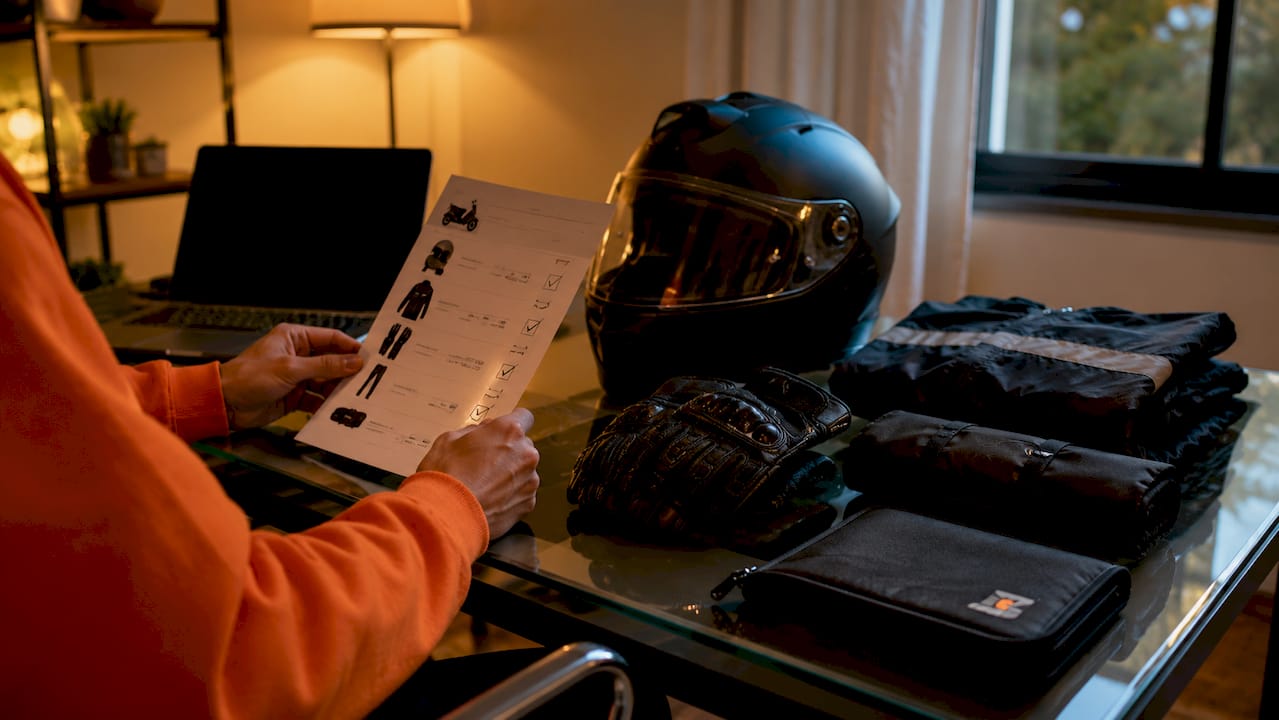
Minimalism is the core principle. Every kilogram you add above the optimal load affects handling, braking distance, and rider fatigue. Packing light is not about comfort. It is about control.
2. Essential clothing and protective gear
Protective gear is the highest-priority category on any motorcycle travel gear list. A full-face or modular helmet certified to ECE 22.06 (the current European standard) or DOT (the US standard) is non-negotiable. Helmet quality directly affects survivability in a crash, so never rent or borrow one you cannot inspect.
Clothing checklist:
- Riding jacket with CE Level 1 or Level 2 armor at shoulders, elbows, and back
- Riding pants with knee and hip protection
- Waterproof gloves and a dry pair for warm weather
- Ankle-covering motorcycle boots (not sneakers)
- Base layers for temperature regulation
- Rain suit or waterproof oversuit that fits over your riding gear
- Buff or neck gaiter for wind and dust
Pro Tip: Pack your rain suit on top of your bag or in an outer pocket. You will need it fast when a storm hits, and digging through a packed pannier in the rain is miserable.
Layering is the most effective strategy for variable weather. A thermal base layer plus a vented jacket plus a rain shell covers temperatures from 45°F to 90°F without requiring multiple bulky jackets. Compression packing cubes cut clothing volume by roughly a third and keep your bag organized by day.
3. Tools, repair kits, and spare parts
Every rider on a long-distance trip needs a basic repair kit. Breakdowns happen far from towns, and a few small tools can save a trip. The goal is not to carry a full workshop. It is to handle the five most common roadside problems: flat tires, blown fuses, loose bolts, dead lights, and broken zip ties.
Core tool and repair kit:
- Tire pressure gauge (digital is more reliable)
- Tire repair plug kit and CO2 inflators or a mini pump
- Duct tape and electrical tape
- Zip ties in multiple sizes
- Spare fuses matching your bike's fuse box
- Spare bulbs for brake light and turn signals
- Compact multi-tool with pliers, screwdrivers, and hex keys
- Bungee cords and a cargo net
Pro Tip: Store your tools in a soft roll-up pouch and strap it to the bottom of a pannier. Heavy items low and to the center keep the bike stable. A tool bag rattling around on top of your gear shifts weight with every corner.
Heavier items belong low and centered, distributed evenly left and right. Top-heavy packing makes the bike feel vague in corners and exhausting to maneuver at low speed. This is not a preference. It is physics.
4. Electronics, documents, and safety items
The electronics and documents category is where most riders make avoidable mistakes. Forgetting a charging cable or leaving your IDP at home can end a trip before it starts.
Electronics:
- Smartphone with offline maps downloaded (Google Maps or Maps.me work without data)
- Dedicated GPS unit for long tours in areas with poor cell coverage
- USB charging cable and a waterproof power bank
- Bluetooth helmet communicator if riding with a group
- Action camera and mount (optional but useful for documentation)
Documents and legal items:
- Home country motorcycle license showing the correct category
- International Driving Permit alongside your home license for international trips
- Passport copy (not the original, for rental deposits)
- Travel insurance documents with motorcycle coverage confirmed
- Rental agreement and emergency contact numbers
Safety items:
- Compact first aid kit with bandages, antiseptic wipes, and pain relief
- Earplugs rated for wind noise reduction (prolonged wind noise causes hearing damage)
- Reflective vest for roadside stops or low-visibility conditions
The IDP costs between £5 and £15 and validates your motorcycle license category for local law enforcement and insurance purposes abroad. Riding without one in many countries voids your insurance coverage entirely.
5. Weight distribution and packing organization
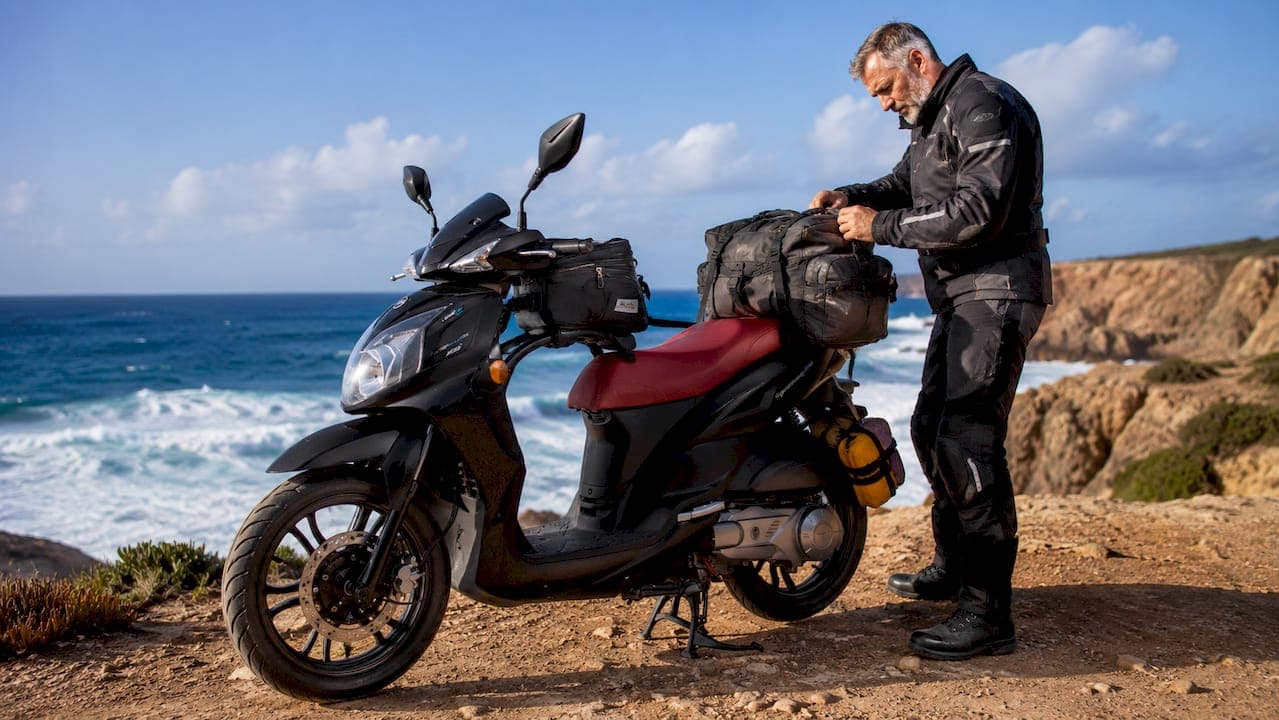
Smart packing organization is what separates a comfortable long-distance trip from a physically draining one. Packing by location and use frequency means daily essentials go in the tank bag, wet-weather gear sits on top of the main bag, and tools stay in a consistent spot in one pannier.
| Category | Recommended weight | Placement |
|---|---|---|
| Clothing and toiletries | 37% of total load | Main panniers, evenly split |
| Camping gear | 29.6% of total load | Rear bag or top case |
| Electronics | 11.1% of total load | Tank bag or inner jacket pocket |
| Tools and spares | 9.3% of total load | Bottom of one pannier |
| Cooking and water | 13% of total load | Rear pannier, low and centered |
Pro Tip: Use your tank bag for everything you touch every hour: phone, snacks, sunscreen, and your wallet. Stopping to dig through a pannier for a lip balm adds up to real lost time over a week.
A tank bag keeps weight over the front wheel, which improves steering feel. Panniers balanced left and right prevent the bike from pulling to one side. Never stack heavy items on a tail bag above the rear wheel. That position raises the center of gravity and makes the bike feel unstable at highway speed.
6. Motorbike rental and return checklist
The rental and return process is where trips go wrong financially. A solid motorbike rental checklist protects you from false damage claims and deposit disputes.
Before you ride:
- Inspect the bike in daylight and film every panel, scratch, and dent in slow motion.
- Record the odometer reading and fuel level with the shop owner present.
- Document rental bike condition with timestamped video to deter false damage claims on return.
- Confirm the rental agreement covers your license category and includes insurance.
- Pay the deposit in cash. Cash deposits typically range from $100 to $300 USD for motorbike rentals.
Deposit rules:
- Never surrender your original passport as deposit collateral. Offer a cash deposit or a photocopy instead.
- Walking away from any rental that demands your original passport is the right call. This practice is a known scam vector.
On return day:
- Arrive 30 minutes early and match the fuel level specified in your contract.
- Film the bike condition again at return, matching your pre-ride footage.
- Count your deposit cash on camera before leaving the shop.
The scooter return procedure matters as much as the pre-ride inspection. Shops that see you have video evidence rarely pursue false damage claims.
Key takeaways
A complete motorcycle packing list covers protective gear, tools, electronics, legal documents, and smart weight distribution, with rental documentation protecting your deposit on both ends of the trip.
| Point | Details |
|---|---|
| Prioritize protective gear | Helmet, jacket, gloves, and boots are non-negotiable before any other item. |
| Pack by weight and location | Heavy items go low and centered; daily essentials go in the tank bag. |
| Carry your IDP | An International Driving Permit validates your license abroad and protects your insurance coverage. |
| Never give up your passport | Pay cash deposits of $100–$300 USD and offer a photocopy, not the original document. |
| Film everything at rental | Timestamped video of bike condition at pickup and return prevents false damage disputes. |
What I've learned from packing for long rides
Riders consistently overpack on their first long trip and underpack on their second. The sweet spot takes a few trips to find, but the principle is always the same: if you are not sure you need it, you do not need it.
The biggest mistake I see is treating the motorcycle like a car trunk. A car absorbs poor weight distribution. A motorcycle punishes it immediately. I once watched a rider struggle through mountain switchbacks with a top-heavy tail bag that turned every corner into a fight. He had packed two pairs of jeans "just in case." That is the mindset to leave at home.
Documentation is the other area where riders get burned. Showing up at a rental counter without an IDP, or handing over a passport because the shop insists, are both avoidable problems. Read the rental agreement details before you sign, not after. The five minutes you spend on that saves hours of dispute later.
The riders who enjoy long trips the most are not the ones with the best gear. They are the ones who prepared the most boring parts: the checklist, the documents, and the packing order. Get those right and the ride takes care of itself.
— KONSTANTINOS
Plan your next ride with Motorent
Motorent makes the rental side of your trip straightforward. The fleet covers everything from urban scooters to touring-ready motorcycles, all fully insured and maintained to a consistent standard.
Every Motorent rental includes transparent deposit terms, legal compliance support, and 24/7 customer service. You will not be asked for your passport as collateral. Browse the full fleet and lock in your dates at Motorent's Thessaloniki rental platform. If you already know what you want, book your ride directly and get your confirmation in minutes. Your checklist is ready. The bike is waiting.
FAQ
What should be on a basic motorbike packing checklist?
A basic motorcycle packing list includes a certified helmet, riding jacket with armor, gloves, boots, rain gear, a tire repair kit, a multi-tool, your home license, an IDP, and a cash deposit for rentals.
How much weight should I pack on a motorcycle trip?
Target a total load of 27 kg, with clothing at 37%, camping gear at 29.6%, electronics at 11.1%, and tools at 9.3% of that total.
Do I need an International Driving Permit for a motorbike rental?
Yes. An IDP is required alongside your home motorcycle license for most international rentals and is needed to validate your license category for local law enforcement and insurance.
Should I leave my passport as a rental deposit?
No. Never surrender your original passport as rental collateral. Pay a cash deposit in the $100–$300 USD range and offer a photocopy of your passport instead.
How do I protect myself when returning a rental motorbike?
Film the bike condition in slow motion at both pickup and return, arrive 30 minutes early, match the fuel level in your contract, and count your deposit cash on camera before leaving.