
TL;DR:
- The motorbike delivery process involves careful preparation, secure loading, and thorough condition verification. Proper documentation and securing techniques prevent damage disputes and ensure safety during transit. Electric motorcycles are increasingly practical for urban delivery due to their range, quick charging, and reduced operating costs.
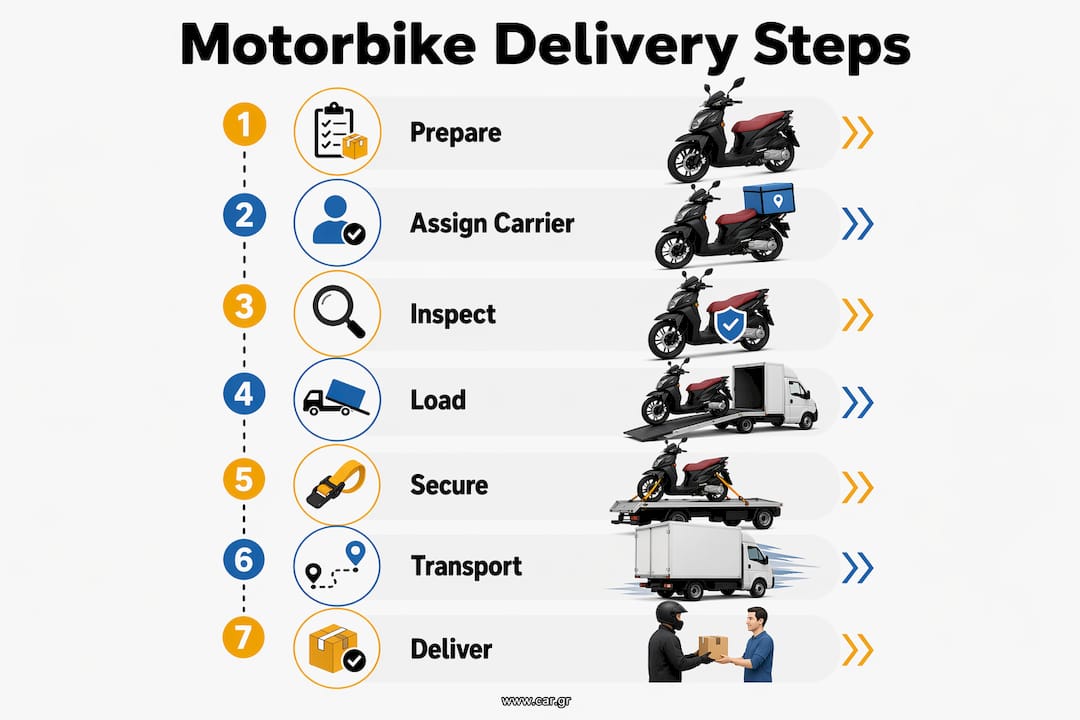
The motorbike delivery process is a coordinated series of steps that moves a motorcycle or parcel from pickup to destination safely, legally, and on time. Whether you are shipping a personal bike across the country or running a fleet of courier motorcycles for a business, the underlying motorcycle delivery logistics follow the same core framework: prepare the vehicle, assign a carrier, secure the load, transit carefully, and verify condition at delivery. Skipping any step creates liability, delays, and damage claims. This guide breaks down every stage so you know exactly what to expect and how to protect yourself.
What does the motorbike delivery process require before transport?
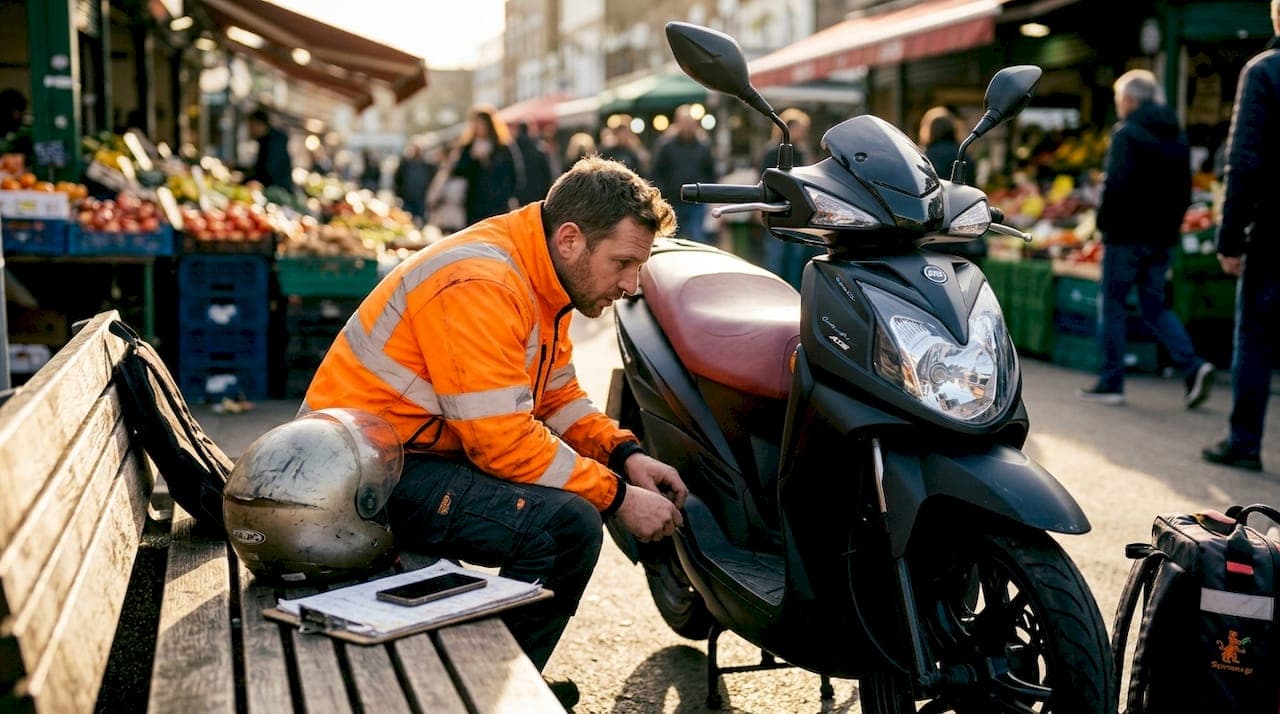
Preparation is the stage where most damage claims originate. A clean motorcycle lets you document every scratch, dent, and scuff with photos before the carrier arrives. Cleaning the bike first protects you from false claims of transit damage, because any pre-existing marks are visible and on record. That record becomes your legal defense if something goes wrong.
Documentation is equally non-negotiable. A Bill of Lading signed at both pickup and delivery is the legal record of the bike's condition throughout transport. Without it, you have no enforceable claim if the carrier returns your bike with a new dent.
Beyond paperwork, the bike itself needs physical preparation:
- Fuel level: Keep the tank at one quarter or less. A full tank adds weight and creates a fire risk during transport.
- Alarm systems: Disable all alarms. A triggered alarm mid-transit can drain the battery and cause delays.
- Loose parts: Remove mirrors, panniers, and any accessories that could shift or snap during loading.
- Tire pressure: Check and inflate to the manufacturer's recommended level for static load bearing.
- Non-rolling bikes: If the motorcycle cannot roll under its own weight, communicate this to the carrier in advance. Non-rolling motorcycles require winches or lifts, and carriers need to bring the right equipment.
Carrier assignment for professional motorcycle transport typically occurs within 1–5 days of the requested date. That window gives you time to complete all preparation steps without rushing. Use the motorbike packing checklist from Motorent to make sure nothing gets missed before the carrier arrives.
Pro Tip: Take timestamped photos from six angles, including the undercarriage, immediately before handoff. Store them in cloud backup so they are accessible if a dispute arises weeks later.
How is a motorbike secured and transported safely?
Loading is the highest-risk moment in the entire motorcycle courier process. A handler guides the bike up a ramp or uses a lift, keeping the motorcycle upright and controlling the weight distribution. Rushing this step causes tip-overs before the bike even leaves the ground.
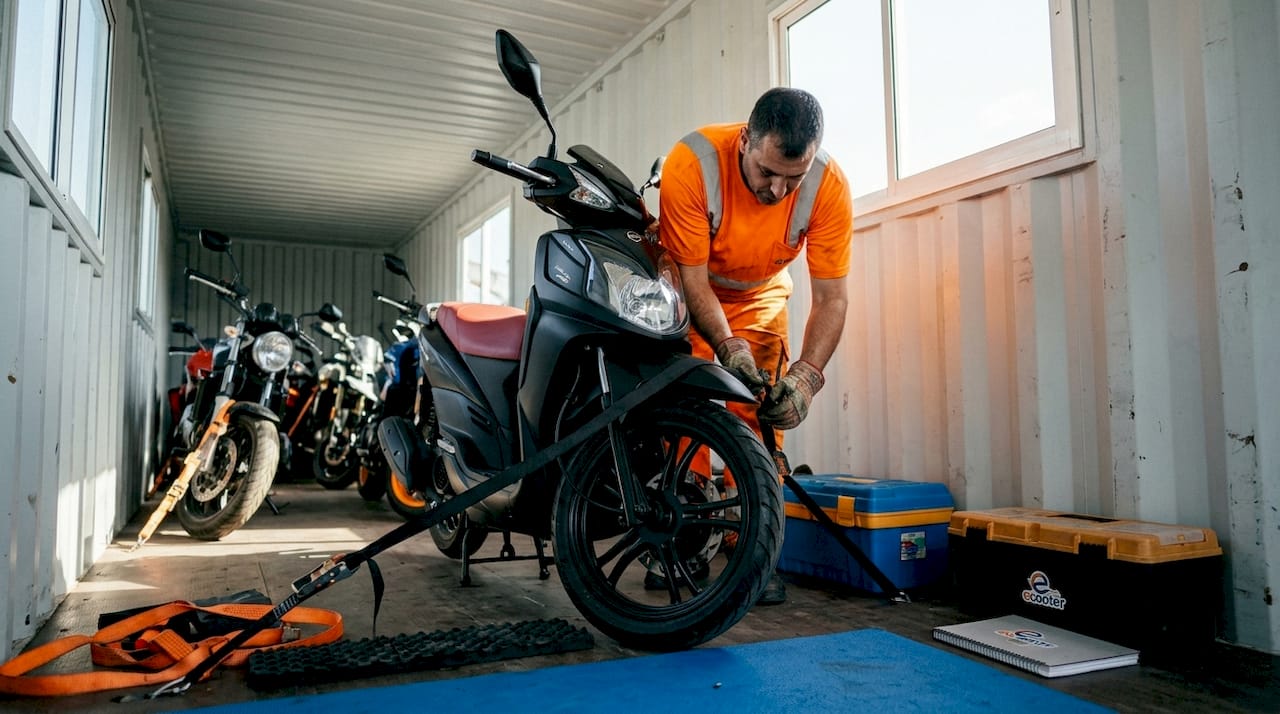
Once loaded, securing follows a strict method. Soft-tie straps through the subframe or designated tie-down points hold the bike in place without damaging painted bodywork or compressing the suspension. Straps over painted surfaces scratch the finish. Straps over the suspension distort the geometry. Neither is acceptable on a professional transport job.
Wheel chocks prevent lateral movement during transit. Without them, the bike rocks side to side on every curve, wearing down the strap tension and risking a fall. Motorcycle transport on trailers uses soft straps, wheel chocks, and careful speed management together as a system, not as individual options.
Transport vehicle types vary by budget and protection level:
- Open trailer: The most affordable option. The bike is exposed to weather and road debris but is fully visible for monitoring.
- Partially enclosed trailer: Provides side protection while keeping costs moderate.
- Fully enclosed trailer: The highest protection level, preferred for high-value or custom motorcycles.
- Crated shipping: Used for international or air freight. The bike is disassembled partially and packed in a wooden crate.
Pro Tip: For enclosed transport, ask the carrier to check strap tension at every fuel stop. Vibration loosens straps over long distances, and a mid-transit check costs nothing but prevents serious damage.
After delivery, inspect the bike against the original Bill of Lading before signing anything. Note every discrepancy in writing on the document itself. A signature without notes is treated as acceptance of the bike's condition.
What logistics options exist for businesses managing delivery fleets?
Businesses running motorbike parcel delivery at scale face a different set of challenges than individuals shipping a single motorcycle. The core decision is whether to own and manage the fleet internally or outsource it to a third-party logistics provider, commonly called a 3PL.
3PL providers supply fleets of 500 to 1,000 or more motorcycles and riders, along with complete management of HR, visas, maintenance, and compliance. That scale means a business can launch a delivery operation without purchasing a single motorcycle or hiring a single rider directly. The monthly service fee replaces a long list of fixed costs.
Outsourcing delivery fleets to 3PL riders frees companies from fixed assets and operational bottlenecks, allowing focus on dispatch efficiency and customer experience. That shift matters most during demand spikes, when an in-house fleet hits a hard ceiling and a 3PL simply adds riders.
Here is how the 3PL service model typically breaks down:
- Fleet sizing: The provider matches motorcycle and rider count to your delivery zone and order volume.
- Compliance management: 3PL rider companies provide full compliance with government mandates, including registrations, visa sponsorships, licensing, and insurance.
- Maintenance and uptime: The provider handles all servicing and offers rapid rider replacement to maintain delivery continuity.
- Pricing structure: Business 3PL rider costs range from AED 2,500 to AED 4,500 monthly per rider, depending on service scope and geography.
| Service tier | Monthly cost per rider | Includes |
|---|---|---|
| Entry-level managed fleet | AED 2,500 | Rider supply, basic compliance |
| Mid-tier managed fleet | AED 3,500 | Compliance, maintenance, insurance |
| Full-service 3PL | AED 4,500 | All above plus rapid replacement, reporting |
For businesses in regulated markets, the compliance layer alone justifies the cost. RTA driver qualifications, commercial registration, and delivery box specifications each carry fines for non-compliance that quickly exceed the monthly service fee.
What challenges and costs should you plan for in bike delivery?
The most common problems in fast motorcycle delivery are preventable. Damage during transit almost always traces back to improper securing or missing condition documentation. A missed pickup appointment usually means the carrier moved on to the next job, and rebooking adds days to the timeline.
Common issues and how to address them:
- Transit damage with no documentation: Verify the Bill of Lading at pickup. If the carrier did not complete one, do not release the bike.
- Strap marks on bodywork: Require soft ties in writing before booking. Confirm the carrier's equipment list.
- Missed pickup windows: Confirm the exact pickup window 24 hours in advance by phone, not just email.
- Coverage gaps: Check whether the carrier's insurance covers the full replacement value of your motorcycle, not just a depreciated amount.
- Delivery delays: Build a one-day buffer into any time-sensitive plan. Weather, traffic, and mechanical issues affect every transport route.
Pricing for the bike delivery service depends on four main variables: distance, transport method (open versus enclosed), service level, and delivery speed. Enclosed transport costs more than open transport for the same route. Same-day or next-day delivery costs more than standard scheduling. Adding insurance riders increases the total but reduces financial risk.
Pro Tip: Get at least three quotes before booking. Provide identical information to each carrier, including exact pickup and delivery addresses, bike weight, and whether it is rolling or non-rolling. Inconsistent quotes often reveal hidden fees.
For anyone inspecting a rental scooter or a delivery motorcycle before use, the same documentation discipline applies. Condition records protect both the owner and the operator.
How are electric motorcycles changing urban delivery logistics?
Electric delivery motorcycles are redefining what fast motorcycle delivery looks like in dense urban areas. The key performance metrics for delivery-spec electric bikes are range and charging speed. Electric delivery models typically offer 60–120 km of range and reach 80% charge in 1–2 hours. For a city courier completing multiple short runs per shift, that profile covers a full working day with one midday charge.
Delivery-spec motorcycles emphasize torque and structural reinforcement over top speed and recreational features. High torque handles stop-and-go urban cycles without mechanical strain. Reinforced frames carry heavier cargo boxes without flexing. Both design choices reduce mechanical failures and improve uptime in high-volume operations.
Battery swapping is the operational advantage that separates purpose-built delivery electric bikes from converted recreational models. A rider swaps a depleted battery for a charged one in under two minutes at a swap station, eliminating charging downtime entirely. That capability matters most for businesses running two or three delivery shifts per day.
| Feature | Standard electric bike | Delivery-spec electric bike |
|---|---|---|
| Range | 60–80 km | 80–120 km |
| Charging time to 80% | 2–4 hours | 1–2 hours |
| Cargo capacity | Minimal | Reinforced box mount |
| Torque profile | Recreational | High torque for urban stop-and-go |
The environmental benefit is real but secondary for most operators. The primary driver is cost. Electricity costs less per kilometer than gasoline, and electric motors require fewer service intervals than combustion engines. For a fleet running 200 deliveries per day, those savings compound quickly. Features like electric charging range and battery management are now standard considerations when evaluating any two-wheeled delivery vehicle.
Key Takeaways
The motorbike delivery process requires rigorous documentation, proper securing techniques, and clear carrier communication to protect both the vehicle and the delivery timeline.
| Point | Details |
|---|---|
| Document condition before transport | Clean the bike and photograph it from all angles before the carrier arrives to prevent false damage claims. |
| Bill of Lading is non-negotiable | Sign and retain this document at both pickup and delivery as your legal protection for any damage dispute. |
| Securing method determines safety | Use soft-tie straps through the subframe and wheel chocks to prevent movement and bodywork damage during transit. |
| 3PL outsourcing suits fleet operations | Monthly costs of AED 2,500–4,500 per rider cover compliance, maintenance, and rapid replacement for business continuity. |
| Electric bikes suit urban last-mile delivery | A 60–120 km range and 1–2 hour fast charging make electric delivery motorcycles viable for full-shift urban operations. |
What I have learned from watching deliveries go wrong
After years of working with motorbikes in rental and transport contexts, the pattern I see most often is this: people treat documentation as a formality rather than a tool. They sign the Bill of Lading without reading it, skip the pre-transport photos because the bike "looks fine," and then have no recourse when a scratch appears that was not there before. The paperwork is not bureaucracy. It is the only thing standing between you and an expensive dispute.
The second lesson is about 3PL partnerships for businesses. I have seen companies spend months building in-house delivery fleets, hiring riders, managing licenses, and handling maintenance, only to realize the fixed cost structure makes scaling painful. A 3PL provider absorbs all of that. The monthly fee feels high until you calculate what a full-time fleet manager, a compliance officer, and a maintenance contract actually cost separately.
Electric delivery motorcycles are the piece most operators underestimate. The range and charging numbers are already good enough for most urban routes. The real advantage is the torque profile and structural design, which reduce breakdowns during peak hours when you can least afford them. If you are evaluating a motorbike delivery workflow for a growing operation, electric-first is no longer a bold choice. It is the practical one.
— KONSTANTINOS
Motorent's approach to short-term motorbike transport in Thessaloniki
Motorent operates a fleet of well-maintained scooters and motorcycles available for daily and monthly rentals across Thessaloniki and Halkidiki. Every bike goes through a condition check before handoff, which mirrors the same documentation discipline this article covers for professional transport.
If you need a reliable two-wheeled vehicle for short-term use, whether for local errands, coastal exploration, or business mobility, Motorent's scooter rental guide covers available models, pricing, and pickup procedures in detail. The fleet includes fully insured options with 24/7 support, so you are covered from the moment you pick up the keys. Browse the full motorcycle and scooter fleet to find the right fit for your needs in Thessaloniki.
FAQ
What is the motorbike delivery process?
The motorbike delivery process is a structured workflow covering vehicle preparation, carrier assignment, secure loading, transit, and condition verification at delivery. Each step requires documentation to protect both the owner and the carrier.
How long does motorcycle transport carrier assignment take?
Carrier assignment typically occurs within 1–5 days of the requested pickup date. A formal pre-load inspection happens on pickup day to record the bike's condition on a Bill of Lading.
What securing method prevents damage during motorcycle transport?
Soft-tie straps through the subframe or designated tie-down points, combined with wheel chocks, prevent lateral movement and bodywork damage during transit. Never use straps over painted surfaces or suspension components.
How much does a business 3PL motorbike delivery service cost?
Monthly costs for managed 3PL rider services range from AED 2,500 to AED 4,500 per rider, depending on service scope. Full-service tiers include compliance, maintenance, insurance, and rapid rider replacement.
Are electric motorcycles practical for urban parcel delivery?
Yes. Delivery-spec electric motorcycles offer 60–120 km of range and reach 80% charge in 1–2 hours, which covers a full urban delivery shift with one midday charge or a battery swap.