

TL;DR:
- Scooters offer quick, flexible, and affordable transportation through Thessaloniki’s congestion.
- They environmentally compete with cars for short trips but depend on usage and manufacturing impacts.
- Proper knowledge of local rules and responsible parking maximize safety and discovery.
Thessaloniki is vibrant, dense, and full of surprises. But getting around it as a tourist can be genuinely frustrating. Buses run on their own schedule, taxis pile up in traffic, and parking a car near the waterfront is practically an Olympic sport. Scooters solve these problems quietly and efficiently. They slip through congestion, park almost anywhere, and put you directly in front of the places you actually want to see. As a flexible last-mile solution in modern cities, scooters complement public transit rather than replacing it, making them one of the smartest mobility tools a visitor can use.
Table of Contents
- Why scooters matter for urban travel
- Environmental and urban impact of scooters
- How to rent and ride scooters in Thessaloniki and Halkidiki
- Challenges and what to watch out for
- What most guides miss about scooters and urban discovery
- Explore Thessaloniki and Halkidiki your way—rent a scooter today
- Frequently asked questions
Key Takeaways
| Point | Details |
|---|---|
| Scooters boost urban mobility | Scooters offer tourists flexible, efficient travel in Thessaloniki and Halkidiki, filling gaps left by public transit. |
| Environmental benefits and limits | E-scooters cut transport emissions but require smart use and proper management for maximum green impact. |
| Know the local rules | Awareness of Thessaloniki's scooter rules and recent crackdowns helps visitors avoid fines and enjoy worry-free rides. |
| Easy rental options | Tourists can rent scooters with minimal hassle, often including insurance and gear for a safe exploration adventure. |
Why scooters matter for urban travel
Thessaloniki is not a small city. With a metro area pushing 1.1 million people, its streets get congested fast, especially during summer when tourist numbers spike. Halkidiki, just south of the city, adds beach traffic to the mix. Renting a car feels logical until you face narrow coastal roads, zero parking near popular beaches, and daily fees that add up quickly.
Scooters change the equation entirely. They give you point-to-point access that no bus route can match. You decide the route, the pace, and the stops. That kind of freedom is hard to put a price on when you are trying to see a city on a short trip.
Here is what scooters handle better than most other city transport options:
- Traffic: Scooters move through gridlock that stops cars cold.
- Parking: Most sidewalk scooter spots are free or very low cost.
- Cost: Daily rental rates beat most taxi fares for a full day of sightseeing.
- Flexibility: You can reach spots that buses simply do not serve.
- Speed: Short urban trips by scooter often take half the time of public transit.
Research confirms this practical advantage. Scooters, particularly rental and shared models, are flexible last-mile solutions that complement public transit and reduce congestion on short urban trips. That is not marketing language. That is what the data from European cities actually shows.
"The real value of a scooter in a city like Thessaloniki is not just speed. It is the ability to show up exactly where you want, when you want, without depending on a fixed schedule."
For tourists, that translates into seeing more with less stress. You can hit the Byzantine walls in the morning, cruise the Ladadika neighborhood for lunch, and reach a Halkidiki beach by mid-afternoon. A bus itinerary for that same day would be a logistical puzzle. If you are new to scooter travel in this region, a beginner's guide to scooter travel is a great starting point before you book.
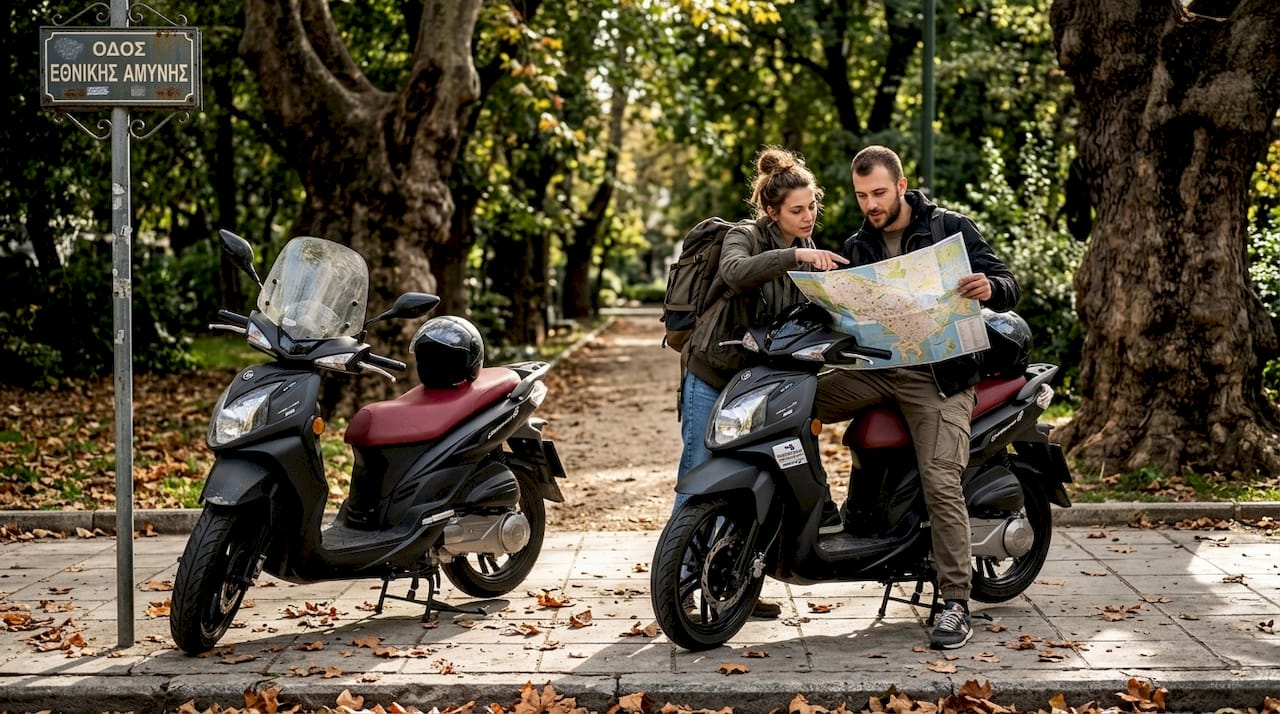
Compared to car rentals, scooters win on cost and agility. Compared to rideshares, they win on freedom and long-term value. Compared to public transit, they win on coverage and timing. For short to medium urban trips, very few options beat them.
Environmental and urban impact of scooters
Scooters are often marketed as the green choice. The truth is more layered, and understanding that nuance helps you make a smarter decision as a traveler.
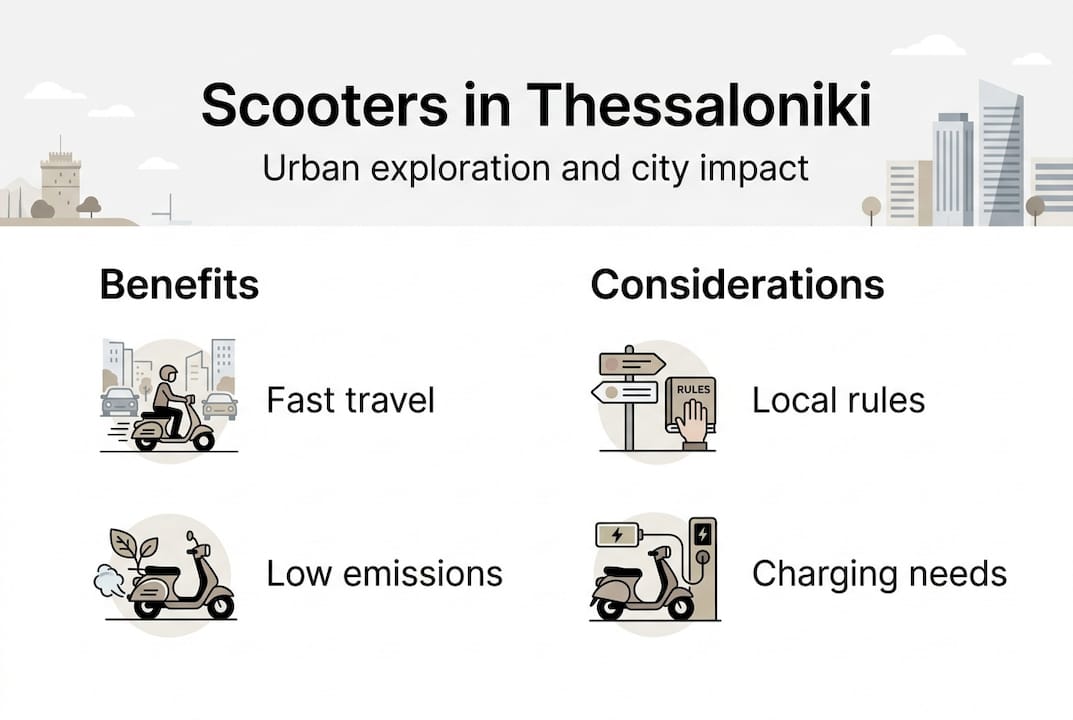
Emissions data from 100 EU cities shows that shared e-scooters emit 30 to 124 g CO2-eq/km, with a fixed manufacturing burden of 115.6 kg CO2eq per scooter. Active riding averages around 15.9 Wh/km. That range is wide because emissions depend heavily on local grid carbon intensity and how often the scooter is actually used. A scooter ridden daily in a city with clean electricity is genuinely low-impact. One that sits unused most of the day tells a different story.
| Transport mode | Approx. CO2-eq per km | Parking impact | Urban congestion effect |
|---|---|---|---|
| E-scooter (shared) | 30 to 124 g | Minimal | Low to moderate |
| Petrol scooter | 70 to 100 g | Minimal | Low |
| Car (city driving) | 150 to 250 g | High | High |
| City bus (per rider) | 40 to 80 g | None (fixed stops) | Low |
| Taxi/rideshare | 130 to 200 g | Low | Moderate to high |
The table makes one thing clear: for short trips, scooters compete well environmentally against cars and taxis. The catch is the manufacturing phase. Each scooter requires significant materials and energy to produce, meaning that environmental return improves the more the scooter gets used over its lifetime.
"Scooters reduce emissions and congestion compared to cars, but manufacturing impacts and variable utilization mean the net environmental gain depends heavily on actual usage patterns."
In Thessaloniki, the shift toward e-scooters is tied to the city's broader urban mobility goals. More scooters on the road means fewer cars idling in the city center, which is good for air quality. The downside is clutter. Poorly parked scooters block sidewalks and create hazards for pedestrians and cyclists. Cities that manage this well see the benefits. Cities that do not face backlash.
Pro Tip: If you care about minimizing your travel footprint, choose a well-maintained electric rental over a petrol scooter, and always park in designated spots to keep the city navigable for everyone. Before you head out, check out essential scooter travel gear to make sure your setup is both safe and practical.
How to rent and ride scooters in Thessaloniki and Halkidiki
Renting a scooter here is straightforward, but a few steps make the process much smoother. Knowing what to expect before you walk into a rental shop or open an app saves time and prevents surprises.
Here is the step-by-step process most tourists follow:
- Choose your rental type. You can go through a dedicated rental shop, an online platform, or a sharing app. Each has different pricing structures and flexibility levels.
- Check your license. Most scooters under 125cc require a standard car license (Category B). Larger bikes need a motorcycle license. Always confirm before booking.
- Review insurance coverage. Basic insurance is usually included, but third-party or collision coverage may cost extra. Read the fine print before you sign.
- Inspect the scooter. Before riding, photograph any existing scratches, dents, or damage. This protects you when you return it.
- Gear up. Helmets are mandatory in Greece. Reputable rentals provide one, but bringing your own liner for hygiene is smart.
- Understand local rules. Speed limits, lane etiquette, and parking restrictions vary by zone. Ask the rental provider about current restrictions in the areas you plan to visit.
For app-based options, Penny.rent offers a minute-based e-moped service in Thessaloniki that includes insurance and helmets, making it easy to avoid traffic and parking issues without committing to a full-day rental.
Pro Tip: Book your scooter online at least a day in advance during summer. Peak season demand in Thessaloniki and Halkidiki means the best bikes go fast, and last-minute walk-ins often get limited options. You can find a full breakdown in this guide on how to rent a scooter and a detailed look at coverage in this scooter insurance guide.
For Halkidiki specifically, a petrol scooter with slightly more power handles hilly terrain better than a lightweight e-scooter. Match the vehicle to the terrain, not just the price.
Challenges and what to watch out for
Scooters are not without complications, and Thessaloniki has its own set of city-specific issues that tourists should understand before they ride.
The most common problems visitors run into include:
- Unclear parking zones: Leaving a scooter in a pedestrian zone or bus stop area can result in fines or towing.
- Insurance gaps: Some rentals cover the scooter but not personal injury. Always ask.
- Poorly maintained rentals: A worn-out scooter on a hilly coastal road is a safety risk.
- Traffic behavior: Local drivers have their own unwritten rules. Tourists who do not observe them quickly find themselves in uncomfortable situations.
Thessaloniki has been actively cracking down on e-scooter chaos, with regulations addressing clutter, unsafe riding, and unauthorized parking. This is part of the city's broader sustainable urban mobility plan. For tourists, this means enforcement is real and fines are possible.
"Knowing the rules is not just responsible. In Thessaloniki in 2026, it is necessary. Enforcement has increased significantly compared to previous years."
| Rule | What it means for tourists |
|---|---|
| Helmet required | Always, no exceptions |
| Pedestrian zones | No riding or parking |
| Designated parking | Use marked spots whenever available |
| Speed in urban areas | Typically 25 to 50 km/h depending on zone |
| Insurance | Must be active before riding |
The best defense against all of this is choosing a rental provider that explains local rules clearly and provides documentation. Learning how to identify a quality scooter also helps you avoid the kind of breakdown that turns a fun afternoon into a long wait on a roadside.
What most guides miss about scooters and urban discovery
Most travel articles treat scooters as a convenience item, like a better taxi. That framing misses what makes them genuinely valuable, and what makes them genuinely risky.
The real opportunity with scooter travel is not speed. It is the quality of discovery. On a scooter, you stop when something catches your eye. You take a detour. You find the neighborhood that was not on your itinerary. That is a fundamentally different travel experience from being driven somewhere or following a bus route.
But here is the uncomfortable truth. That freedom only works well when you understand the local context. Ignoring city-specific regulations, choosing a rental based only on price, or riding unfamiliar terrain without the right bike are all ways the experience goes wrong fast. The research is clear that scooters reduce emissions and congestion compared to cars, but raise safety and clutter concerns when riders are uninformed.
The best scooter trips in Thessaloniki and Halkidiki come from a simple triangle: comfort on the vehicle, confidence in the rules, and curiosity about the route. Get all three right, and a scooter turns a standard tourist visit into something memorable. If you want to go further, adventure scooter rentals open up routes that most tourists never see.
Explore Thessaloniki and Halkidiki your way—rent a scooter today
If reading this has made you want to get moving, MotoRent.io makes that easy. We offer a range of well-maintained scooters and motorbikes designed specifically for tourists exploring Thessaloniki and Halkidiki. Every rental comes fully insured, with 24/7 support if you need it.

Whether you want a quick urban ride or a multi-day coastal adventure, you can browse the Thessaloniki scooter rental guide to match the right bike to your plans. Check out detailed scooter rental options to compare models, or go straight to MotoRent Thessaloniki rentals and book your ride today. Affordable daily rates, flexible durations, and a fleet built for real exploration.
Frequently asked questions
Are scooters allowed in all areas of Thessaloniki?
Scooters are permitted in most central and touristic areas, but recent crackdowns restrict parking and riding in pedestrian-only zones and certain high-traffic streets. Always check current zone restrictions before riding.
How eco-friendly are e-scooters compared to other city transport?
E-scooters emit 30 to 124 g CO2-eq/km, which is significantly lower than cars or taxis for short trips, though their fixed manufacturing impact means frequent use improves the overall environmental return.
Do I need a license or special insurance to rent a scooter in Thessaloniki?
Yes, a valid driver's license is required, and many rental services like Penny.rent include insurance and helmets as part of the rental package. Always confirm what your rental covers before you ride.
What safety gear is required when riding a scooter?
Helmets are legally required in Greece and are provided by most reputable rental shops. Wearing closed-toe shoes and light protective clothing is strongly advised for any trip longer than a short city loop.
Recommended
- Scooter Rental Thessaloniki | Motorbike Rental Thessaloniki | MotoRent Thessaloniki | MotoRent
- Beginner's guide to scooter travel in Thessaloniki
- How to identify a quality scooter for your Thessaloniki adventure
- Scooter Rental Thessaloniki-Motorbike Rentals Thessaloniki | Motorcycle Rentals Thessaloniki
- City ground transportation guide for travelers 2026
- How to explore local Greek events and find eco-friendly stays