
TL;DR:
- Renting a scooter offers freedom to explore less-accessible areas in Thessaloniki and Halkidiki.
- Legal requirements include a valid license, helmet use, and thorough inspection before rental.
- Riding safety depends on understanding local road rules, hazards, and riding with proper gear.
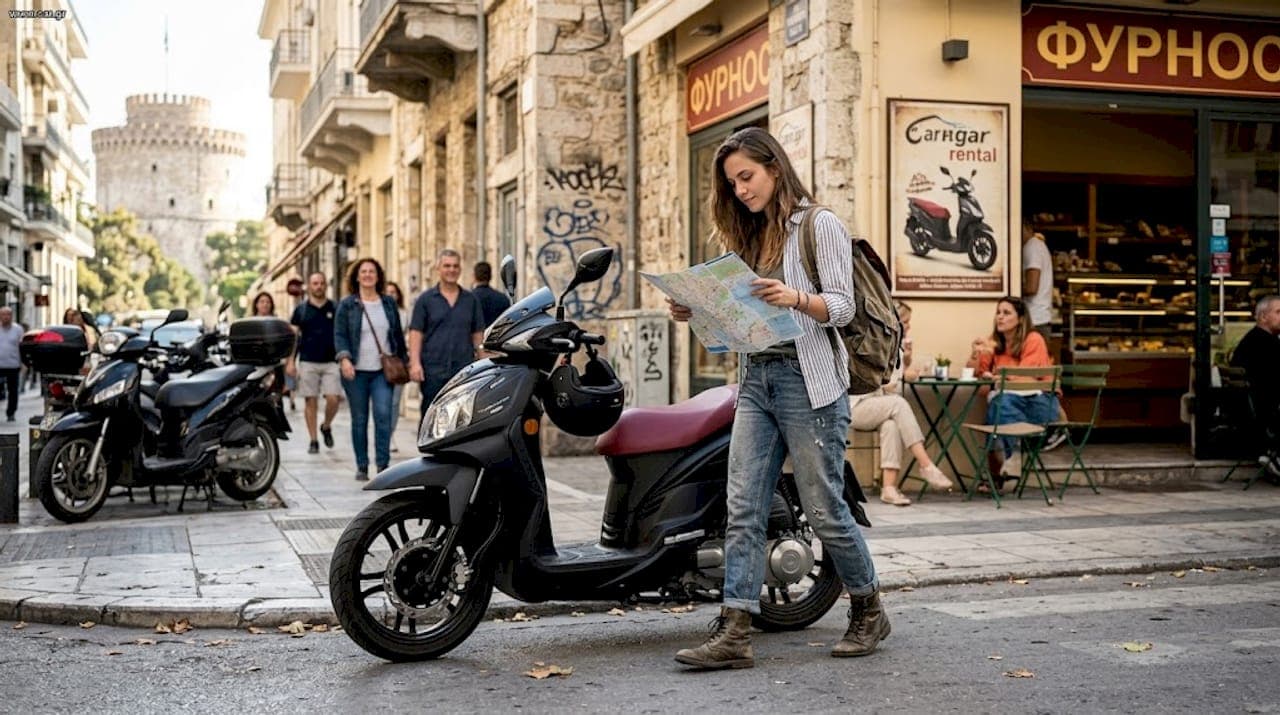
Thessaloniki and Halkidiki are the kind of places that reward curious travelers who move at their own pace. Public transit gets you to the main squares, sure, but it won't take you down a sun-baked coastal road in Halkidiki or through the winding backstreets of Thessaloniki's Ano Poli neighborhood. Organized tours cover the highlights but skip the magic in between. Renting a scooter solves both problems, giving you the freedom to explore on your own schedule. This guide walks you through everything you need: legal requirements, how to inspect and rent a scooter, road safety rules specific to this region, and how to handle problems if they come up.
Table of Contents
- What you need before you ride: Essentials and requirements
- How to rent and inspect a scooter in Thessaloniki or Halkidiki
- Safe scooter navigation: Road rules, local landscapes, and real-world risks
- Common mistakes and troubleshooting: What to do if issues arise
- Why scooter travel in Thessaloniki and Halkidiki is different (and how to do it right))
- Ready to start your scooter journey? We can help
- Frequently asked questions
Key Takeaways
| Point | Details |
|---|---|
| Prepare legally and safely | Bring the right license, wear a helmet, and know the essentials before you begin. |
| Inspect before you ride | Always check your scooter’s condition and confirm insurance before hitting the road. |
| Stay vigilant on local roads | Greece’s road conditions can be tricky, so respect local risks and avoid night riding and rough terrain. |
| Know what to do in emergencies | If issues arise, follow the correct steps for breakdowns, accidents, or disagreements with rental agencies. |
| Choose a reputable provider | A quality scooter rental partner offers support, a reliable fleet, and clear guidance for beginners. |
What you need before you ride: Essentials and requirements
Before you even sit on a scooter, you need to check a few boxes. Greece has specific rules for scooter riders, and skipping them can mean fines, accidents, or worse. Getting these right from the start makes the whole experience smoother.
Legal requirements at a glance
| Requirement | Detail |
|---|---|
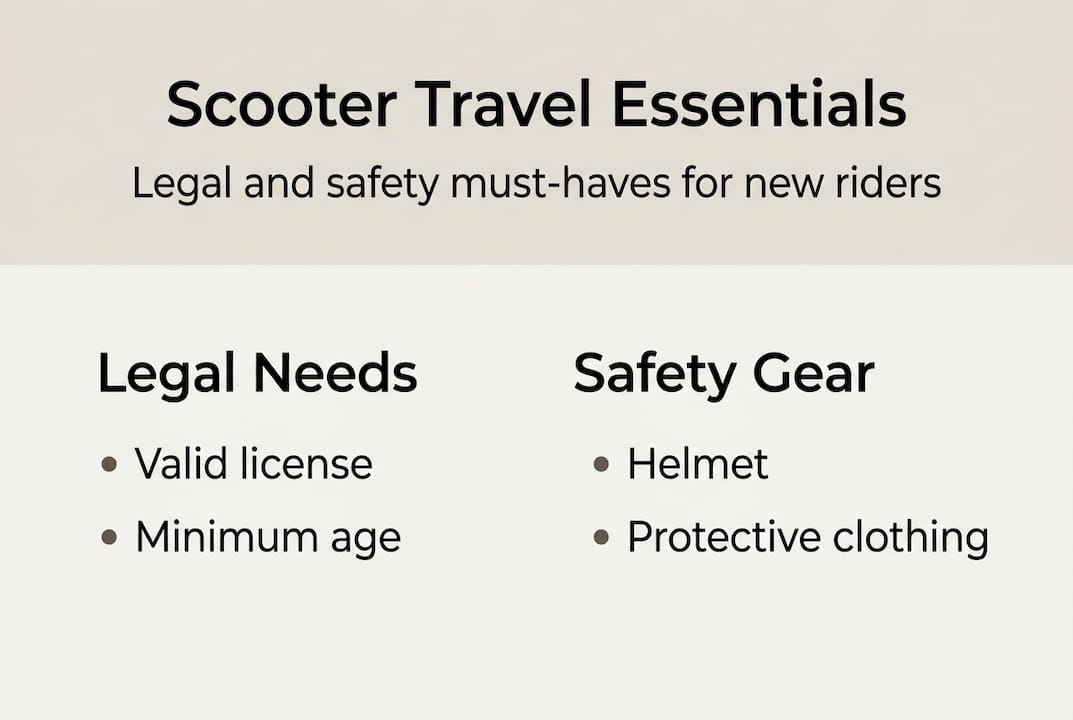
| Driver's license | Valid international or EU license |
| Minimum age | Typically 18+ (varies by engine size) |
| Helmet | Mandatory by law |
| Security deposit | Usually €100 to €300 |
| Insurance | Included in most rentals, verify coverage |
Greece requires helmets and protective clothing for all scooter riders, no exceptions. This isn't just a formality. Road surfaces in both urban Thessaloniki and rural Halkidiki can be unpredictable, and even a low-speed fall without gear can cause serious injury. Invest in proper essential scooter gear before your trip, not after you arrive.
For your license, you need either an EU driver's license or a valid international driving permit (IDP) issued in your home country. Most countries issue IDPs through their national automobile associations. If you're unsure what qualifies, check the scooter rental requirements specific to Greece before booking anything.
Here's a quick checklist of what to bring to the rental agency:
- Valid passport or national ID
- EU or international driver's license
- Credit card for the security deposit
- Travel insurance documents (if applicable)
- Emergency contact information
One thing many first-timers overlook: always read the insurance policy before signing. Standard rental insurance often excludes damage to tires, mirrors, or the undercarriage. Knowing what's covered protects you from surprise charges when you return the scooter. Ask the rental agent specifically what the insurance does and does not cover, and get it in writing if possible.
Statistic: Greece ranks among the higher-risk countries for road accidents in the EU, making proper gear and preparation non-negotiable before your first ride.
How to rent and inspect a scooter in Thessaloniki or Halkidiki
With your documents ready, the next step is finding the right scooter and making sure it's in good condition before you accept it. This part matters more than most travelers realize.
Here's how the rental process works, step by step:
- Search and compare online platforms and local agencies in Thessaloniki or your Halkidiki base town.
- Book in advance during summer months, since popular models sell out fast.
- Arrive with your documents: license, passport, and payment method for the deposit.
- Walk around the scooter with the agent and note any existing scratches, dents, or damage.
- Test the controls: brakes, horn, lights, and throttle response before leaving the lot.
- Confirm the fuel level and agree on whether you return it full or as-is.
- Sign the rental agreement only after reviewing the insurance terms.
For a detailed walkthrough, the renting a scooter step-by-step guide covers every stage of the process.
What's typically included vs. extra
| Included in standard rental | Usually costs extra |
|---|---|
| Basic third-party insurance | Full collision damage waiver |
| Helmet (sometimes) | Second helmet |
| Lock and chain | GPS unit |
| Roadside assistance (varies) | Delivery to hotel |
Always inspect the vehicle before accepting it. Check the tires for wear and proper inflation, squeeze both brakes firmly to confirm they engage, and turn on all lights including indicators. Look at the chain or belt drive for obvious slack or damage. If anything looks off, ask for a different unit or have the issue documented in writing.
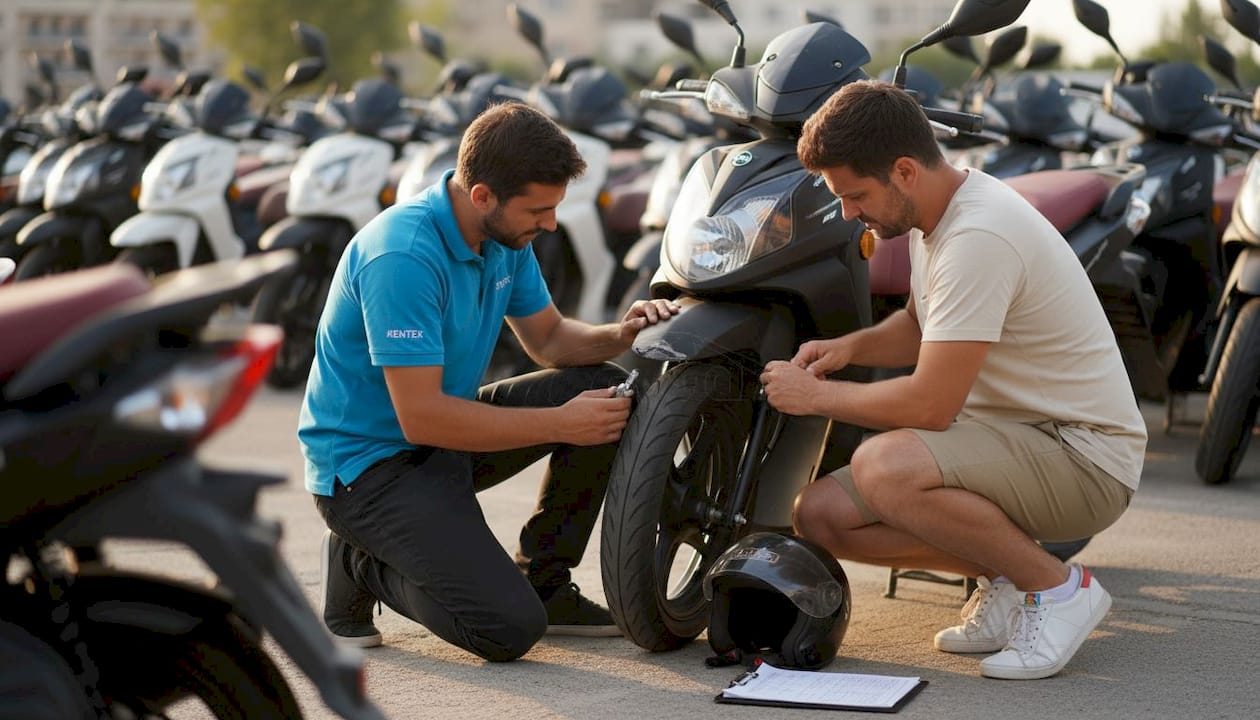
Pro Tip: Take timestamped photos and a short video of the entire scooter, including close-ups of any existing damage, before you ride off. Do the same when you return it. This simple step has saved countless travelers from unfair damage charges. Learn more about identifying a quality scooter so you know exactly what to look for. Also review insurance considerations to understand your full coverage picture.
Safe scooter navigation: Road rules, local landscapes, and real-world risks
Renting the scooter is the easy part. Riding it safely through Thessaloniki's city center or along Halkidiki's coastal roads takes awareness and preparation.
Greece enforces a blood alcohol limit of 0.05% for all riders, which is stricter than many tourists expect. Even one drink can push you over the limit. Beyond alcohol, Greek traffic law requires helmets at all times, prohibits phone use while riding, and mandates that headlights stay on during the day on major roads.
Thessaloniki's urban traffic is dense, especially around the port area and the Egnatia Odos corridor. Drivers here are assertive, and lane discipline is loose by Northern European standards. In Halkidiki, the challenge shifts: roads narrow quickly as you move toward the peninsulas, and rural and winding roads demand much more skill than a flat city street.
"Greece has high road accident rates; be extra vigilant, especially on rural and island roads."
The benefits of motorbike travel in this region are real, but so are the risks. Understanding both helps you make smarter decisions on the road.
Key hazards to watch for:
- Loose gravel on mountain curves, especially after rain
- Unmarked speed bumps in small villages
- Trucks and buses that swing wide on tight coastal bends
- Slippery marble or tile surfaces near churches and town squares
- Sudden road surface changes between paved and unpaved sections
Night riding adds every one of these risks and removes your ability to see them coming. Understanding scooter risks before you go helps you plan routes that avoid the worst of them.
Pro Tip: Plan your daily routes to finish before sunset. If you're exploring the Sithonia or Kassandra peninsulas in Halkidiki, start early, build in a long lunch break, and leave yourself plenty of daylight for the return. Avoid mountain shortcuts unless you have prior off-road experience. Use navigating Thessaloniki by scooter as your starting point for urban route planning.
Common mistakes and troubleshooting: What to do if issues arise
Even well-prepared travelers run into problems. Knowing what the most common mistakes are, and how to handle a real-world issue, keeps a small problem from becoming a trip-ruining one.
Top 5 mistakes beginners make:
- Skipping protective gear because the weather feels too hot
- Accepting a scooter without a thorough inspection
- Overestimating their riding skill on unfamiliar terrain
- Riding after dark on rural roads
- Renting without verifying insurance coverage details
These aren't hypothetical. Bumpy and narrow roads catch overconfident riders off guard every season. Halkidiki's peninsula roads in particular can feel manageable at first and then turn technical fast.
If your scooter breaks down, here's exactly what to do:
- Move the scooter off the road and turn on the hazard lights.
- Call the rental agency's emergency number (confirm this before you leave).
- Document the location using your phone's GPS.
- Take photos of the scooter and surrounding area.
- Do not attempt repairs yourself unless you have specific mechanical knowledge.
- Wait for assistance in a safe, visible location away from traffic.
For a minor accident involving another vehicle, stay calm and do not move the scooter until photos are taken. Exchange contact and insurance information with the other party. Call the local police (dial 100 in Greece) if there are injuries or a dispute about fault. Review accident protocols in advance so you know your rights before you need them.
Disputes with rental agencies most often involve damage charges. Your pre-rental photos are your best defense. If a charge seems unfair, ask for the specific clause in your rental agreement that justifies it. If the agency is unresponsive, contact your credit card provider to initiate a dispute. Knowing how to troubleshoot scooter problems before they escalate saves both money and stress.
Why scooter travel in Thessaloniki and Halkidiki is different (and how to do it right)
Most travel guides treat scooter rental as a generic European activity, as if riding through Amsterdam or Barcelona prepares you for Halkidiki's switchbacks or Thessaloniki's chaotic ring roads. It doesn't. The combination of dense urban traffic, long stretches of rural coastal road, and the sudden shift between the two creates a riding environment that genuinely requires local awareness.
What separates satisfied riders from frustrated ones isn't just skill. It's attitude. The travelers who have the best experiences are the ones who treat scooters as a tool for exploration, not a shortcut to skip safety steps. They ask questions at the rental agency. They ride slower than they think they need to. They stop when the road gets unfamiliar.
Scooters aren't for everyone in this region, and there's no shame in that. If you've never ridden before, Thessaloniki is not the place to learn. But if you have basic experience and a willingness to respect the local difficulty level, choosing a motorbike in Thessaloniki opens up a version of this region that most tourists never see.
Ready to start your scooter journey? We can help
You've got the knowledge. Now you need the right ride. MotoRent.io offers a carefully maintained fleet of scooters and motorbikes built for exactly the kind of travel this guide describes, from urban Thessaloniki rides to full-day Halkidiki coastal runs.

Every rental comes with transparent insurance terms, 24/7 support, and a team that actually knows these roads. Browse the Thessaloniki scooter rental guide to match your trip style with the right model, or go straight to the browse scooter fleet page to see what's available for your dates. When you're ready to book, the official MotoRent portal makes the whole process fast and straightforward. Your next adventure starts with the right scooter.
Frequently asked questions
Do I need an international driver's license to rent a scooter in Greece?
Yes, you need a valid international or EU license to legally rent and ride a scooter in Greece. Most rental agencies will check this before handing over the keys.
Is it safe for beginners to ride a scooter in Thessaloniki or Halkidiki?
Scooter travel is manageable if you wear full protective gear and stick to familiar road types, but rural and narrow roads in Halkidiki can be genuinely challenging for first-time riders. Build your confidence in town before heading out to the peninsulas.
What's the legal blood alcohol limit for scooter riders in Greece?
The legal BAC limit is 0.05% for scooter and motorcycle riders in Greece, which is lower than many tourists assume. Ride sober, every time.
What should I inspect before renting a scooter?
Always inspect the vehicle for visible damage, test the brakes and lights, check tire condition, and confirm that all documentation matches the scooter you're accepting. Document everything with photos before you leave the lot.