
TL;DR:
- Beginners need formal training, certified protective gear, and a suitable motorcycle to reduce crash risk. Structured courses like the MSF Basic RiderCourse improve skills and offer safety and financial benefits. Practicing defensive riding, inspecting the bike before every ride, and owning proper gear foster safer riding habits and build confidence.
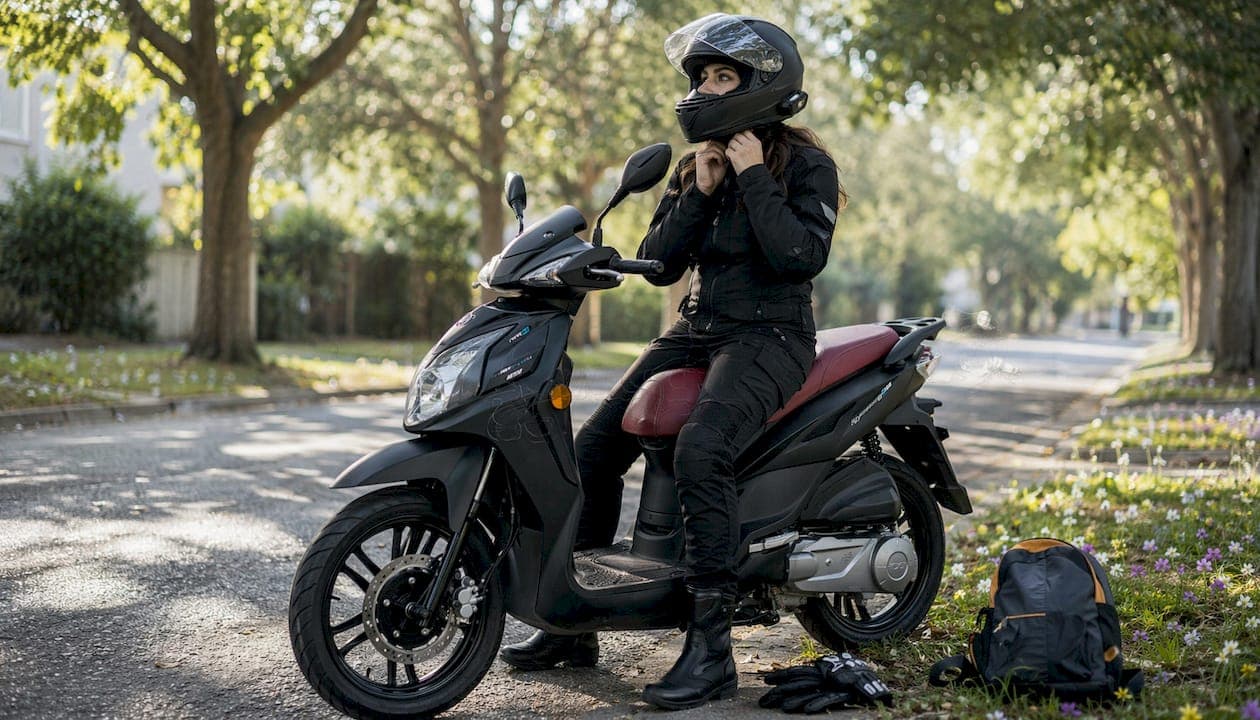
Beginner motorbike riding is defined as the structured process of learning motorcycle operation, safety habits, and road awareness before riding independently. Every new rider needs three things from the start: formal training, certified protective gear, and a bike matched to their skill level. The Motorcycle Safety Foundation (MSF) Basic RiderCourse sets the industry standard for new rider preparation. Choosing the right motorcycle in the 125cc–500cc range gives you manageable power while you build confidence. Skip any one of these three pillars and your risk of a crash in year one rises sharply.
What are the best motorcycle safety courses for beginners?
Formal training is the single most effective way to reduce crash risk as a new rider. The MSF Basic RiderCourse delivers 15 hours of hands-on instruction over 2–3 days in a controlled, off-street environment. That structure matters because you practice slow-speed maneuvers, emergency stops, and cornering without traffic pressure.
Completing the MSF course also carries real financial benefits. Many insurance providers offer premium discounts to riders who hold an MSF certificate. Some states waive the DMV riding skills test for MSF graduates, saving both time and money.
The controlled environment is what separates formal training from self-teaching in a parking lot. Instructors catch bad habits early, before they become muscle memory. Riders who skip structured training often spend months unlearning dangerous instincts they picked up on their own.
Key benefits of formal motorcycle training:
- Hands-on clutch and throttle control practice from day one
- Emergency braking and swerving drills in a safe space
- Instructor feedback on posture, vision, and body position
- Certificate that satisfies licensing requirements in most U.S. states
- Potential insurance discounts upon completion
Pro Tip: Book your MSF course before you buy a bike. The course provides motorcycles, so you learn the basics without putting miles on your own machine.
How to choose the right beginner motorcycle and gear
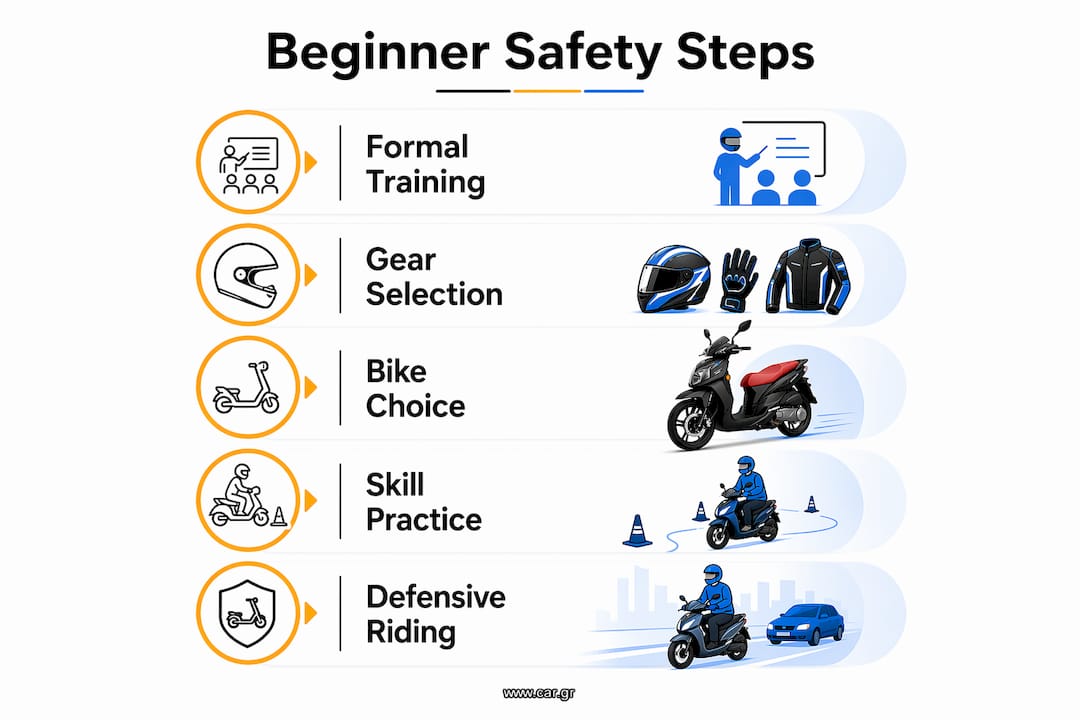
The best beginner bike is one that builds confidence, not one that impresses onlookers. Recommended engine sizes for new riders fall between 125cc and 500cc. Bikes in this range deliver enough power to handle highways while staying forgiving when you make the inevitable beginner mistakes.
New vs. used: what actually makes sense
Buying a used motorcycle in the 250cc–400cc range typically costs $2,000–$3,500. That price point removes the anxiety of dropping a $9,000 new bike in a parking lot. New riders tip over, scratch fairings, and stall in intersections. A used bike lets you learn without financial dread attached to every mistake.
For riders who want to test riding before committing to a purchase, renting a beginner-friendly scooter is a practical first step. You get real road experience without the upfront cost of ownership.
The gear checklist every new rider needs
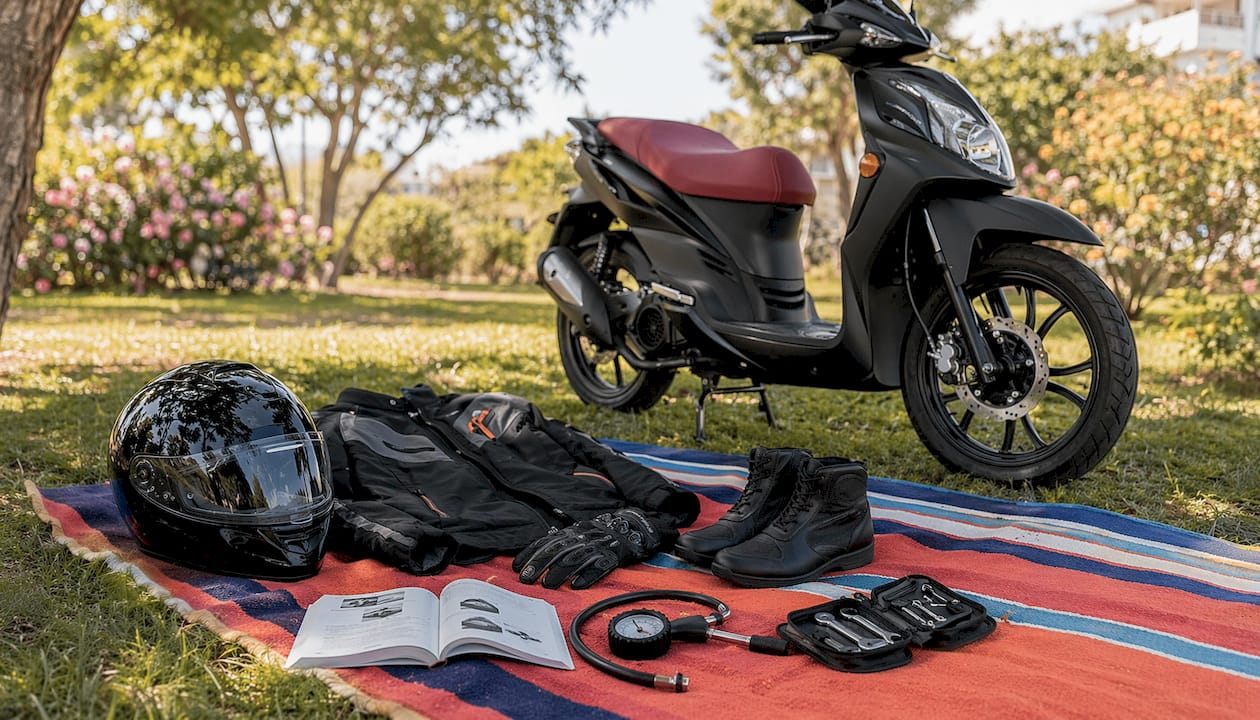
Gear is not optional. Proper protective equipment is a system: helmet, armored jacket, gloves, and boots work together to prevent injuries that could sideline you for months.
A DOT-approved or ECE-rated helmet reduces head injury risk by 69% and death risk by 42%. Those numbers make the helmet the single most important purchase you will make as a rider.
Essential gear for new riders:
- Helmet: DOT, ECE 22.06, or Snell M2020 certified. Full-face offers the most protection.
- Jacket: Leather or textile with CE-rated armor at shoulders and elbows.
- Gloves: Motorcycle-specific with palm sliders and knuckle protection.
- Boots: Over-the-ankle with ankle support and oil-resistant soles.
- Pants: Riding pants with CE-rated knee and hip armor, not jeans.
| Gear Item | Minimum Standard | Why It Matters |
|---|---|---|
| Helmet | DOT / ECE 22.06 / Snell M2020 | Reduces fatal head injury risk by 42% |
| Jacket | CE Level 1 armor minimum | Protects shoulders and elbows in a slide |
| Gloves | Motorcycle-specific construction | Hands instinctively absorb impact in a fall |
| Boots | Over-ankle, oil-resistant sole | Prevents ankle fractures and foot burns |
| Pants | CE-rated knee and hip armor | Jeans offer near-zero abrasion resistance |
For a broader look at what to evaluate before you ride, the 2026 beginner scooter buying guide covers selection criteria in detail.
Pro Tip: Try on helmets in person before buying. A helmet that fits poorly will cause fatigue on longer rides and may not stay in place during a crash.
How do you learn basic motorbike riding skills safely?
Riding a motorcycle safely requires mastering a sequence of physical skills before you ever enter traffic. Each skill builds on the last, and rushing the sequence is the most common beginner mistake.
Starting, stopping, and the friction zone
Friction zone clutch control is the foundation of smooth riding. The friction zone is the range of clutch lever travel where the engine begins to engage the rear wheel. Practice finding and holding this point on a flat surface until smooth starts feel automatic.
Stopping safely means using both brakes together. Apply the front brake progressively, not suddenly. Grabbing the front brake hard causes the front wheel to lock, which is the leading cause of low-speed tip-overs for new riders.
Turning, shifting, and lane positioning
Countersteering is the technique that controls direction at speeds above 15 mph. To turn right, you briefly push forward on the right handlebar. The physics feel counterintuitive at first, but the technique becomes natural within a few practice sessions.
Lane positioning directly affects your visibility and safety. Riding in the left third of your lane increases your sightlines and keeps you out of the oil and debris that collect at the lane center. Avoid the center strip, especially in wet conditions.
Defensive riding strategies that prevent crashes
About 40% of motorcycle crashes involve a car turning left across the rider's path at an intersection. That single statistic explains why defensive riding is not optional for new riders. It is the skill that keeps you alive.
The SEE method (Search, Evaluate, Execute) gives you a repeatable mental framework for every riding situation. Search constantly for hazards 12 seconds ahead. Evaluate which hazards require a response. Execute your response early, before the hazard becomes a crisis.
New riders face significantly higher crash rates in their first year on the road. Planning escape routes at every intersection and maintaining 360-degree awareness are the two habits that close that gap fastest.
Defensive riding habits to build from day one:
- Scan intersections before entering, even on a green light
- Maintain a following distance of at least 3–4 seconds behind the vehicle ahead
- Position yourself where drivers can see you in their mirrors
- Cover the brake lever in heavy traffic to cut reaction time
- Never ride in another vehicle's blind spot
What motorbike maintenance should every beginner know?
Basic maintenance keeps your bike safe and teaches you how it works. Riders who understand their machine make better decisions on the road.
The T-CLOCS pre-ride inspection covers Tires, Controls, Lights, Oil, Chassis, and Stand. Running through this checklist before every ride takes under five minutes and catches problems before they become emergencies.
T-CLOCS checklist for beginners:
- Tires: Check pressure with a gauge and inspect tread depth visually. Underinflated tires reduce handling and increase blowout risk.
- Controls: Test throttle, clutch, and brake levers for smooth operation and correct free play.
- Lights: Confirm headlight, taillight, and turn signals work before every ride.
- Oil: Check the sight glass or dipstick. Low oil causes engine damage quickly.
- Chassis: Look for loose bolts, leaks, and chain slack. A chain with too much slack can jump the sprocket.
- Stand: Confirm the side stand retracts fully. A dragging stand can catch pavement in a turn.
Chain lubrication is the most neglected beginner maintenance task. A dry chain stretches faster, wears sprockets, and can snap under load. Clean and lubricate the chain every 300–500 miles, or after any ride in rain.
Pro Tip: Buy a tire pressure gauge and keep it in your riding bag. Checking pressure cold, before you ride, gives you an accurate reading. Tires lose pressure gradually and riders rarely notice until handling suffers.
Key Takeaways
Safe beginner motorbike riding requires formal training, certified gear, a confidence-building bike, and consistent practice of defensive techniques before riding in traffic.
| Point | Details |
|---|---|
| Start with formal training | The MSF Basic RiderCourse provides 15 hours of structured, hands-on instruction over 2–3 days. |
| Wear certified gear every ride | A DOT or ECE-rated helmet reduces head injury risk by 69% and death risk by 42%. |
| Choose a 125cc–500cc bike | Engine sizes in this range give beginners manageable power and room to build confidence. |
| Practice defensive riding | The SEE method and 360-degree awareness are the core habits that prevent first-year crashes. |
| Inspect before every ride | The T-CLOCS checklist takes five minutes and catches safety issues before they become emergencies. |
What I've learned watching new riders get it right and wrong
The riders who progress fastest share one trait: they treat the first six months as a dedicated learning period, not a casual hobby phase. Muscle memory and situational awareness typically take 3–6 months of consistent practice to develop fully. That timeline is not a warning. It is a realistic expectation that helps you stay patient when progress feels slow.
The biggest mistake I see is new riders buying too much bike. A 600cc sportbike does not make you a better rider faster. It makes every mistake more consequential. The best first bike is the one that feels slightly boring after six months, because that means you have outgrown it safely.
Gear resistance is the other pattern I notice. Riders skip gloves on short trips, or wear a textile jacket without the armor inserts installed. The logic is always "it's just a quick ride." Most crashes happen within a few miles of home, on familiar roads, at low speeds. The gear needs to be on every time.
Respect for the machine is not fear. It is the recognition that a motorcycle rewards attention and punishes distraction. Riders who stay curious, keep practicing, and treat every ride as a chance to improve are the ones still riding five years later.
— KONSTANTINOS
Motorent makes your first ride in Thessaloniki easy
Renting before buying is one of the most practical ways to build real road confidence without the financial commitment of ownership. Motorent offers a fleet of well-maintained, beginner-friendly scooters and motorbikes in Thessaloniki, with fully insured rentals and 24/7 customer support included.

Every rental comes with a helmet, so you are covered on the most critical piece of protective gear from the moment you pick up the bike. Motorent's flexible daily and monthly rental options let you practice at your own pace, whether you are exploring Thessaloniki's streets or heading out toward Halkidiki. Browse the full fleet and check availability on the Motorent rental page to find the right bike for your skill level and itinerary.
FAQ
What is the best first step for a beginner motorbike rider?
Complete a formal training course like the MSF Basic RiderCourse before riding on public roads. The course provides 15 hours of hands-on instruction and a certificate that satisfies licensing requirements in most U.S. states.
What engine size is right for a beginner motorcycle?
Bikes in the 125cc–500cc range are the standard recommendation for new riders. This range provides enough power for highway use while staying manageable during the learning phase.
Do I really need full motorcycle gear as a beginner?
A DOT or ECE-rated helmet alone reduces death risk by 42%, and a full gear system including jacket, gloves, boots, and armored pants prevents injuries that could end your riding season. Gear is not optional at any skill level.
How long does it take to become a confident rider?
Muscle memory and situational awareness typically take 3–6 months of consistent riding to develop. Riders who practice regularly and take a structured course progress significantly faster than those who ride occasionally.
What is the T-CLOCS inspection method?
T-CLOCS stands for Tires, Controls, Lights, Oil, Chassis, and Stand. Running through this checklist before every ride takes under five minutes and identifies safety issues before they cause problems on the road.